Heritage
Assin Manso: Visitor and Heritage Guide
The last bath before the coast. Assin Manso was a great inland slave market, and is now a place of return, of reburial and of quiet.
- Country Ghana
- Category Heritage
- Reviewed 16 August 2026
- Sources 3
- Length 3 min read
Credit Caupolicaningles, CC BY-SA 4.0, via Wikimedia Commons
Assin Manso is inland, an hour or so north of the coast, and it is a river in a stand of bamboo rather than a fortification. It is also, for many people who travel to Ghana to trace a history, the hardest place on the route.
History
Assin Manso was one of the largest markets at which people were gathered to be sold into the trans-Atlantic slave trade. It was the last link in a route that ran down from the north of what is now Ghana and beyond it, and the point from which captives were taken on to the forts and castles on the coast to be sold to European traders.
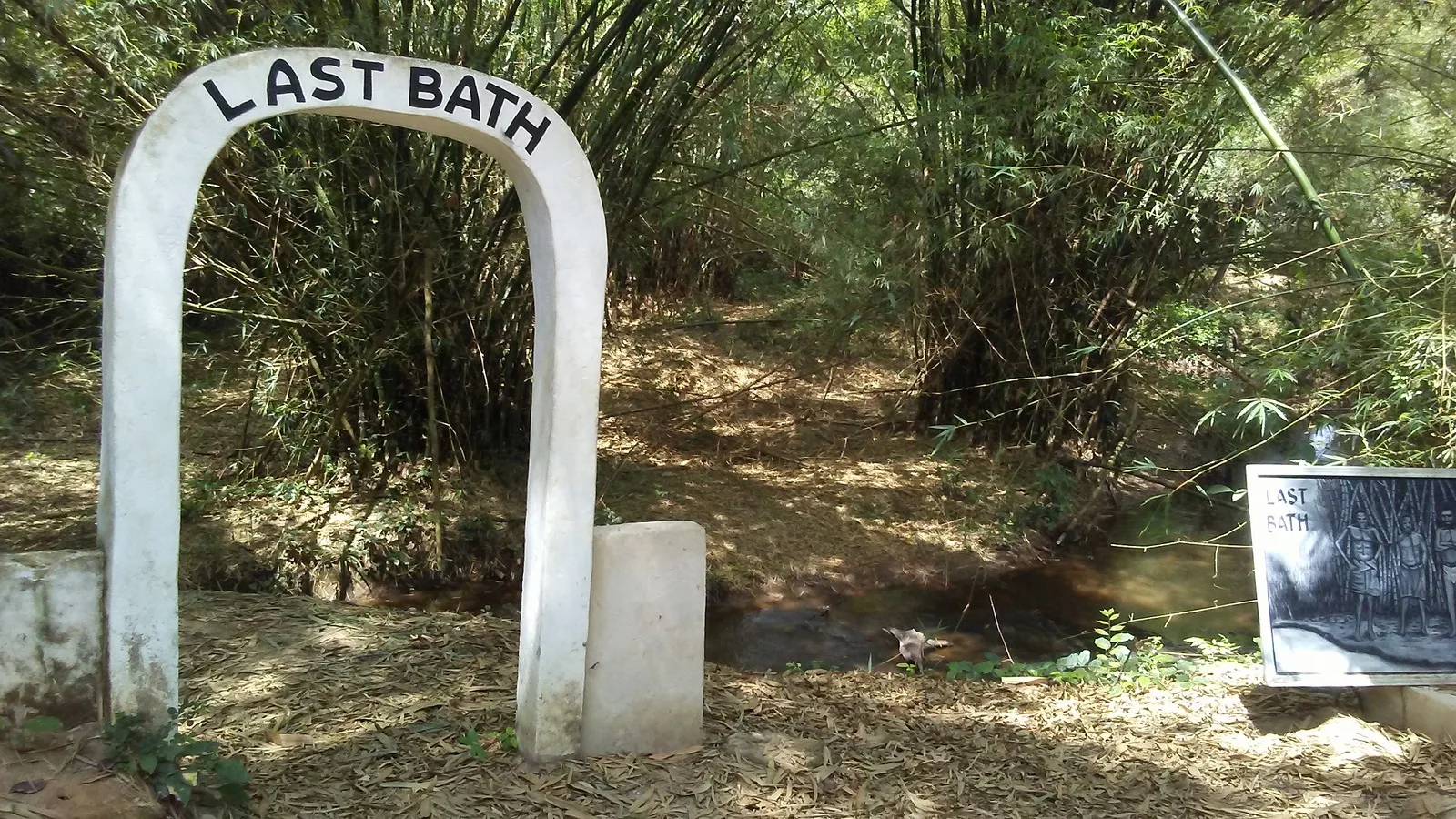
The river here is remembered as the place where people were washed before that final stage of the journey, which is why it is known as the last bath. The site is presented today as a prelude to the coastal castles, on the argument that you are then following the route that was walked, in the order it was walked.
What you will see
There is a simple white arch over the water reading Last Bath, an interpretive board, and a path down through the bamboo to the stream itself, which is small, brown and unremarkable to look at. The scale of the place is domestic. That is a large part of its effect.
There is also a burial ground. Remains of people of African descent have been returned from the Americas and reinterred here, and the graves are marked. Ceremonies of return and reburial are held at the site, and it functions as a memorial ground rather than only as a historical marker.
Visiting
Assin Manso is a short visit in clock terms and it should not be a rushed one. An hour is enough to walk it. Whether an hour is enough is another question, and people commonly find that this site, rather than the castles, is the one that takes the most out of them.
Guides are available at the site and are worth taking. Facilities are limited compared with the castles, so bring water and do not count on much shade beyond the trees. If you are traveling with a group, agree in advance that people may want to separate for a while.
Getting there
The site is on the road inland from the coast towards Kumasi, in the Central Region, and is most easily reached with a hired car and driver as part of a coastal itinerary. From Cape Coast it is a straightforward drive of about an hour.
Public transport along that road exists and drops you at the roadside rather than at the site, which makes it a less comfortable option in the heat. If you are building a route, the sequence that makes sense is Assin Manso first and the coast afterwards.
Visiting respectfully
- This is a burial ground, so behave as you would in one at home
- Do not walk on or photograph the graves without asking
- Ceremonies may be in progress, and if they are, stand back and wait
- No posed photographs at the river or at the arch
- Let people in your group be quiet, and do not fill the silence
- Nothing here should be picked up, moved or taken away
Sources
- Ghana Tourism Authority: Assin Manso Slave River
- UNESCO World Heritage Centre: Forts and Castles, Volta, Greater Accra, Central and Western Regions
- Ghana Museums and Monuments Board: custodian of Ghana material cultural heritage
The description of the site as a great inland market and the final link in the route from the north follows the Ghana Tourism Authority’s account. The coastal castles it fed are the subject of UNESCO inscription 34.