Heritage
Ghana and Diaspora Reconnection
UNESCO calls the coastal castles the starting point of the African diaspora. What a journey of return to Ghana involves, and what it asks.
- Country Ghana
- Category Heritage
- Reviewed 16 August 2026
- Sources 4
- Length 3 min read
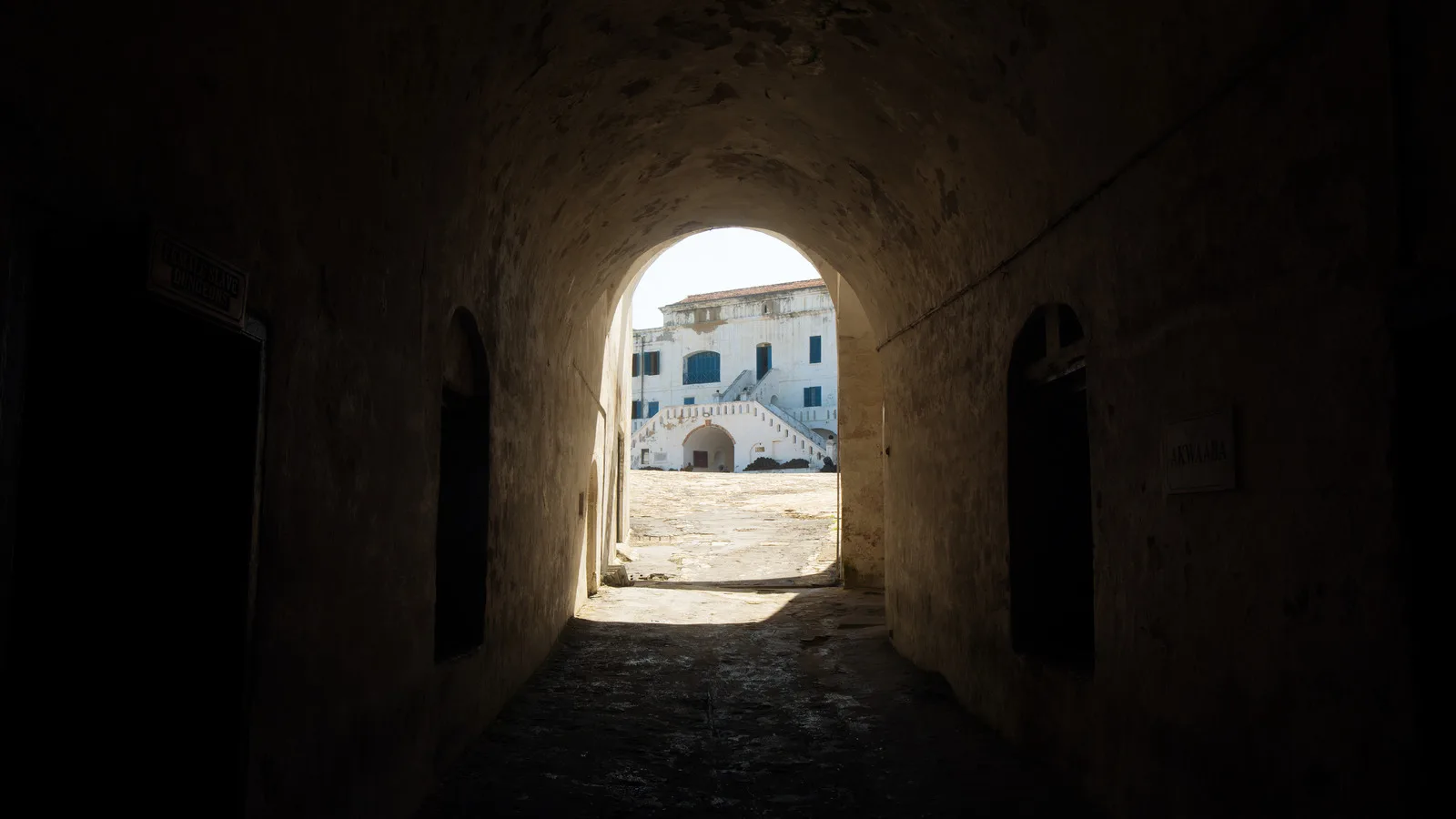
Credit Kwameghana, CC BY-SA 4.0, via Wikimedia Commons
Ghana occupies a particular place in diaspora travel, and it is not an accident of marketing. The country holds the largest concentration of the European trading forts on the West African coast, and it has spent decades deliberately inviting the descendants of the people taken through them to come back.
The historical connection
UNESCO inscribed the Ghanaian forts and castles as a single World Heritage property in recognition of what they were and what they became. Founded between 1482 and 1786, they run about 500 kilometers along the coast between Keta in the east and Beyin in the west, and were built and occupied in turn by traders from Portugal, Spain, Denmark, Sweden, Holland, Germany and Britain.
They were built for gold. UNESCO is careful about this, and so are we: for much of their history they were the machinery of a commerce between Africans and Europeans conducted on terms of rough equality, and only later did they become central to the trade in people. Both things are true of the same walls, and the inscription describes them as a monument to both.
They represent, significantly and emotively, the continuing history of European African encounter over five centuries and the starting point of the African Diaspora.UNESCO World Heritage Centre, on inscription 34
Programs and initiatives
Ghana has built policy around this. The Year of Return marked four centuries since the first recorded arrival of enslaved Africans in Virginia and brought a very large number of visitors of African descent to Ghana, and the government followed it with a longer program intended to turn a commemorative year into a standing relationship. Emancipation Day commemorations and Panafest are held on the coast.
There are also routes to a longer stay, including provisions for people of African descent to be granted the right of abode, and naturalization for those who settle. These are legal processes with requirements and costs, administered by Ghanaian authorities, and they change. If that is your interest, take advice from the authorities themselves rather than from an itinerary.
Planning a reconnection journey
The practical advice from people who have done it is consistent and worth repeating. Give the coast more time than an itinerary suggests. A castle is commonly sold as a morning and is very often not one. Two sites in a day is possible and frequently a mistake.
Go in the order the history went, if you can: inland at Assin Manso first, then the coast at Cape Coast or Elmina. It is the route that was walked, and taking it in that sequence changes what the coast feels like when you reach it.
Take a guide, and take one who is willing to answer questions rather than perform a script. Build in a day afterwards with nothing scheduled. People who have traveled this way generally say the difficulty arrives later than they expected, and that having somewhere quiet to be when it does matters more than another site.
Sites to visit
- Assin Manso Ancestral Slave River, the last bath before the walk to the coast
- Cape Coast Castle, the largest of the castles, with the West African Historical Museum
- Elmina Castle, begun in 1482 and the earliest of them
- Christiansborg at Osu in Accra, the third of the inscribed castles
- Fort William at Anomabu, and the smaller forts along the same coast
- The W. E. B. Du Bois Memorial Centre in Accra, where he is buried
Sources
- UNESCO World Heritage Centre: Forts and Castles, Volta, Greater Accra, Central and Western Regions
- Ghana Museums and Monuments Board: custodian of Ghana material cultural heritage
- Ghana Tourism Authority: Assin Manso Slave River
- Ghana Tourism Authority: Cape Coast Castle
The quotations and the dates in this article are UNESCO’s own wording for inscription 34. Immigration and residence provisions are set by Ghanaian authorities and are not stated here, because they change and the consequences of acting on a stale version are serious.