Heritage
Cape Coast Castle: Visitor and Heritage Guide
The largest of Ghana’s coastal castles, a World Heritage Site and a working museum. What stands there now, and how to visit it properly.
- Country Ghana
- Category Heritage
- Reviewed 16 August 2026
- Sources 3
- Length 3 min read
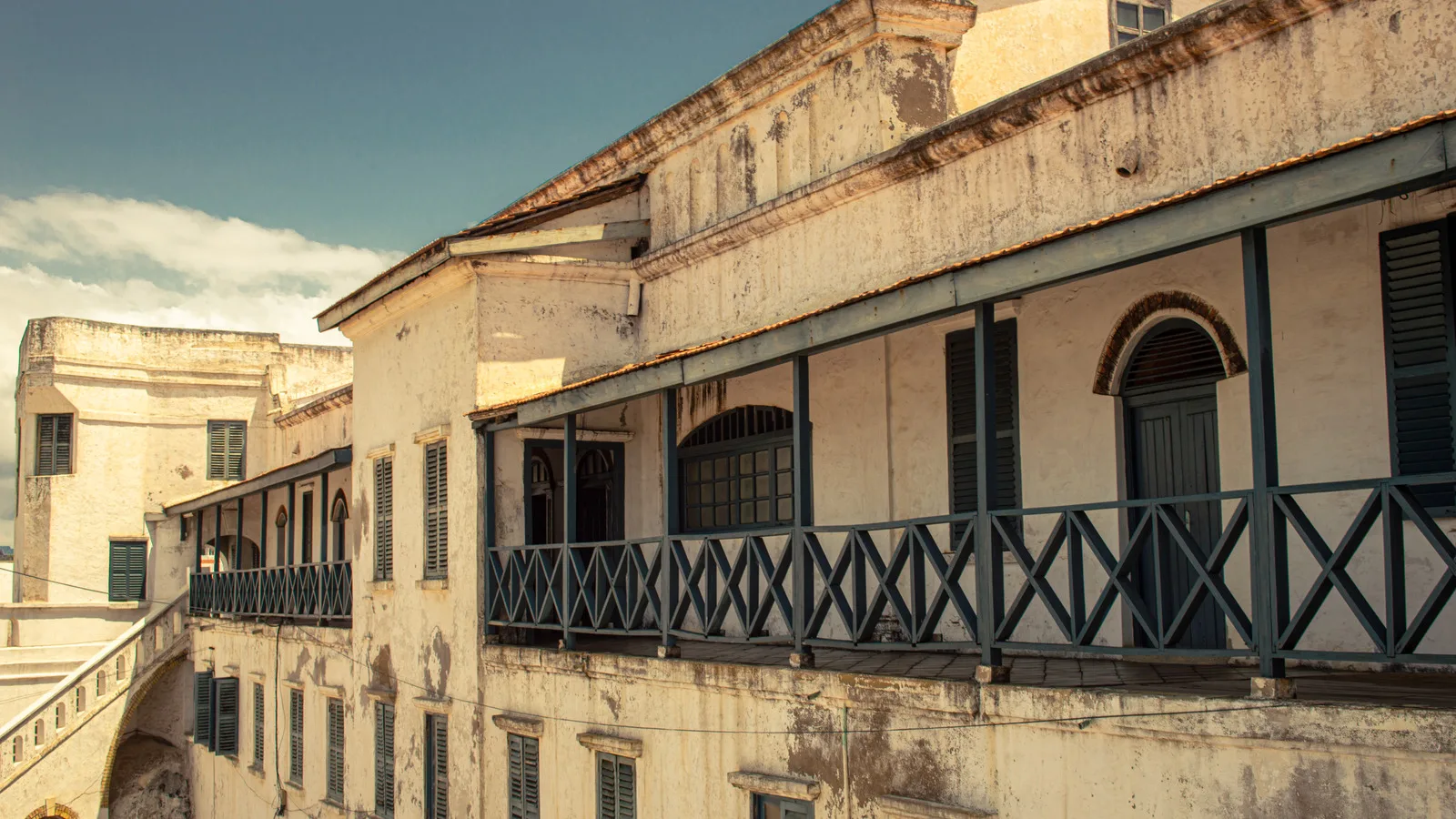
Credit Philip Nalangan, CC BY 4.0, via Wikimedia Commons
Cape Coast Castle is a white fortification on a rock above the Atlantic, in a town that carries on around it. It is the largest of the buildings in which the history of the trans-Atlantic slave trade is held in Ghana, and it is a museum, a monument and a working part of a busy fishing town at the same time.
History
The castle is one of three inscribed by UNESCO as part of the property covering Ghana coastal fortifications, alongside St. George’s d’Elmina and Christiansborg at Osu in Accra. Those fortified trading posts were founded between 1482 and 1786 and were occupied at different times by traders from Portugal, Spain, Denmark, Sweden, Holland, Germany and Britain.
They served the gold trade of the European chartered companies first. Later they played a significant part in the developing slave trade, and therefore in the history of the Americas, and later still, in the nineteenth century, in the suppression of that trade. Cape Coast also saw two developments the tourism authority draws attention to: the arrival of Christianity, and the beginning of formal education in the castle schools.
What you will see
A guided tour takes in Dalzel Tower, the cannons and mortars of the defenses, the courtyards, and the dungeons. The West African Historical Museum is inside the castle and holds a collection of art and cultural objects.
The dungeons are the reason most people come and they are not an exhibit. They are dark, low, close and hot, and the guide will at some point turn the lights off. Above them, on the upper floors, are the airy rooms with sea views where the garrison lived, and in one part of the building a church sits directly over the cells. That vertical arrangement is the thing people remember.
Visiting
Entry is through the Ghana Museums and Monuments Board, which is the custodian of the castles and forts, and admission includes a guide. Take the guided tour rather than wandering: the building does not explain itself and the guides are the reason the visit works.
Allow longer than you think. Two to three hours is realistic if you intend to see the museum as well, and mornings are cooler and generally quieter than the middle of the day. Fees and opening hours are set by the board and published by it, and are not stated here because a fee written on a travel page is wrong within a year.
Getting there
Cape Coast is on the coast road roughly three hours west of Accra in ordinary traffic, and longer leaving the city on a weekday morning. Intercity coaches run to Cape Coast from Accra, and shared taxis and tro-tros connect it with Elmina, which is about twenty minutes further west.
Most visitors either hire a car with a driver for a coastal trip or stay a night in Cape Coast and see both castles across two days. Doing Accra to Cape Coast to Elmina and back in a single day is possible, and it is a long day that does neither castle justice.
Visiting respectfully
- This is a place where people died, and a number of visitors will have ancestors here
- Keep your voice down in the dungeons, and let people who need a moment have it
- Ask before photographing other visitors, and do not photograph anyone in distress
- No posed or smiling photographs in the dungeons or at the door to the sea
- Dress as you would for a memorial rather than for a beach that happens to be nearby
- Ask your guide questions, including difficult ones. They are used to them
Sources
- UNESCO World Heritage Centre: Forts and Castles, Volta, Greater Accra, Central and Western Regions
- Ghana Museums and Monuments Board: custodian of Ghana material cultural heritage
- Ghana Tourism Authority: Cape Coast Castle
Dates and the description of the inscribed property are UNESCO’s wording. Features of the castle and the museum are as described by the Ghana Tourism Authority. Opening hours and fees are the Ghana Museums and Monuments Board’s to publish.