Heritage
Elmina Castle: Visitor and Heritage Guide
Begun in 1482, St. George’s d’Elmina is one of the oldest European buildings outside Europe. What survives there, and how to visit it.
- Country Ghana
- Category Heritage
- Reviewed 16 August 2026
- Sources 2
- Length 3 min read
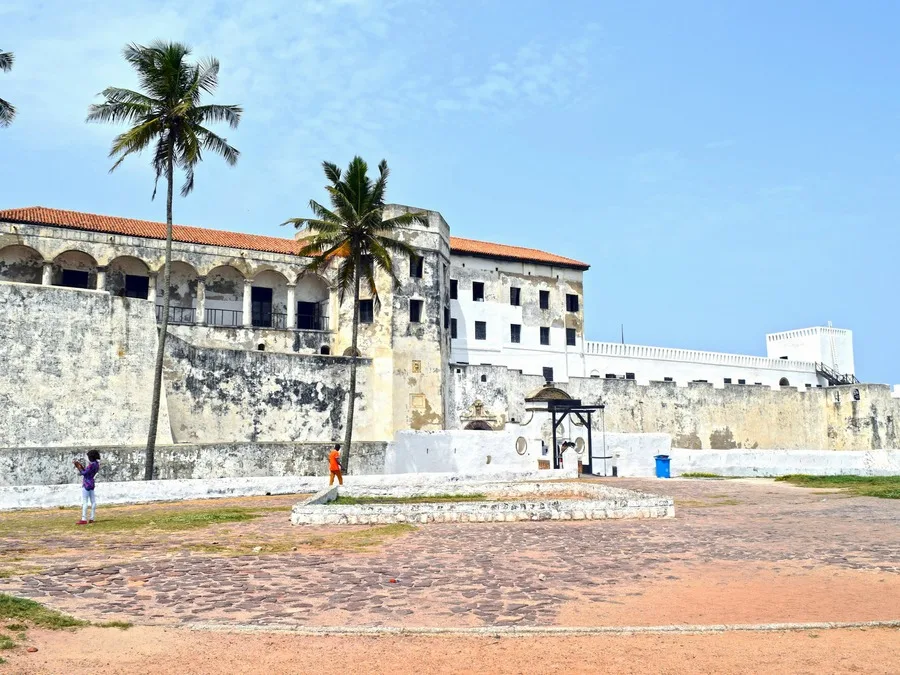
Credit Omoniyi David, via Unsplash
Elmina is where it starts. St. George’s d’Elmina Castle was built in 1482, which makes it the earliest of the fortified trading posts on this coast and, in UNESCO’s description, one of the oldest European buildings outside Europe. The town around it is believed to be the location of the first point of contact between Europeans and sub-Saharan Africans.
History
The Portuguese built it for the gold trade, which is what the name records. It passed later to the Dutch and later again to the British, and it is one of three castles in the World Heritage property that also contains fifteen forts and a number of ruined and partially ruined structures, spread over roughly 500 kilometers of coast between Keta and Beyin.
UNESCO describes the whole property as a kind of shopping street of West Africa for more than four centuries, and as a collective historical monument not only to the evils of the slave trade but to the long period of Afro-European commerce that preceded it. Elmina is the oldest link in that chain, and it held both meanings for longer than anywhere else on the coast.
What you will see
The castle sits at the mouth of the Benya lagoon with the fishing harbor directly below it, and the working harbor is part of the experience: the courtyards look out over boats being repaired and unloaded. Across the water on the hill stands Fort St. Jago, built to command the castle, and also part of the inscription.
Inside are the courtyards, the governor’s quarters, the church, the condemned cell and the dungeons, and the door through which people were taken to the boats. As at Cape Coast, the arrangement of the building is the argument: comfortable rooms with a view above, and holding cells below.
Visiting
Elmina is administered, like the other inscribed sites, by the Ghana Museums and Monuments Board, and entry includes a guided tour. Allow two hours, and more if you intend to walk up to Fort St. Jago afterwards, which is worth it for the view back over the castle and the harbor.
Many visitors see Elmina and Cape Coast on the same trip and it is worth putting a night between them rather than an hour. They are different buildings telling overlapping stories, and the second one lands very differently on a tired afternoon than it does on a fresh morning.
Getting there
Elmina is about twenty minutes west of Cape Coast on the coast road, and roughly three to four hours from Accra depending on when you leave the city. Shared taxis and tro-tros run the short hop from Cape Coast constantly and are the easy way to do it without a car.
If you are hiring a driver for the coast, ask to be dropped at the castle and collected at the harbor side, which gives you the walk along the water between the two and is the best way to understand where the castle sits.
Visiting respectfully
- The harbor below is a workplace, so ask before photographing people at work
- Keep quiet in the cells, and let the guide finish before asking questions there
- No posed photographs in the dungeons or at the door to the sea
- Cover shoulders and knees, as you would at any memorial
- Buy from the traders at the gate if you want to, and accept no as an answer both ways
Sources
- UNESCO World Heritage Centre: Forts and Castles, Volta, Greater Accra, Central and Western Regions
- Ghana Museums and Monuments Board: custodian of Ghana material cultural heritage
Every date and description here is UNESCO’s wording for inscription 34. The Ghana Tourism Authority page for Elmina Castle is deliberately not cited: at the time of writing it carried the text of the Cape Coast Castle entry rather than a description of Elmina.