Food
Ghana Food Guide
Jollof, banku, waakye and kelewele. The staples worth knowing, how street food actually works, and what to ask for if you avoid chilli.
- Country Ghana
- Category Food
- Reviewed 16 August 2026
- Sources 2
- Length 2 min read
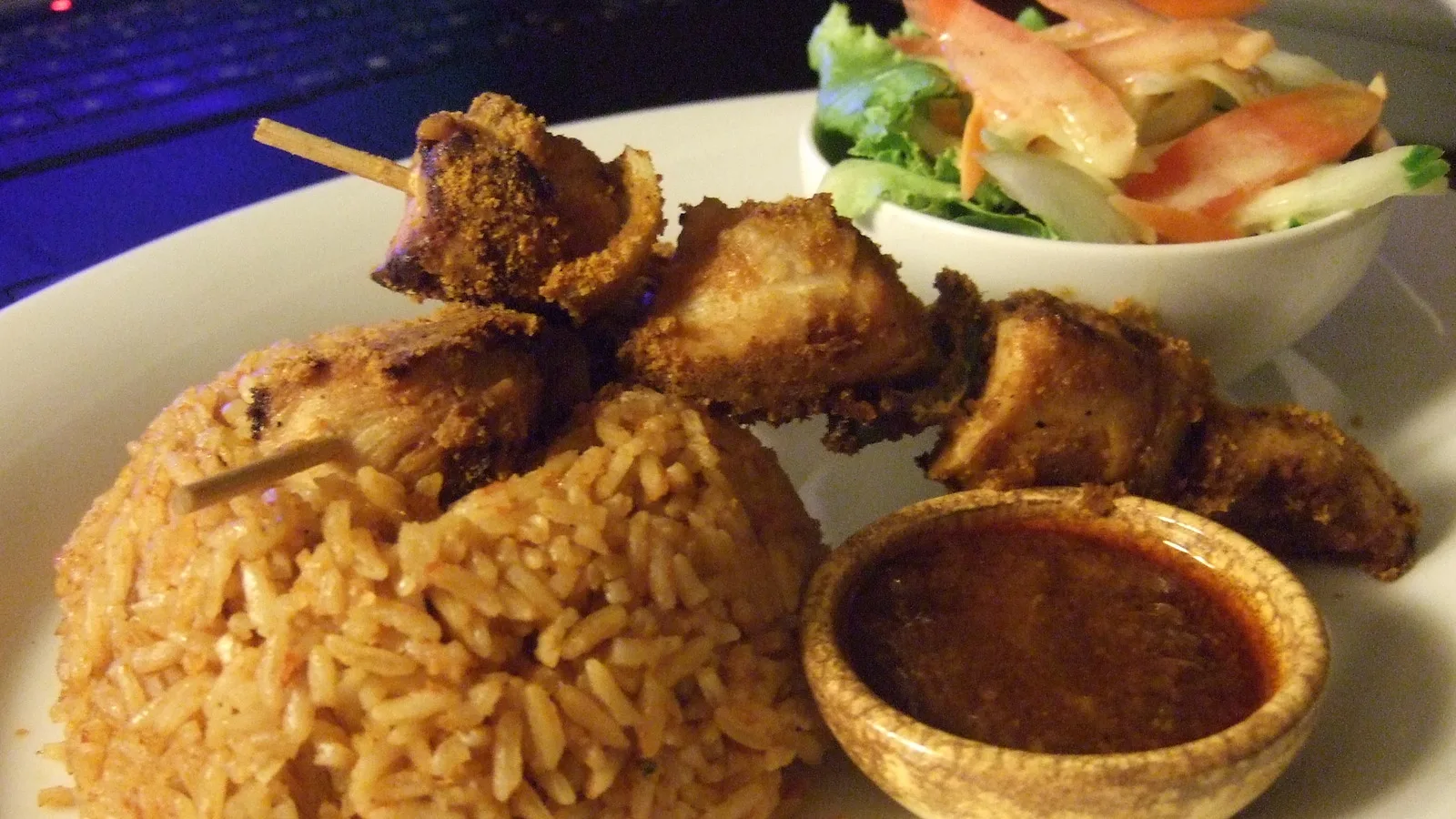
Credit zmtomako, CC BY-SA 2.0, via Wikimedia Commons
Ghanaian food is starch, stew and heat, in proportions that take a few days to get used to and are then hard to give up. Most of it is eaten with the right hand, most of it is cooked to order, and the best of it is rarely in a restaurant.
Staple dishes
- Jollof rice: rice cooked in a tomato and pepper base, and a matter of national pride
- Banku: fermented corn and cassava dough, served with soup or grilled tilapia
- Fufu: pounded cassava and plantain, taken with a soup rather than chewed
- Waakye: rice and beans, usually breakfast, usually with a plate of accompaniments
- Kenkey: fermented maize steamed in leaves, eaten with pepper and fish
- Red red: bean stew with fried plantain, and the easiest vegetarian plate to find
- Groundnut and palm nut soups: rich, heavy and the heart of a proper meal
Street food
Kelewele, which is fried plantain with ginger and pepper, is the thing to eat first. It is sold in the evening, it is cheap and it converts people. Beyond it there is chichinga, the spiced kebab, roasted corn and plantain from a coal pot, meat pies, and bofrot, the sweet fried dough.
Street food is a normal way to eat here, not an adventure sport. The sensible approach is the same as anywhere: eat where there is a queue of local customers, eat things cooked hot in front of you, be more careful with anything that has been sitting out, and give your stomach a few days before the raw salads.
Where to eat
The chop bar is the institution to seek out. It is a local eating house serving a small number of dishes very well, often with no menu and a short conversation instead. Ask what is ready. That is the correct question and the answer is usually the right order.
Accra also has a genuine restaurant scene, in Osu, East Legon and Airport Residential in particular, which ranges from Ghanaian cooking done formally to Lebanese, Indian, Chinese and West African fusion. Hotel breakfasts will feed you toast. Ask for waakye instead.
Dietary needs
- Vegetarian: possible but needs asking, since stock and dried fish appear in many soups
- Red red, kelewele, roasted plantain and rice dishes are the reliable places to start
- Vegan: harder, and worth learning the phrase for no fish and no meat rather than no meat
- Chilli: ask for it small or on the side, which is normal and not an insult to the cook
- Gluten: naturally easier than in Europe, since cassava, maize, rice and plantain dominate
- Allergies: carry a written explanation, since kitchens are busy and English is one of several languages
Drinks
Sobolo, made from hibiscus with ginger and spice, is the drink to know: cold, sharp and sold everywhere. Fresh coconut is cut in front of you on the street. Asana, from fermented corn, is an acquired and rewarding taste.
Ghana grows cocoa and drinks instant coffee, which is one of the honest disappointments of the country, though Accra now has real coffee if you look. Beer is widely available, palm wine is a rural pleasure best taken fresh, and akpeteshie, the distilled spirit, is stronger than it looks and is offered with more ceremony than you might expect.
Sources
- Ghana Tourism Authority: the current events calendar
- Ghana Museums and Monuments Board: custodian of Ghana material cultural heritage
Dish names and preparations vary by region and by household, and this article describes what is commonly served rather than a single authoritative version of any of them.