History
Nairobi: The City That Remembers While It Reinvents Itself
A Kenyan tour operator on the city most safari travelers pass straight through
- Region East Africa
- Country Kenya
- Category History
- Reviewed 30 October 2026
- Length 11 min read
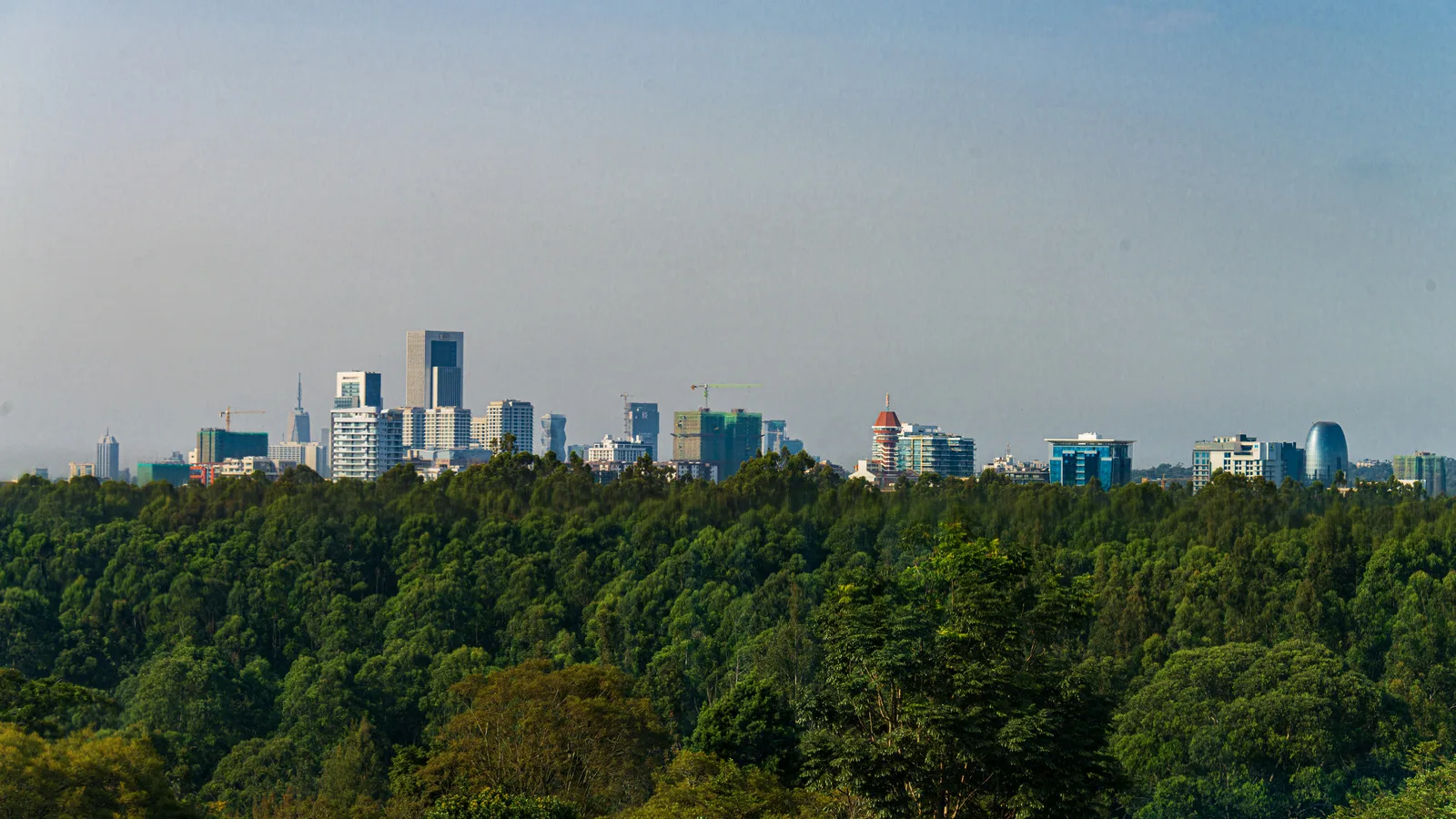
Nairobi’s office towers beyond the forest canopy. · Credit Daniel Case, CC BY-SA 4.0, via Wikimedia Commons
There is a particular kind of traveler who arrives in Nairobi already looking beyond it. They land, collect their luggage, meet their driver and perhaps spend the night in a hotel before setting off towards the Maasai Mara, Amboseli or another of Kenya’s famous wildlife destinations. I understand why. Many have spent decades teaching the world to dream about the animals beyond the city.
But there is something Nairobi quietly asks of you before you leave. Stay a little longer. Because Nairobi is not simply the place where your Kenyan safari begins. It is where many of the country’s stories begin. And some of them are still being written.
The City Between Two Worlds
Nairobi is an unusual city. It can feel intensely modern and unexpectedly old within the space of a single afternoon. A glass office tower rises above streets that carry memories from another century. A technology company operates from a neighborhood whose history reaches back to the colonial period. A traveler can drink coffee in a fashionable café and, a short distance away, stand beside a railway locomotive that arrived in an entirely different Kenya.
Even the name of the city carries a history. Nairobi grew from a railway settlement in the late nineteenth century, developing around the construction of the Uganda Railway. What began as a camp became a town, then a colonial capital, and eventually the capital of an independent Kenya. That transformation is still visible. You just have to know where to look.
Start With a Hotel
Perhaps one of the most surprising places to begin understanding Nairobi is not a museum. It is a hotel. Walk into the Sarova Stanley in the heart of the city, and you enter a building that has watched Nairobi change for more than a century. The hotel opened in 1902, when Nairobi was still a young settlement growing around the railway. Generations of travelers, politicians, explorers and businesspeople have passed through its doors.
But what I find most interesting is that the history does not feel completely locked away. It is still part of the experience. You can sit down for lunch at the Thorn Tree Restaurant and know that you are eating in a place that has witnessed generations of Nairobi’s social and commercial life. The hotel’s historic spaces contain old photographs, antiques and objects that quietly tell stories of the people who passed through here. The Exchange Bar carries another piece of the city’s commercial history. The area was associated with Nairobi’s early stock exchange, while the famous Thorn Tree became a meeting point for travelers in an age when people left handwritten messages for one another rather than sending a WhatsApp.
Today, you can sit beneath the same tree and look at a Nairobi that would have been almost impossible for those early travelers to imagine. That is the strange pleasure of Nairobi. The past does not always announce itself. Sometimes it simply serves you lunch.
A City of Grand Hotels and Complicated Stories
Not far away stands another of Nairobi’s historic institutions: Fairmont The Norfolk. The hotel opened in 1904 and became one of the city’s best-known meeting places for visitors arriving from overseas. Its history is filled with famous names and stories from the early years of tourism and exploration in East Africa. Karen Blixen was among its visitors, and the hotel became part of the wider cultural landscape later immortalized by Out of Africa.
But it is worth resisting the temptation to see this period only through the romance of old safari photographs and colonial-era hotels. Kenya’s colonial history was beautiful for some people and deeply painful for others. Behind the elegant hotels and coffee estates was a system of land dispossession, racial segregation and unequal economic power. The railway that helped create Nairobi also came at enormous human cost.
That contradiction matters. A responsible traveler does not need to reject the history in order to understand it. They simply need to look at the whole story. And Nairobi gives you places to do exactly that.
The Woman Behind the Story
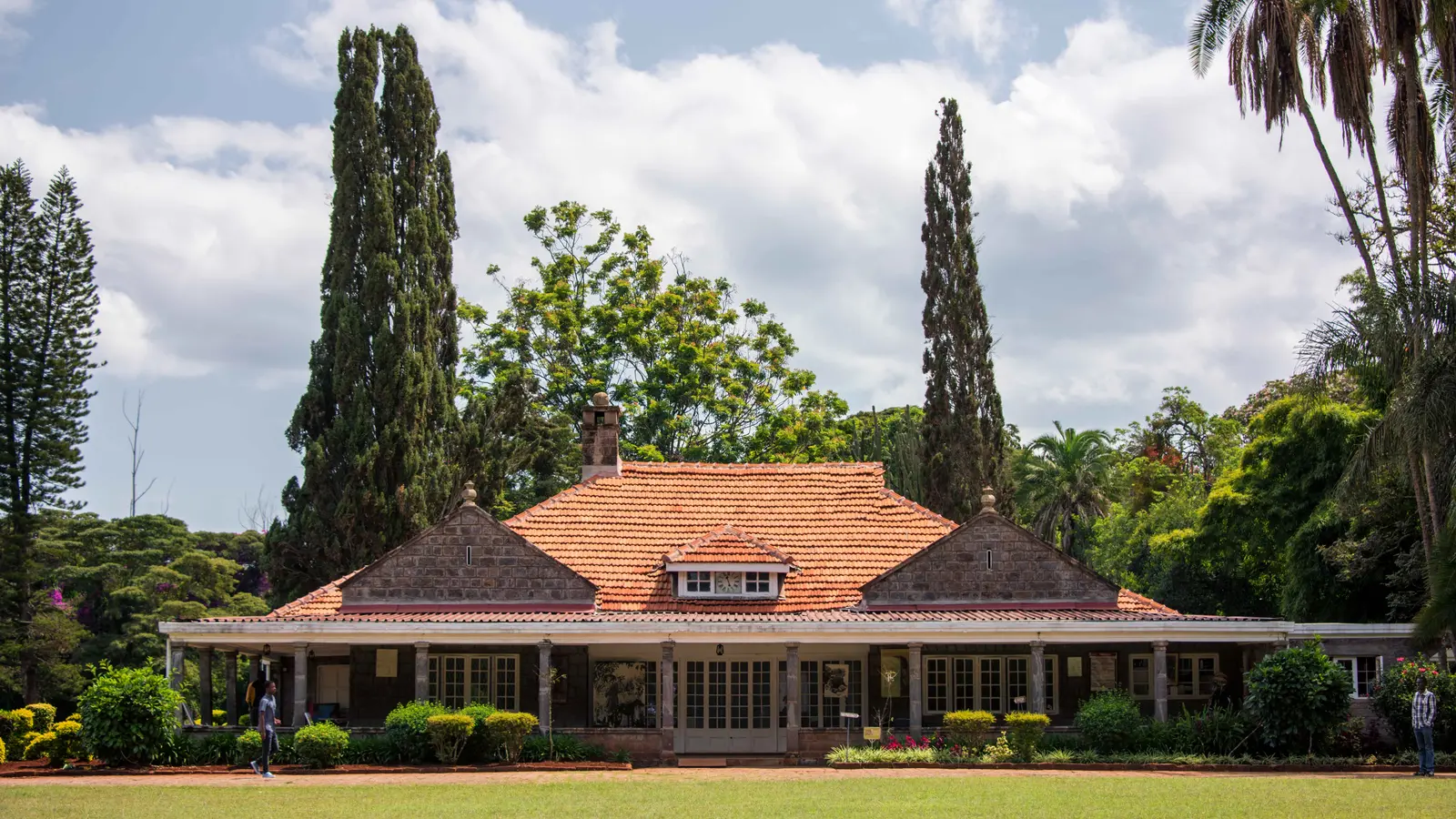
The name Karen is familiar to anyone who has heard of Nairobi. The neighborhood takes its name from Baroness Karen Blixen, the Danish author whose years in Kenya became the basis of her memoir Out of Africa. Her former home, now the Karen Blixen Museum, sits beneath the Ngong Hills.
The first impression is easy to understand. The garden is beautiful. The house feels intimate. Beyond it, the Ngong Hills rise across the horizon. It is not difficult to imagine why the landscape captured the imagination of visitors and writers.
But the house also opens the door to more complicated questions about colonial Kenya. Blixen arrived in Kenya in 1914 and lived here until 1931. She farmed coffee, experienced the realities of colonial agriculture, and eventually left after the farm failed. Today, visitors come to see the rooms, furniture and landscapes associated with her life.
But the most interesting visit is one where you leave asking more questions than you arrived with. What did it mean to own land in colonial Kenya? Who worked those farms? What happened to the communities whose lives were transformed by colonial settlement? And how did the country move from that Kenya to the independent nation we know today? The museum cannot answer all of these questions. But it gives you a place to begin asking them.
Follow the Railway
To understand why Nairobi exists where it does, follow the railway. At the Nairobi Railway Museum, old locomotives and railway artifacts remain as physical reminders of the infrastructure that transformed the region. For a visitor accustomed to modern airports and highways, it can be difficult to imagine what the railway represented at the beginning of the twentieth century.
The arrival of the railway transformed Nairobi from a railway camp into a growing urban center. It opened routes for commerce and movement. It also became part of the machinery of colonial expansion. The railway’s history is therefore neither simply a story of progress nor simply a story of exploitation. It is both. And that tension is important because Nairobi itself emerged from it.
The Country Inside a Museum
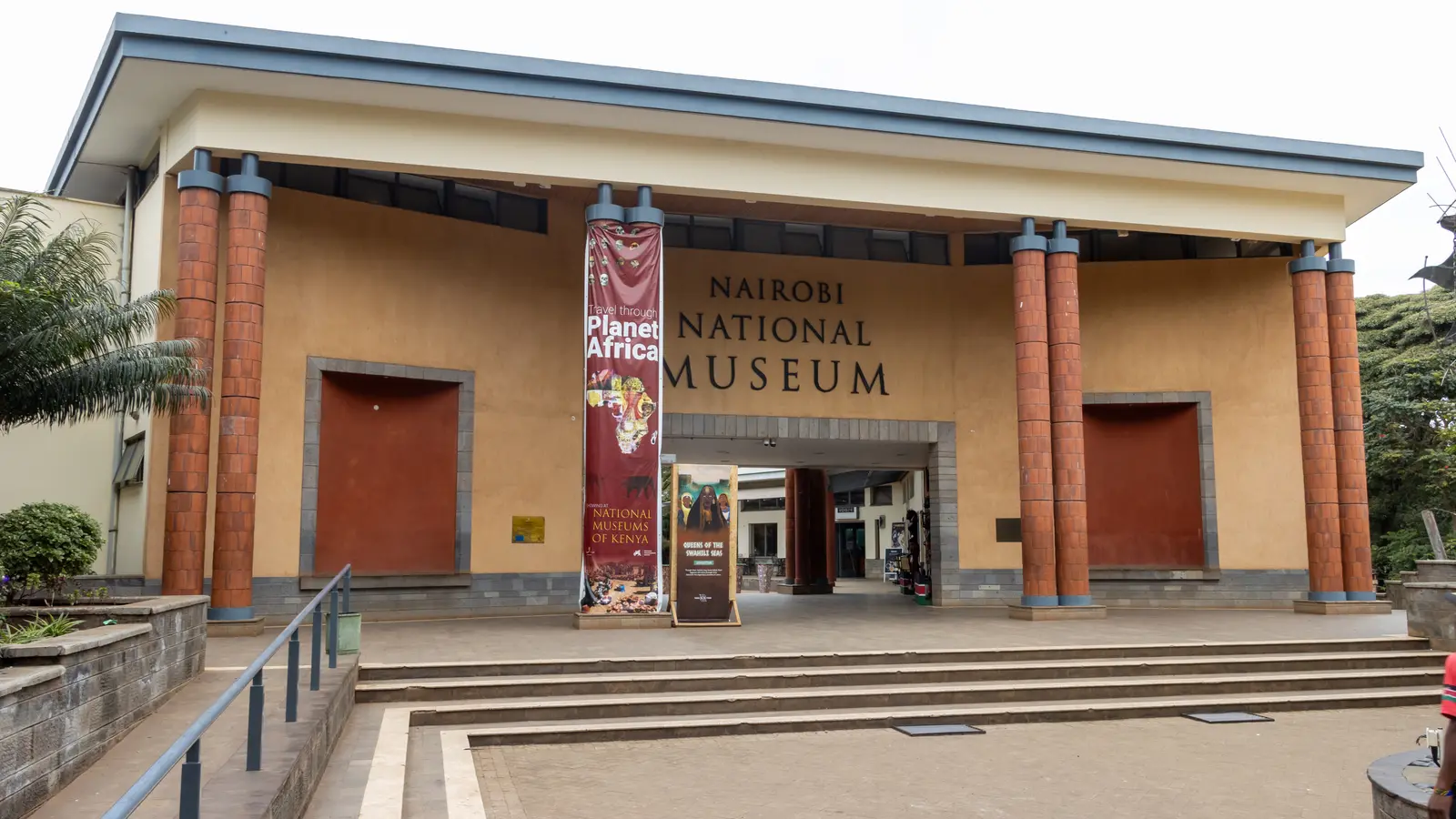
If the railway helps explain how Nairobi grew, the Kenya National Archives and Nairobi National Museum help explain the country that grew around it. The archives preserve photographs, documents and historical material that allow visitors to look into Kenya’s political and social past. The museum goes even further back. At Nairobi National Museum, the story stretches beyond colonialism into archaeology, human evolution, natural history, art and the cultural diversity of Kenya’s communities.
This is one of the places I would encourage a first-time visitor to see before traveling deep into the country. Because it changes how you look at everything afterwards. When you meet a community in Samburu, you know you are not encountering a costume or a performance. You are meeting people whose history stretches far beyond the arrival of tourism. When you see the Great Rift Valley, you know you are looking at a landscape with a geological story measured in millions of years. When you encounter Kenya’s wildlife, you begin to understand that conservation is part of a much larger relationship between people, land and animals.
The museum gives context to the journey. And context changes travel.
Then Nairobi Wakes Up
Leave the museums and historic buildings behind, and Nairobi changes character. The city becomes louder. Traffic builds. Matatus weave through the streets. Young people move between offices, cafés, universities and technology hubs. Restaurants fill. Phones come out. Meetings begin. Deals are made. Ideas are tested.
Nairobi is sometimes described as one of Africa’s leading technology and innovation centers, and the description is not difficult to understand when you spend time here. Global organizations operate alongside Kenyan start-ups. International companies have established regional bases. The United Nations has one of its major global centers here. The hospitality industry has expanded. A new generation of entrepreneurs, designers, filmmakers, musicians, chefs and technology professionals is creating a Nairobi that would be almost unrecognizable to the travelers who stayed at the Stanley a century ago.
And yet the old Nairobi has not disappeared. It sits underneath the new one. That is what makes the city interesting. Nairobi is not trying to choose between its past and its future. It is carrying both.
Where the Wild Things Are
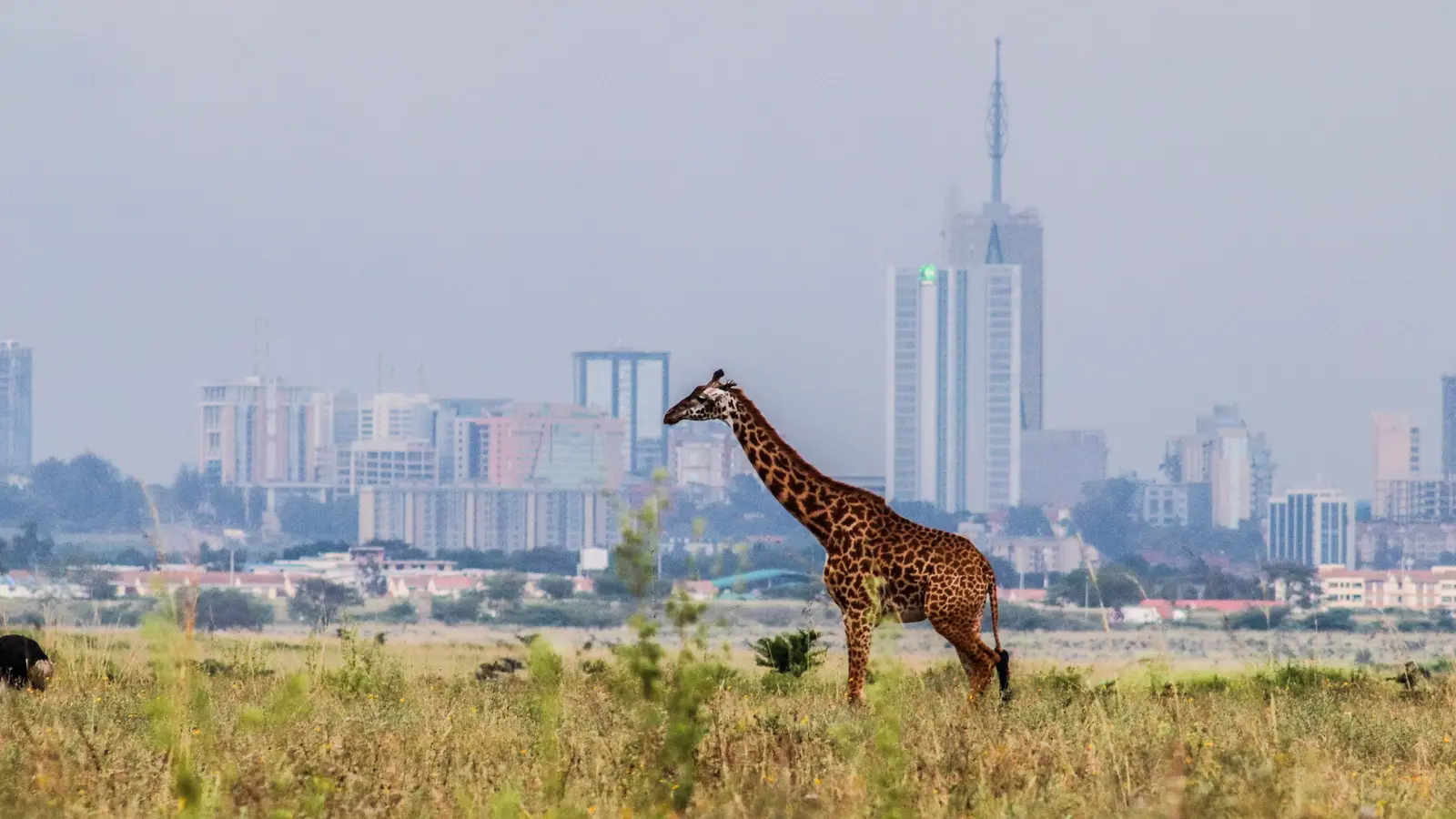
Then, almost absurdly, the city ends. Or perhaps it doesn’t. Drive towards Nairobi National Park and the buildings begin to give way to open grassland. Then you see them: giraffes, zebras, buffalo, rhino, perhaps a lion. The skyline remains in the distance. There is something almost surreal about seeing wildlife moving through a landscape with Nairobi’s towers behind them.
But perhaps that image explains the city better than anything else. This is a place where the modern and the wild have been forced to negotiate space with one another. Nairobi National Park is not simply convenient because it is close to the city. It is significant because it challenges the idea that urban Africa and wild Africa are separate worlds. They are not. They share boundaries. And sometimes they share the same horizon.
Conservation Has a Human Face
Nairobi’s conservation story also extends beyond the national park. At the David Sheldrick Wildlife Trust, visitors can learn about the work involved in rescuing and raising orphaned elephants before their eventual reintegration into the wild. At the Giraffe Centre, the relationship between people and wildlife becomes interactive and immediate. At Kazuri Beads, tourism intersects with enterprise and women’s livelihoods. At Ocean Sole, discarded flip-flops collected from beaches and waterways are transformed into colorful works of art and products, turning an environmental problem into an opportunity for employment and awareness.
These are different organizations with different purposes. But together they reveal something important about contemporary Kenya. Conservation is not simply about protecting animals. It is also about people. About livelihoods. About enterprise. About education. About finding ways for environmental protection to coexist with the economic realities of a growing population. That is a story worth understanding before heading into the famous national parks.
The Nairobi You Don’t See From the Airport
After spending time in Nairobi, something changes. The airport transfer no longer feels like a passage through an anonymous city. You begin recognizing layers. The hotel is no longer just a hotel. The railway is no longer just an old locomotive. The museum is no longer simply a collection of artifacts. The skyline is no longer just a collection of buildings. Everything begins to carry a story. And perhaps that is what Nairobi offers the traveler that a safari alone cannot.
Context
You arrive in Kenya expecting to see wildlife. You discover a country with a complicated history. You arrive expecting a gateway. You discover a city that is becoming something in its own right. You arrive expecting Africa’s past. You discover Africa’s future being built around you.
Stay for the Story
I work in tourism, and I understand the temptation to optimize an itinerary. Travelers have limited time. Flights need to connect. Safari lodges are waiting. The Mara is calling. But sometimes the most valuable thing you can add to an itinerary is not another destination. It is another night.
Nairobi deserves that night. Not because it has to compete with the Maasai Mara. It does not. Nairobi offers something completely different. It gives you a chance to understand the country before you travel through it.
Spend an afternoon at the museum. Walk through the old city. Have lunch at the Stanley. Listen to the stories attached to its walls. Visit the Railway Museum. Stand beneath the Ngong Hills. Look at the city’s skyline from the edge of Nairobi National Park. Watch the traffic move. Watch the city change. And then, when you finally leave for the safari, you may notice that you are no longer simply traveling across Kenya. You are beginning to understand it.
Perhaps that is the greatest gift Nairobi can give a visitor. It teaches you that Kenya is not a safari with a city attached. It is a country with many stories. And Nairobi is where you can begin to hear them.