Heritage
Tongo Tengzuk: Visitor and Heritage Guide
A granite range in the far northeast, sacred for centuries, twice stormed by colonial troops, and still drawing pilgrims to its ancestor shrine.
- Country Ghana
- Category Heritage
- Reviewed 16 August 2026
- Sources 3
- Length 4 min read
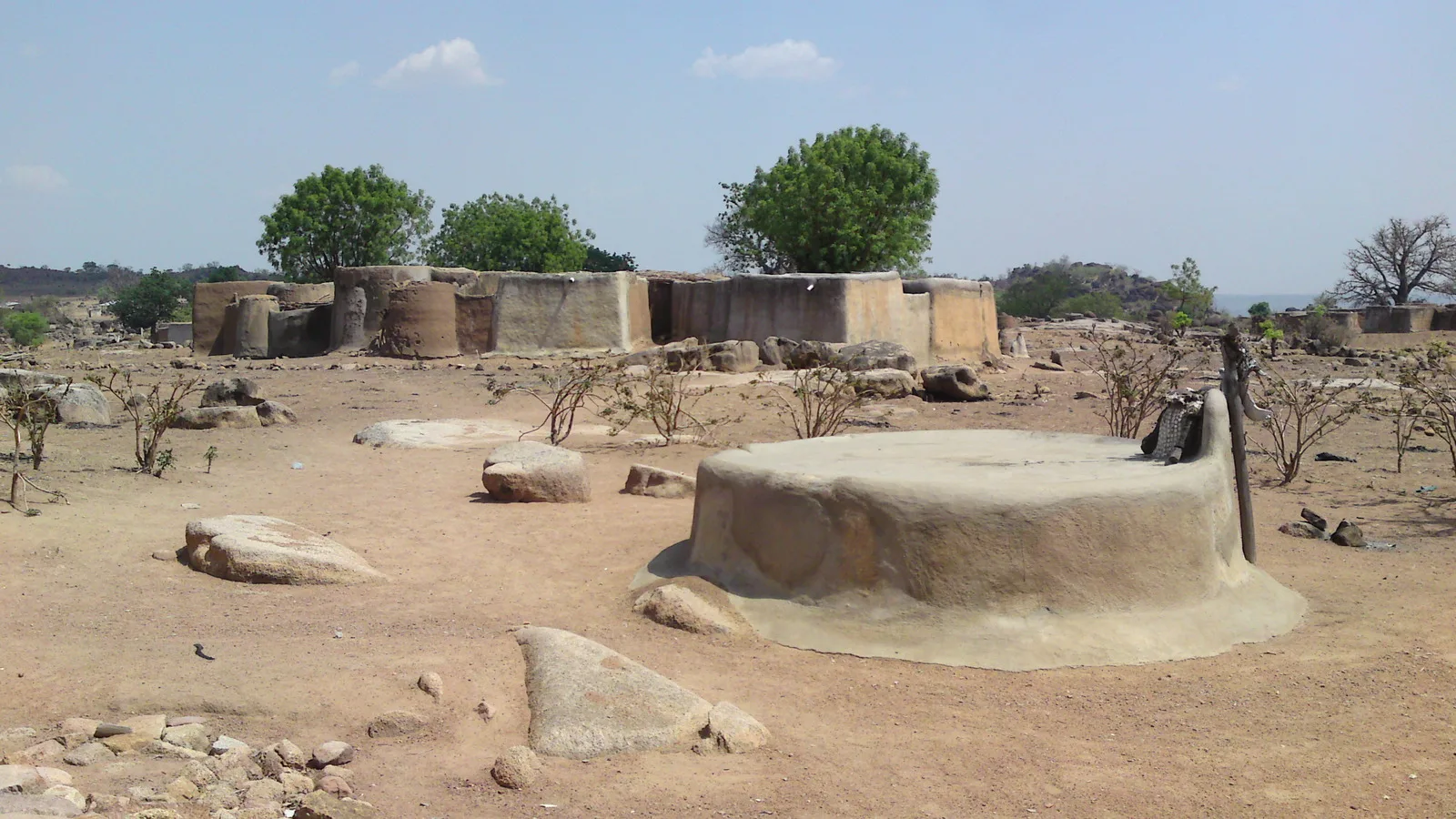
Credit Maarten van der Bent, CC BY-SA 2.0, via Wikimedia Commons
Read the three coastal pages on this site and you could come away thinking the slave trade happened on the shoreline. It did not. It ended there. This page is about one of the places the captives were taken from, and it is a place that is still very much alive.
A tentative listing, not a World Heritage Site
Start with what this is not. Tongo Tengzuk is on Ghana’s tentative list, which is the inventory of properties a country intends to consider nominating. It is not inscribed on the World Heritage List and this page does not claim that it is.
The Ghana Museums and Monuments Board submitted it in January 2000 as a cultural landscape, and it has sat there since. GMMB lists the same place among its own monuments as the Tongo Tengzuk Cultural Landscape; UNESCO files it as Tenzug and the Tallensi settlements. It is here for the reason Assin Manso is here: national heritage that matters, cited to the authority that holds it.
What you will see
The Tong Hills are a rocky granite outcrop rising out of the savanna of the Upper East Region, about sixteen kilometers from Bolgatanga. UNESCO calls them the sacral epicenter of the Tallensi, and one of the most important cultural sites in West Africa.
The hills hold shrines to the earth, tongban, and to the ancestors, ba’ar. The greatest of them is the ba’ar Tonna’ab, set in the cliffs above the village of Tenzug. Most of the settlements are inside the hills rather than below them, and the compound house is worth looking at properly: in front of each one is a shaded area that holds the ancestral shrines and doubles as the household’s social space. Almost the whole population farms or keeps animals.
History
The hills sat on a frontier, between zones where centralized states were forming to the north and to the south, and the topography both isolated and protected the people living there. UNESCO puts the consequence bluntly: a dense population of farmers offered rich pickings for slave raiders from the surrounding cavalry states, and a large proportion of the enslaved people in the Akan forest kingdoms came from these frontier communities. A final surge of captives went south late in the nineteenth century.
That is the link the coastal pages cannot make on their own. The castles at Cape Coast and Elmina were the last stage of a journey that began in country like this.
Resistance, and a shrine that outlasted two assaults
The Tong Hills were among the last places in Ghana to submit to British rule, and Tonna’ab was both a refuge for those who resisted and a symbol of the resistance. In 1911 a military expedition stormed the hills intending to destroy the religious complex. The Tallensi were evicted and all access to the shrines was banned.
Four years later British officers realized that people were returning to the hills in secret and that the shrines had been, in their word, reactivated. A second assault followed in 1915. By the 1920s the great ancestor shrine was flourishing again.
It drew pilgrims from across the region, and the Akan peoples of the south regarded it as a place of real ritual power. Visiting in 1928, the ethnographer R.S. Rattray was astounded to find wealthy Asante businessmen and women who had traveled hundreds of miles north on the new motor road to consult it. By the 1930s satellite shrines were appearing in the south under the name Nana Tongo, so that supplicants no longer had to make the journey at all.
Getting there
Bolgatanga is the base, and the hills are a short drive from it. That is the easy part. The harder part is that Tonna’ab is a shrine in use, access is in the gift of its custodians, and arriving at the foot of the hills is not the same as being admitted.
Arrange a guide from the community beforehand. The Ghana Museums and Monuments Board holds the landscape and keeps a regional office in the north.
Visiting respectfully
The shrines here have survived a colonial army twice. They are not fragile in the way an old building is fragile, but the terms of access are real and they are not yours to set.
- Tonna'ab is a working shrine. Access is granted by its custodians, not acquired by turning up
- Go with a guide from the community, every time
- Expect conditions on where you may go and what you may do, and accept them without negotiating
- Ask before photographing people, shrines or graves, and treat a no as final
- The compounds are homes and the footpaths between them are not a public right of way
- Boaram in October and Gologo at the end of the dry season are religious events that make room for visitors, not performances staged for them
Sources
- UNESCO World Heritage Centre: Tenzug and the Tallensi settlements, tentative list 1392
- Ghana Museums and Monuments Board: custodian of the national monuments and sites
- UNESCO World Heritage Centre: the two properties inscribed in Ghana
The description, the festivals, the history and the 1911 and 1915 assaults are all taken from the tentative list entry that the Ghana Museums and Monuments Board submitted to UNESCO, read on 2026-08-16. Two raiders and two southern states named in that entry are deliberately not repeated here: the page has been scanned and their spellings cannot be read with confidence, and the point does not depend on them.