Culture
Uganda Culture and Etiquette Guide
A republic containing kingdoms, a cloth made from bark, and several rules of dress and speech that carry criminal penalties.
- Country Uganda
- Category Culture
- Reviewed 18 August 2026
- Sources 5
- Length 4 min read
Credit Kyakwera, CC BY-SA 4.0, via Wikimedia Commons
Uganda is a republic that contains kingdoms, and a great deal of what a visitor meets as culture belongs to one of them rather than to the country. Knowing which is most of the courtesy.
Kingdoms inside a republic
Buganda, Bunyoro, Toro, Busoga and Ankole are among the traditional kingdoms whose territories lie inside modern Uganda. Several retain a monarch with a cultural rather than political role, and the Kabaka of Buganda in particular commands genuine popular attachment.
The practical consequence is that "Ugandan culture" is usually a specific culture. The drums, the dances, the dishes and the cloth a visitor meets around Kampala are largely Baganda. Asking whose tradition something is, rather than assuming it is national, is both more accurate and better received.
Language
English is the official language and the language of schooling and government. Luganda is the most widely spoken language in and around Kampala, and Swahili is official and widely used in the security forces and across the region. There are dozens of others.
Greetings matter and are not perfunctory. Ask how someone is and wait for the answer. Among Baganda, forms of greeting have traditionally been elaborate and marked by respect for age and status; you will see kneeling as a greeting in some contexts. Observe rather than imitate, and follow the lead of the person greeting you.
Empaako, the praise name tradition of the Batooro, Banyoro, Batuku, Batagwenda and Banyabindi of western Uganda, is on UNESCO's Urgent Safeguarding List. Being given an empaako is a real courtesy and is worth understanding before it happens.
Barkcloth, and why it is on the wall at Kasubi
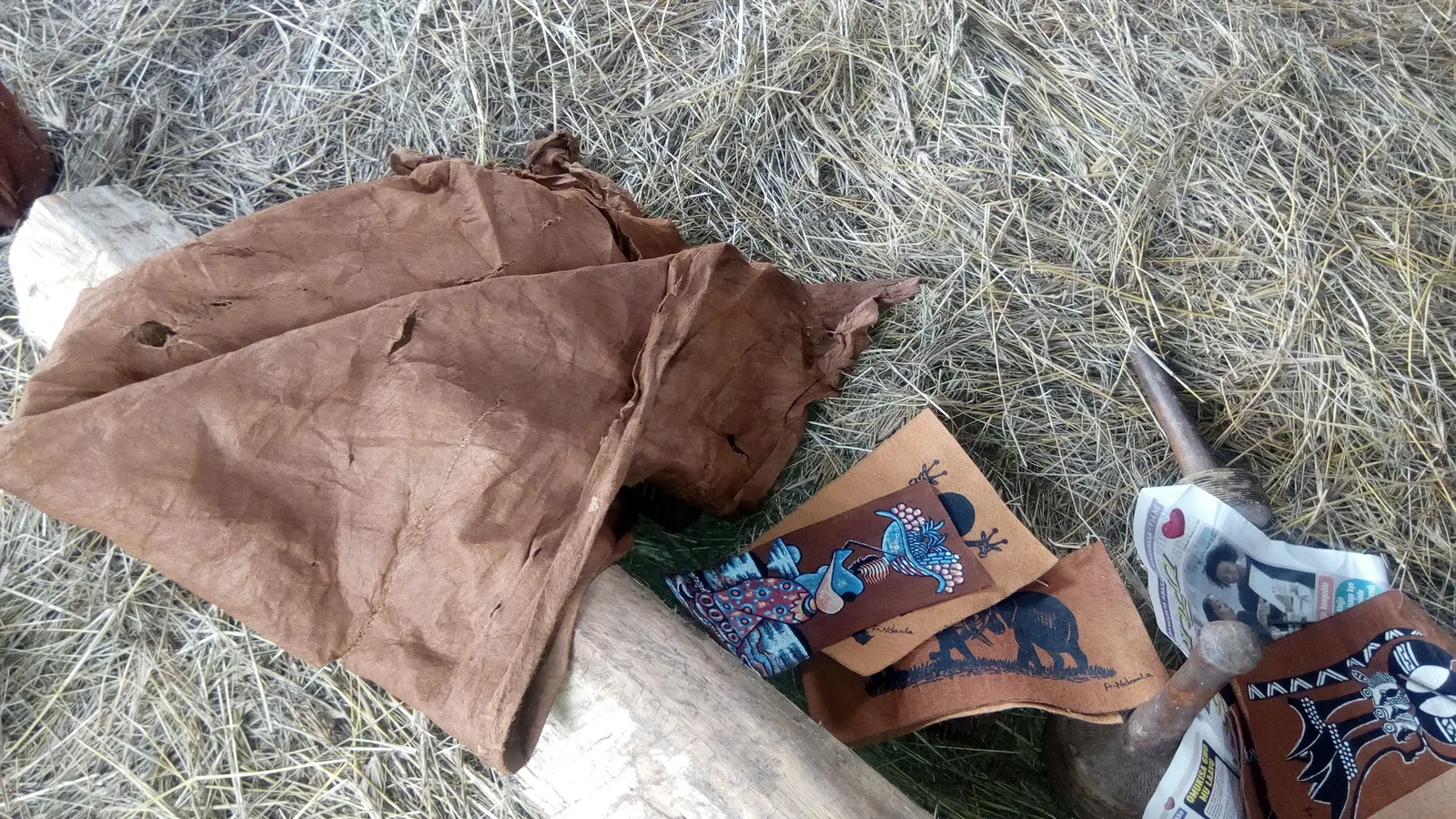
Barkcloth making was inscribed on UNESCO's Representative List in 2008. It is made from the inner bark of a fig tree, stripped, beaten with wooden mallets until it spreads into a wide terracotta colored sheet, and it predates woven cloth in the region.
It is not a craft-shop curiosity. Barkcloth is the material of Baganda ceremony: it wraps the poles inside the great tomb at Kasubi, and the trees themselves mark the boundary of that site. If you see it on a page about Ugandan heritage and again on a wall in a royal tomb, that is the same tradition and not a coincidence.
Five of six, and what that means
Uganda has six elements inscribed on UNESCO's intangible heritage lists. Five of them are on the Urgent Safeguarding List, which is the list for practices assessed as at risk of disappearing, and only barkcloth is on the Representative List.
That ratio is unusual and it is the reverse of most of the region. Bigwala, the gourd trumpet music and dance of the Busoga Kingdom, was inscribed as urgent in 2012; the Koogere oral tradition, the Ma'di bowl lyre, the Lango male-child cleansing ceremony and Empaako are the others.
For a visitor it is worth knowing that a performance of any of these is not a folk display with a long future guaranteed. Several are held up by a small number of surviving practitioners.
Rules that carry a penalty
Several Ugandan conventions are matters of law, and the penalties are not nominal.
Military style clothing is illegal for anyone, including children, covering camouflage, red berets and military marks or badges, with a maximum sentence of life imprisonment. Electronic cigarettes and shisha are illegal. It is forbidden to photograph military, official or diplomatic sites, including Owen Falls Dam at the source of the Nile. It is an offense to give money, food or clothing to children living on the streets in Kampala.
Same sex sexual activity is illegal under the Anti-Homosexuality Act 2023, which provides for life imprisonment and, in some cases, the death penalty, and carries severe penalties for promoting LGBT rights. The full statement of the law is on the travel safety guide in this cluster, and anyone for whom it is relevant should read it there rather than rely on a summary.
Ask before photographing people, and accept a refusal without negotiating.
In practice
- Ask whose tradition something is rather than calling it Ugandan
- Greet properly and wait for the reply
- Observe rather than imitate traditional forms of greeting
- No camouflage or military style clothing, for adults or children
- No vapes, no shisha
- No photographs of official or military sites, including Owen Falls Dam
- Give to an organization rather than to children on the street
- Read the safety guide on the Anti-Homosexuality Act if it affects you
Sources and references
- UK FCDO: Uganda safety and security
- UNESCO Intangible Cultural Heritage: Uganda
- UNESCO Intangible Cultural Heritage: barkcloth making in Uganda
- UNESCO Intangible Cultural Heritage: Bigwala of the Busoga Kingdom
- UNESCO World Heritage Centre: Tombs of Buganda Kings at Kasubi
The legal points are from the UK FCDO advice for Uganda and the heritage inscriptions from the UNESCO intangible heritage register, both read at source on 18 August 2026. Laws and enforcement change.