Equatorial Guinea
Nothing inscribed, and six nominations filed this year
- Region Central Africa
- Country Equatorial Guinea
- Type Country
- Reviewed 13 August 2026
- Sources 3
- Length 3 min read
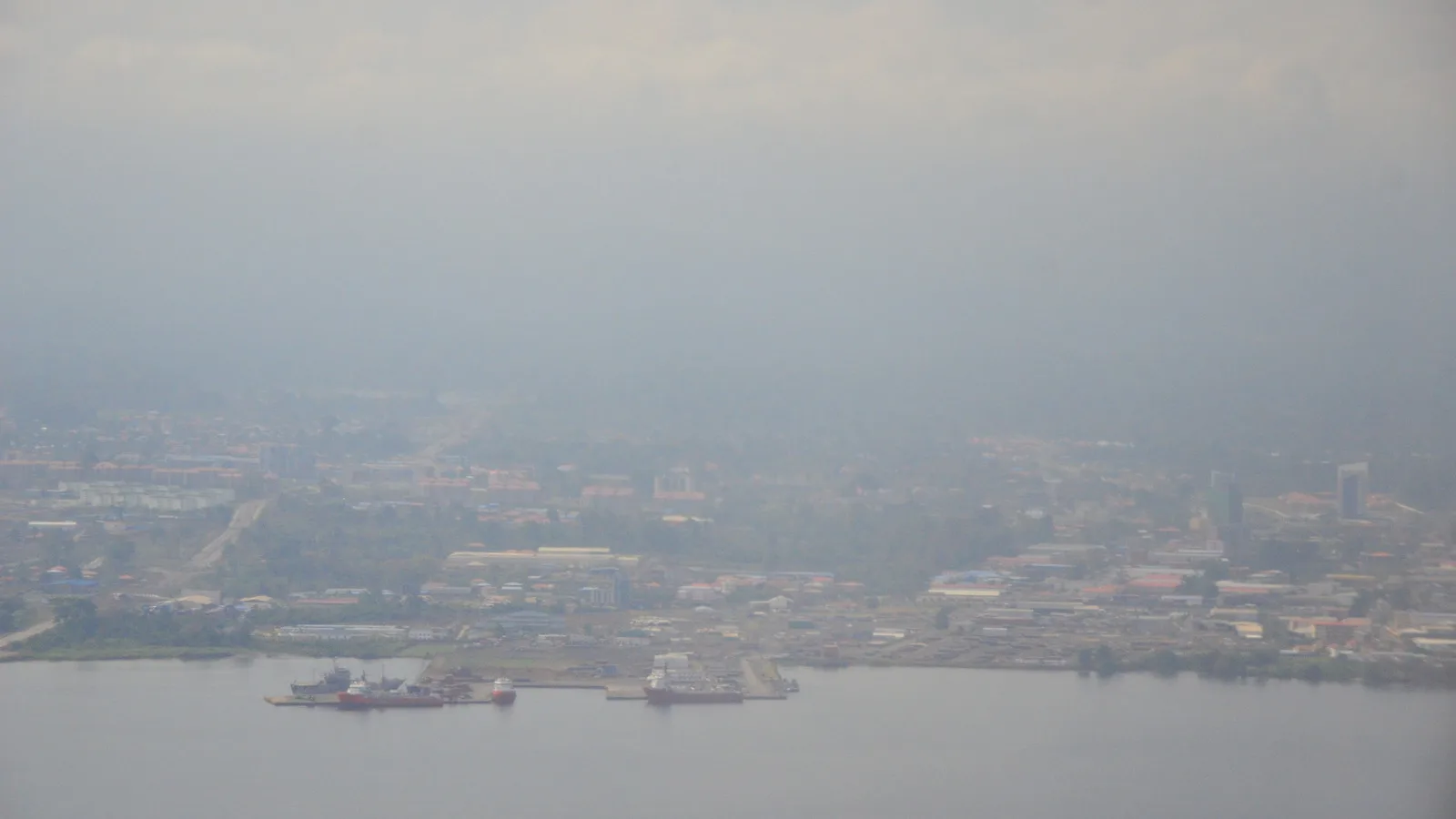
Credit Ben Sutherland, CC BY 2.0, via Wikimedia Commons
Why Equatorial Guinea
Equatorial Guinea is two things at once geographically: an island province in the Gulf of Guinea, where the capital Malabo sits under the volcano on Bioko, and a mainland province between Cameroon and Gabon. Annobon, one of the six nominated sites, is a separate island far to the south.
It is also the only Spanish speaking country in Africa, which is a genuine oddity of the colonial map and shows up in everything from the street signs to the kitchen.
What has been put forward
Four of the six nominations are natural: the Caldera de Luba, the Annobon reserve, Monte Alen and Pico Basile. Monte Alen is mainland rainforest. Pico Basile is the volcano that Malabo sits beneath. The Caldera de Luba is in the south of Bioko, and Annobon is a volcanic island of its own.
The other two are cultural: a neogothic church at Batete, and Corisco, a small island off the mainland coast that has been inhabited far longer than the church has stood.
None of them is inscribed. A tentative list is an inventory of what a state intends to consider nominating, not a queue with a guaranteed end, and the eighteen years Eswatini has waited on one site is a reasonable guide to how long this can take.
Food
The Spanish inheritance is real and shows up in the bread and in the way coffee is taken. Under it the food is Central African: cassava, plantain, forest greens, and peppered soups with fish or bushmeat. Succotash here means the local bean and maize dish rather than the American one.
Practical orientation
Spanish is the official language, with French and Portuguese also official, and Fang and Bubi widely spoken. The currency is the CFA franc. Malabo is on Bioko and Bata is the mainland city, and moving between them means a flight or a ferry.
The US advisory of 7 October 2025 places the country at Level 2, exercise increased caution, for three named risks: crime, health, and arbitrary enforcement of laws. It describes petty crime as common and says local police may lack the resources to respond effectively even to serious crime. On health it is blunt: there are no adequate trauma or ambulance services, and even minor problems may require medical evacuation at the traveler’s own expense. That last point is a reason to read the advisory in full and to think hard about insurance.
Entry requirements vary by nationality and change. This page is not the authority on them.
This page states no entry, health or security requirements, and is not advice. Check your own government’s current guidance before making any decision.
Sources and references
- UNESCO World Heritage Centre: Equatorial Guinea, States Parties and Tentative List
- UNESCO Intangible Cultural Heritage: browse the Lists
- US Department of State: Equatorial Guinea Travel Advisory
These are the authoritative references for the heritage this page discusses; each was checked at source on 13 August 2026. Practical details (entry rules, health guidance, opening times) change constantly. The bodies listed here are authoritative and this page is not.