Eritrea
A city built by an occupier, inscribed together with the neighborhoods it never planned
- Region East Africa
- Country Eritrea
- Type Country
- Reviewed 13 August 2026
- Sources 3
- Length 3 min read
Credit Mheidegger, CC BY 4.0, via Wikimedia Commons
Why Eritrea
One World Heritage property and no intangible heritage elements. But the one property is a whole capital city, which is a different proposition from a ruin or a park.
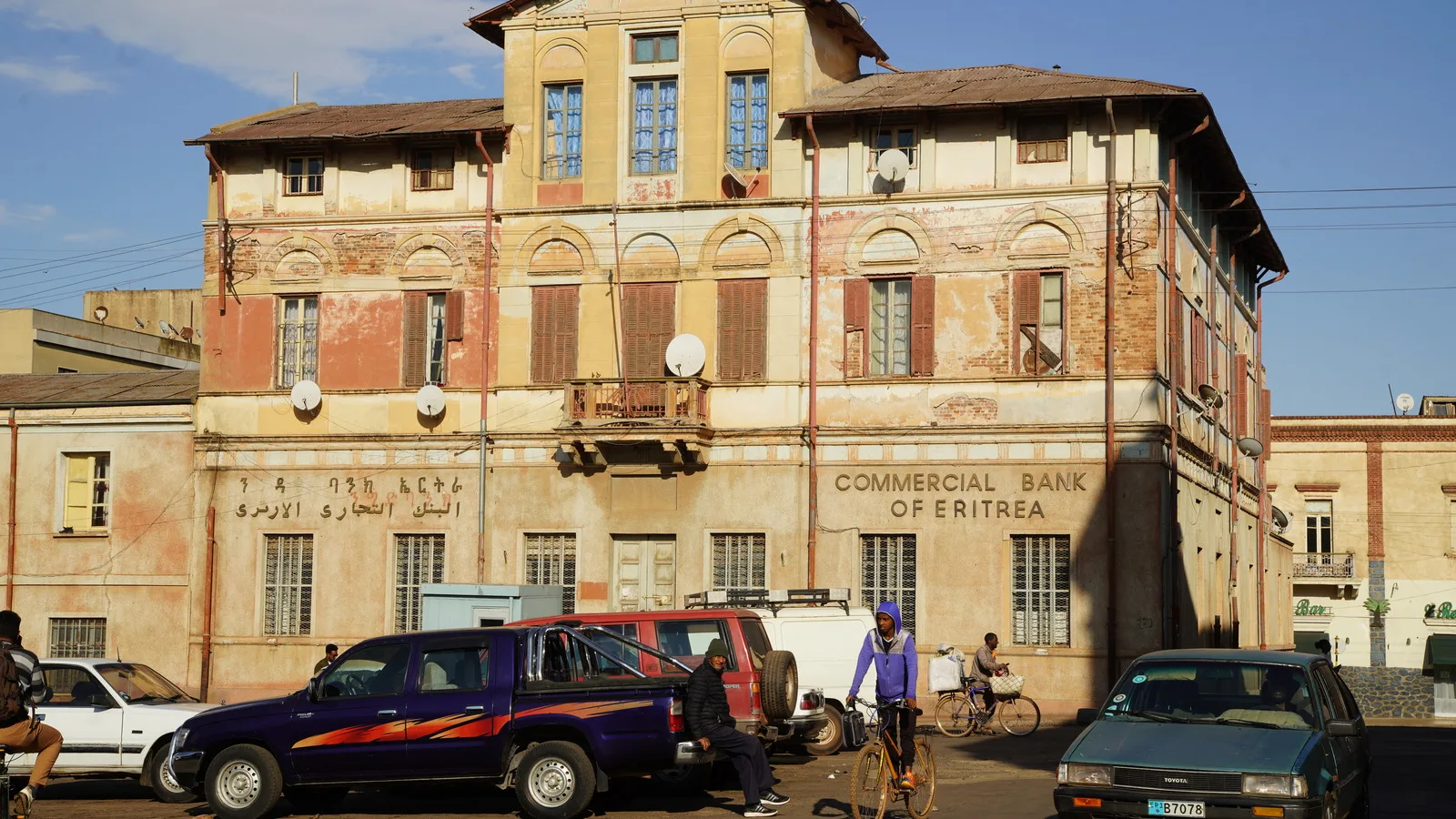
The photograph at the top of this page is the Commercial Bank of Eritrea building: Italian-era, weathered, signposted in three scripts, with satellite dishes on the facade and cars parked in front. Asmara is inscribed and it is also simply in use, and the second fact is what makes it interesting.
Food
Injera, the sour fermented flatbread, is the plate and the cutlery. Zigni is the spiced stew that most often goes on it. The coffee ceremony is long, deliberate and not optional if you are offered it. The Italian period left pasta behind, and it is eaten without irony.
Practical orientation
Tigrinya, Arabic and English are all in official use, and Italian is still heard. The currency is the nakfa. Asmara has the international airport.
Beyond what the advisory block above sets out, the practical constraint worth knowing is that internal travel permits have historically been required for movement outside the capital. Requirements vary and change, and this page is not the authority on them.
This page states no entry, health or security requirements, and is not advice. Check your own government’s current guidance before making any decision.
Sources and references
- UNESCO World Heritage Centre: Eritrea, States Parties
- UNESCO World Heritage Centre: Asmara, A Modernist African City
- US Department of State: Eritrea Travel Advisory
These are the authoritative references for the heritage this page discusses; each was checked at source on 13 August 2026. Practical details (entry rules, health guidance, opening times) change constantly. The bodies listed here are authoritative and this page is not.