Ethiopia
Twelve World Heritage sites, and travel advice that currently rules out much of the map
- Region East Africa
- Country Ethiopia
- Type Country
- Reviewed 11 August 2026
- Sources 3
- Length 5 min read
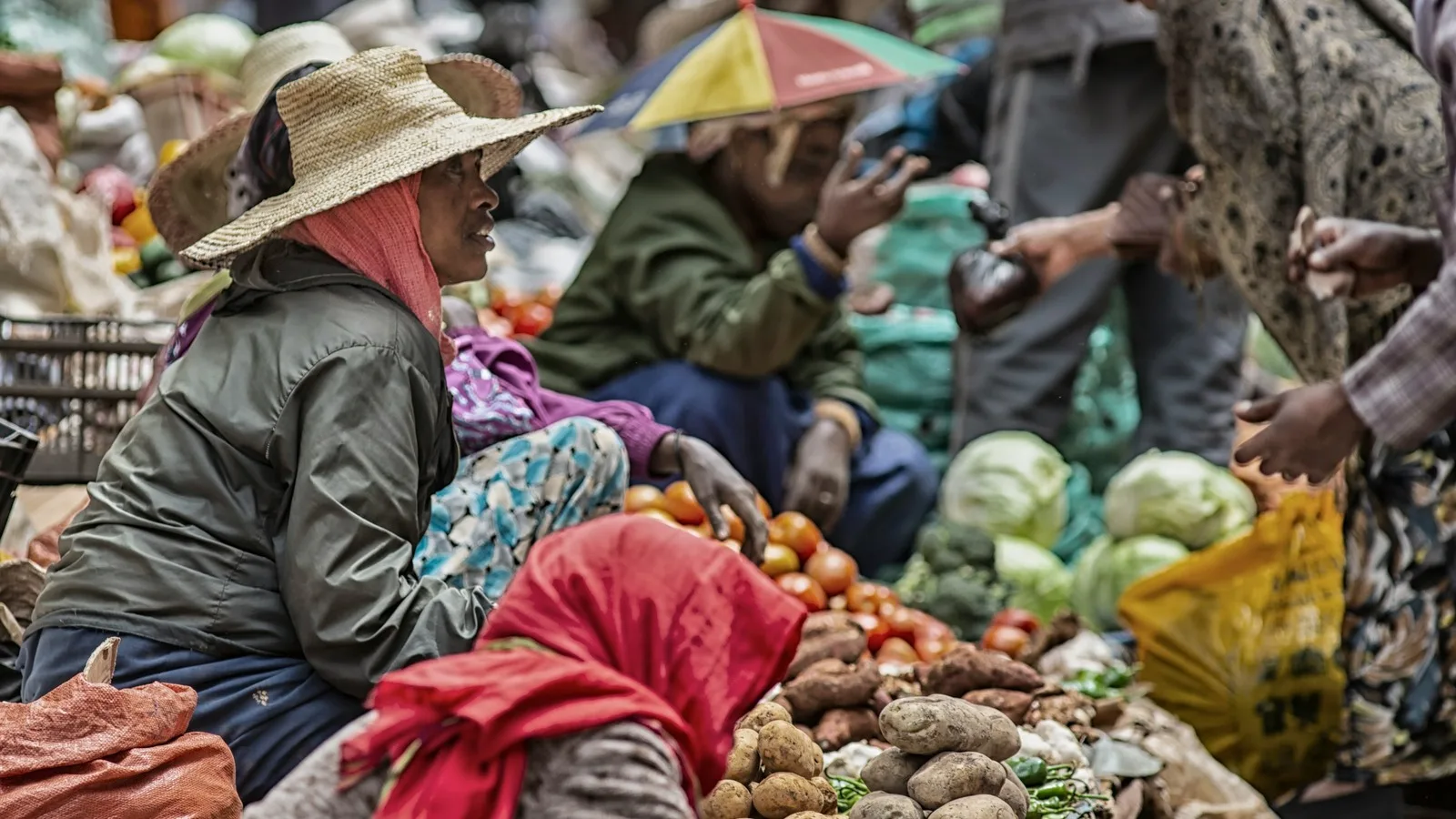
Credit Erik Hathaway, Unsplash
Why Ethiopia
UNESCO lists twelve properties for Ethiopia, ten of them cultural and two natural, on a ratification that dates to 1977. It is one of the deepest heritage records on the continent and it is usually reduced to two entries.
The rock hewn churches at Lalibela and the stelae at Aksum are the two, and this site has written about both, alongside a long piece on the Afar depression and the Danakil by a contributor who works there. Both are linked at the foot of this page and neither is repeated here. What follows is the rest.
Harar Jugol
Harar sits on a plateau in the east of the country, 525 kilometers from Addis Ababa, with deep gorges around it and desert and savannah beyond. The walls that enclose it were built between the thirteenth and sixteenth centuries. It is considered the fourth holy city of Islam, and inside the walls are 82 mosques, three of them dating from the tenth century, and 102 shrines.
The buildings UNESCO singles out are not the mosques but the houses. The traditional Harari house has a form of its own, unlike the domestic layout usual in Muslim countries, and an interior design the inscription calls exceptional. Harar was the capital of the Harari Kingdom from 1520 to 1568, an independent emirate from the seventeenth century, and was brought into Ethiopia in 1887, holding its language and its crafts throughout.
The Gedeo landscape
Along the eastern escarpment of the highlands, the Gedeo cultural landscape covers the twenty kilometers between the top of the escarpment and the lowlands below. It is inscribed for agroforestry: layered cultivation in which large trees shelter enset, the main food crop, under which coffee and other crops grow.
Parts of the forest are set aside as sacred ground where no tree is felled and nothing is planted, and where indigenous species and medicinal plants have survived because of it. Along the ridges stand dense clusters of megalithic monuments, revered by the Gedeo and cared for by their elders.
Food
Injera is the plate. A wide, soft, sour flatbread made from teff, it is spread out and the stews are ladled onto it, and it is torn and used to pick them up. Doro wat, chicken and egg in a long-cooked berbere sauce, is the celebratory one; shiro, ground chickpea or broad bean, is the everyday one. Wednesdays and Fridays are fasting days in the Orthodox calendar, which in practice means the food is vegan, and a fasting platter is one of the best vegetarian meals anywhere.
Practical orientation
Amharic is the working language of the federal government and Oromo, Somali, Tigrinya and many others are spoken across the country. The currency is the birr. Two conventions catch visitors out: Ethiopia keeps its own calendar, which has thirteen months and runs several years behind the Gregorian one, and the clock is counted from dawn rather than from midnight.
Entry requirements, health guidance and internal travel permissions vary and change. The Immigration and Citizenship Services is the authority on the first, your own government on the last, and this page is neither.
Sources and references
- UNESCO World Heritage Centre: Harar Jugol, the Fortified Historic Town
- UNESCO World Heritage Centre: The Gedeo Cultural Landscape
- Immigration and Citizenship Services, Federal Democratic Republic of Ethiopia
These are the authoritative references for the heritage this page discusses; each was checked at source on 11 August 2026. Practical details (entry rules, health guidance, opening times) change constantly. The bodies listed here are authoritative and this page is not.
Travel guides and articles for Ethiopia
-
Article
Rock-Hewn Churches of Lalibela: Visitor and Heritage Guide
Eleven churches cut down into living rock, and the most significant heritage site in Ethiopia. It is also in a region closed to all travel.
-
Article
Aksum: Visitor and Heritage Guide
The capital of a kingdom that traded with Rome and Persia as an equal, marked by giant stelae. Tigray is closed and its flights are suspended.
-
Article
Harar Jugol: Visitor and Heritage Guide
A walled city said to be the fourth holiest in Islam, with 82 mosques inside it. It is also the one site in this cluster you can reach.
-
Article
Konso Cultural Landscape: Visitor and Heritage Guide
Stone terraces worked continuously for 21 generations, and carved wooden figures that UNESCO says record a tradition close to disappearing.
-
Article
Lower Valley of the Awash: Visitor and Heritage Guide
Where Lucy was reconstructed from 52 fragments in 1974, and one of the most important paleontological landscapes anywhere on earth.
-
Article
Best Time to Visit Ethiopia
On Ethiopia the honest answer to when you should go begins with where you are still allowed to, and then with two precisely dated festivals.
-
Travel planning
Ethiopia Visa and Entry Requirements
A visa is required and is applied for online before you fly. Ethiopian Origin ID card holders are the exception worth knowing about.
-
Travel planning
Ethiopia Currency and Money Guide
Ethiopia is a cash society with hard limits on carrying birr across the border, and one receipt decides whether you can change money back.
-
Travel planning
Ethiopia Packing List
Altitude, a malaria line drawn at 2,500 meters and thin medical care outside Addis Ababa decide most of what goes in an Ethiopian bag.
-
Travel planning
Getting Around Ethiopia
Getting around Ethiopia is decided by the advisory before it is decided by timetables. Two of the country's best known routes are closed.
-
Travel planning
Ethiopia Travel Safety Guide
Ethiopia is US Level 3. Three whole regions are closed by UK advice, and one warning speaks directly to travelers of Ethiopian descent.
-
Article
Ethiopia Food Guide
Ethiopian eating is communal, seasoned by a fasting calendar most visitors never hear about, and built on a grain grown almost nowhere else.
-
Article
Ethiopia Culture and Etiquette Guide
Ethiopia keeps its own calendar, its own clock and its own alphabet, and it is the only African country never formally colonized.
-
Article
Ethiopia Festivals and Celebrations
Ethiopia has seven festivals and traditions on UNESCO's intangible heritage list, more than any other country in this series, with fixed dates.
-
Article
Ethiopia and Diaspora Reconnection
Ethiopia never became a diaspora through the Atlantic trade, and the reconnection it offers is a different one. There is also a warning to read.
-
Travel planning
Accessible Travel in Ethiopia
On Ethiopia the accessibility question starts with which regions you can reach and what happens if you need a hospital outside Addis Ababa.
Related reading
-
Article
Afar: Human Origins, Salt and Fire in Ethiopia's Rift
The Afar Depression in northeastern Ethiopia holds one of the deepest records of human origins anywhere, alongside a working salt trade, an acid hydrothermal field and a persistent lava lake. It is also a region the US, UK and Canadian governments currently advise against.
-
Article
Exploring African History Beyond the Textbook
Great Zimbabwe, Lalibela, Timbuktu, Aksum. The sites are not obscure. What is worth knowing is how hard some scholarship worked to explain them away.