The Gambia
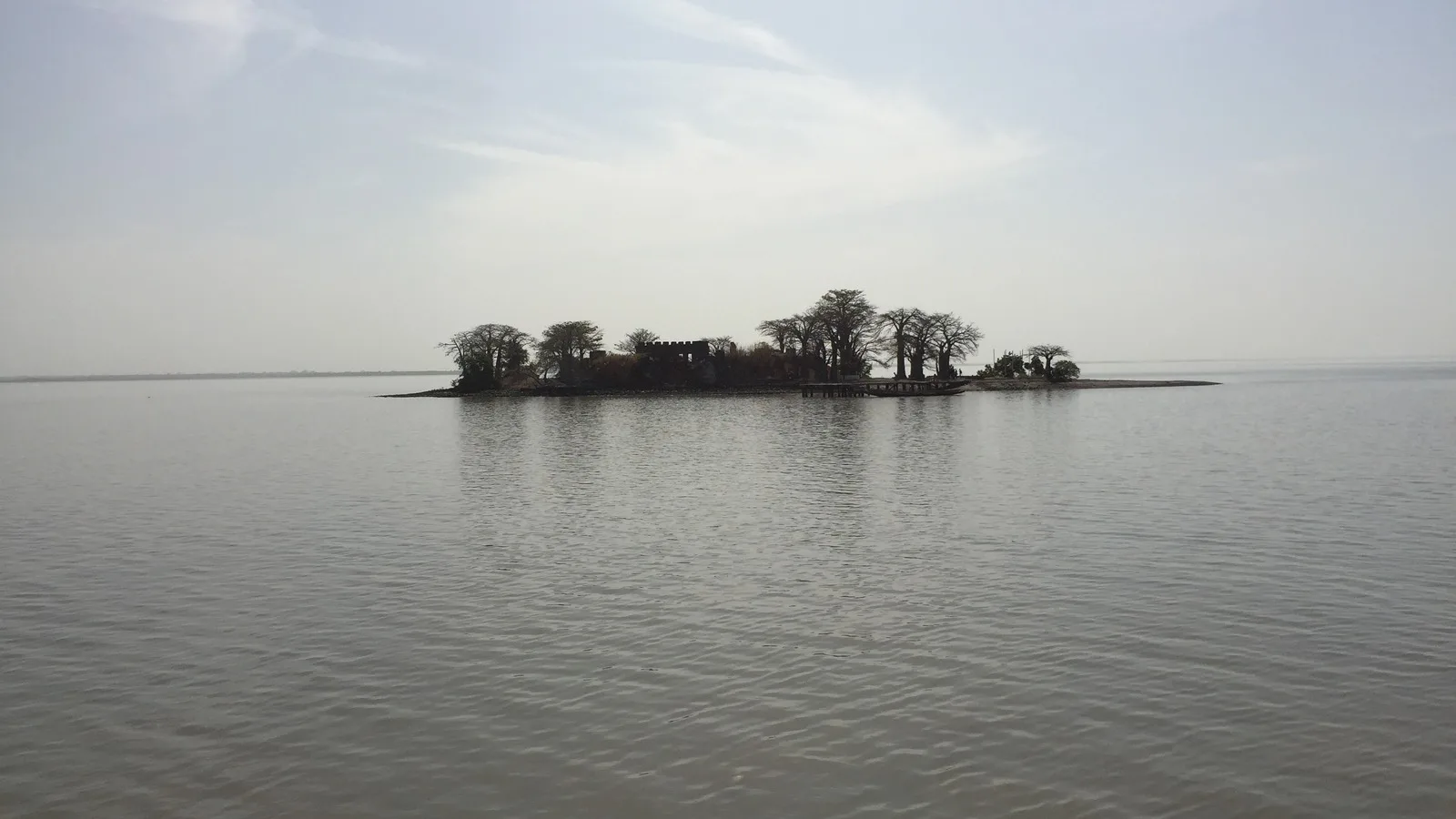
An island that documents the beginning of the trade and its abolition, on the same few acres
- Region West Africa
- Country The Gambia
- Type Country
- Reviewed 13 August 2026
- Sources 4
- Length 3 min read
Credit Tjeerd Wiersma, CC BY 2.0, via Wikimedia Commons
Why the Gambia
The smallest country on mainland Africa, and effectively a river with banks. Two World Heritage properties, one of which it shares with Senegal, and one intangible heritage element, which it also shares with Senegal.
Most visitors arrive for the coast. The reason this page leads elsewhere is sitting in the river about thirty kilometers upstream.
Kunta Kinteh Island
The island and its related sites are inscribed as a testimony to the encounter between Africa and Europe along the River Gambia. UNESCO describes that encounter as a continuum, stretching from pre-colonial and pre-slavery times through to independence.
The citation then says something that is easy to read past. The site is particularly significant for its relation to the beginning of the slave trade and to its abolition. Both. The same few acres of rock in the same river were used to run the trade and later to suppress it, because the British anti-slavery patrols worked from the same positions the traders had held.
It also documents early European access to the interior of Africa, the river being the road. The island is small, low and eroding, and it is reached by boat.
Food
Benachin, the one-pot rice cooked with fish or meat and vegetables, is the Gambian version of a dish the whole region argues over. Domoda is the groundnut stew, thick and faintly sour with tamarind. Yassa crosses from Senegal. The fish along this coast is very good and very cheap.
Practical orientation
English is the official language and Mandinka, Wolof and Pulaar are widely spoken. The currency is the dalasi. Banjul has the international airport, and the country is small enough that the river, rather than the roads, is often the sensible way to move.
The US advisory of 16 January 2026 places the Gambia at Level 2, exercise increased caution, for crime, unrest and inadequate health infrastructure, with no Do Not Travel area. It describes petty street crime and burglary as frequent around Banjul and the tourist areas, and advises against walking alone on beaches and after dark. It also notes the separatist group operating in the Casamance region, which is in Senegal and borders the Gambia to the south.
Entry requirements vary by nationality and change. This page is not the authority on them.
This page states no entry, health or security requirements, and is not advice. Check your own government’s current guidance before making any decision.
Sources and references
- UNESCO World Heritage Centre: Gambia, States Parties
- UNESCO World Heritage Centre: Kunta Kinteh Island and Related Sites
- UNESCO World Heritage Centre: Stone Circles of Senegambia
- US Department of State: The Gambia Travel Advisory
These are the authoritative references for the heritage this page discusses; each was checked at source on 13 August 2026. Practical details (entry rules, health guidance, opening times) change constantly. The bodies listed here are authoritative and this page is not.