Senegal
Seven World Heritage sites, and the one most visitors come for is a question rather than an answer
- Region West Africa
- Country Senegal
- Type Country
- Reviewed 13 August 2026
- Sources 5
- Length 4 min read
Credit Anton Lecock, Unsplash
Why Senegal
Senegal has seven World Heritage properties, more than any of its neighbors, and they are not variations on one theme: two cultural islands, three wild places, a prehistoric landscape shared with the Gambia, and a living cultural landscape in the southeast.
It is also, as of the advisory of 1 December 2025, one of only four countries in Africa at Level 1, the lowest band the US State Department uses. The Casamance carries its own qualifier, set out in the practical section below.
Goree
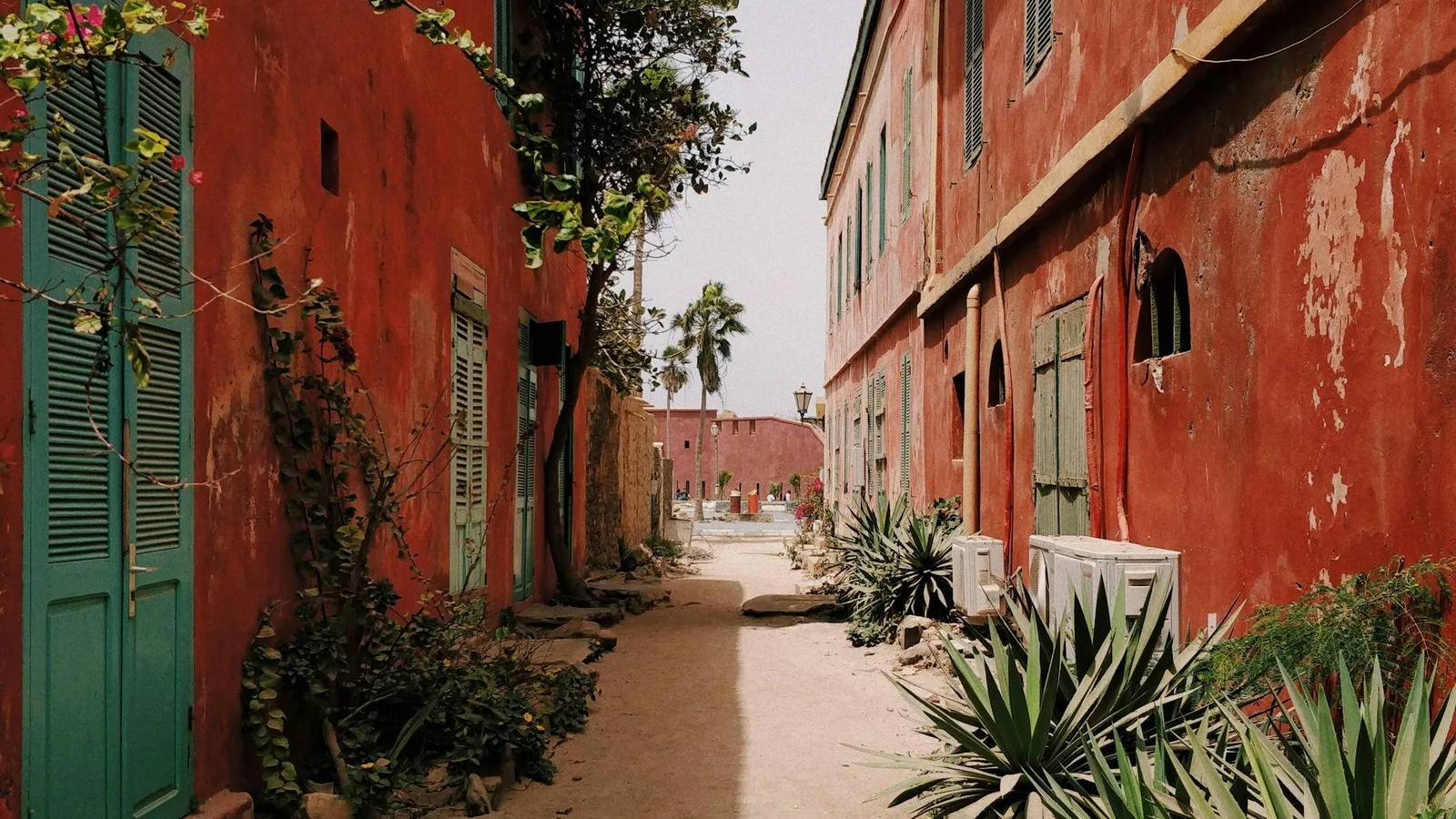
Goree is a small island off Dakar, twenty minutes by ferry. From the fifteenth century to the nineteenth it was, in UNESCO’s words, the largest slave-trading center on the African coast. It was held in succession by the Portuguese, the Dutch, the English and the French.
What the inscription singles out is the architecture, and specifically a contrast: grim slave quarters on one side of a wall, the elegant houses of the traders on the other. The two were built together, by the same economy, and they still stand together. The island is now, again in UNESCO’s words, both a reminder of human exploitation and a sanctuary for reconciliation.
Those are two different jobs for one small island, and Goree is read differently by different visitors: as a memorial, as a place of return, as a contested historical record, and as a pretty village with good light. All of those are happening at once on a few hundred meters of street. Ghana’s Cape Coast Castle raises the same question in a different building, and a reader who has been to one will recognize the problem at the other.
The other six
Saint Louis sits on an island at the mouth of the Senegal River and was the colonial capital. The Djoudj sanctuary north of it carries large numbers of migratory birds. Niokolo-Koba is the big southeastern park, the Saloum delta south of Dakar is mangrove and channel and shell mound, and the Bassari, Fula and Bedik cultural landscapes are the newest of the seven.
None of these is a day trip from Goree. Senegal rewards deciding what kind of trip you are taking before you book it.
Food
Thieboudienne is fish, broken rice and tomato cooked together so the rice takes everything up, and it is treated as the national dish. Yassa is onions cooked down to a sauce with lemon and mustard. Mafe is the peanut stew. Meals are commonly eaten from a shared dish, which is worth knowing in advance.
Practical orientation
French is the official language and Wolof is what is spoken. The currency is the CFA franc. Dakar has the international airport, and the Goree ferry runs from the city.
The US advisory of 1 December 2025 places Senegal at Level 1, exercise normal precautions, and adds one regional exception: exercise increased caution in the Casamance region, in the south, because of crime and landmines. It notes that US embassy personnel may travel there only on main roads and in daylight. That is a specific and serious qualifier attached to an otherwise low rating, and it is worth reading in full rather than in summary.
Entry requirements vary by nationality and change. The Ministry of the Interior is the authority on them, and this page is not.
This page states no entry, health or security requirements, and is not advice. Check your own government’s current guidance before making any decision.
Sources and references
- UNESCO World Heritage Centre: Senegal, States Parties
- UNESCO World Heritage Centre: Island of Goree
- UNESCO World Heritage Centre: Stone Circles of Senegambia
- US Department of State: Senegal Travel Advisory
- Ministry of the Interior and Public Security, Republic of Senegal
These are the authoritative references for the heritage this page discusses; each was checked at source on 13 August 2026. Practical details (entry rules, health guidance, opening times) change constantly. The bodies listed here are authoritative and this page is not.