Heritage
Aksum: Visitor and Heritage Guide
The capital of a kingdom that traded with Rome and Persia as an equal, marked by giant stelae. Tigray is closed and its flights are suspended.
- Country Ethiopia
- Category Heritage
- Reviewed 20 August 2026
- Sources 4
- Length 3 min read
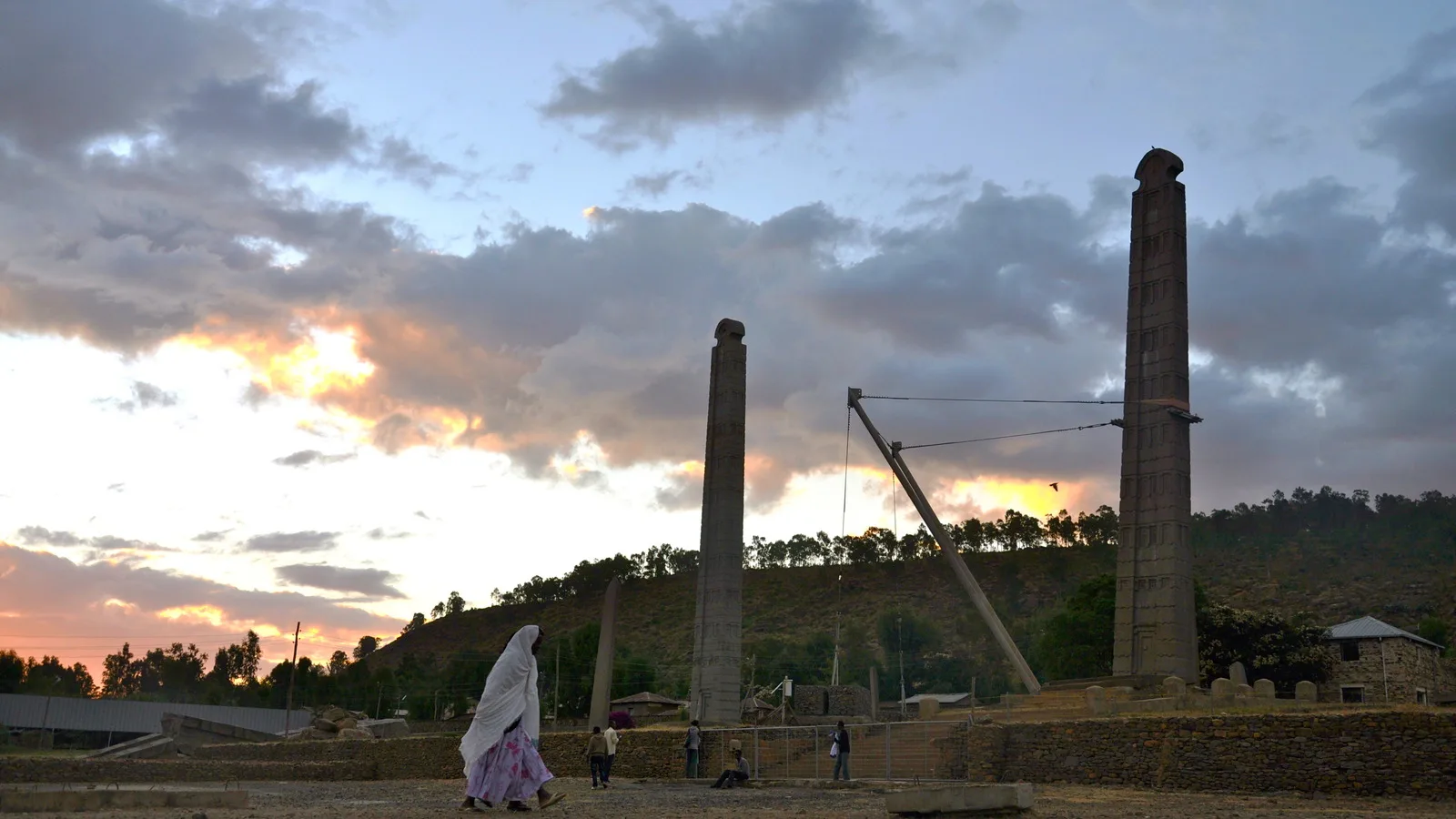
Credit Fabian Lambeck, CC BY-SA 4.0, via Wikimedia Commons
Before anything else
Aksum stands in Tigray region. The UK FCDO advises against all travel to Tigray, and all civilian flights to and from the region have been suspended since 29 January 2026. It records clashes since 26 January between forces aligned with the Tigray People's Liberation Front and the Ethiopian military, reportedly including drone strikes.
The suspension matters practically as well as legally: flying was how nearly every visitor reached Aksum. There is at present no ordinary way in.
Why it is one of the great sites of antiquity
UNESCO describes ruins in the highlands of northern Ethiopia that mark the heart of ancient Ethiopia, and says Aksum symbolizes the wealth and importance of the Aksumite kingdom, which lasted from the first to the eighth centuries of the common era.
The kingdom stood at the crossroads of three continents, Africa, Arabia and the Greco-Roman world, and UNESCO calls it the most powerful state between the Eastern Roman Empire and Persia. In command of the ivory trade with Sudan, its fleets controlled Red Sea commerce through the port of Adulis and the inland routes of north eastern Africa.
That is worth reading twice. This was an African state that dealt with Rome and with Persia as a peer, minted its own coinage, and was named by a third-century Persian writer among the great powers of the world.
What survives
The remains include monolithic obelisks, giant stelae, royal tombs and the ruins of ancient castles, which UNESCO dates between the first and the thirteenth century of the common era. The stelae are the images most people carry: single pieces of granite, carved to represent multi-story buildings, raised as grave markers.
UNESCO records that long after the political decline of the tenth century, Ethiopian emperors continued to be crowned at Aksum. The place stopped being the capital and did not stop being the source of legitimacy, which is a distinction worth holding on to.
Sources
- UNESCO: Aksum, inscribed 1980
- UK FCDO: Ethiopia regional risks
- US State Department travel advisories
- UNESCO: World Heritage properties in Ethiopia
Site description, inscription details and dating read from UNESCO on 20 August 2026. Advisory position and the flight suspension read from the UK FCDO Ethiopia regional risks page the same day. The account of the Ark is given as the position of the Ethiopian Orthodox Church and is not asserted as fact.