Culture
Ethiopia Culture and Etiquette Guide
Ethiopia keeps its own calendar, its own clock and its own alphabet, and it is the only African country never formally colonized.
- Country Ethiopia
- Category Culture
- Reviewed 20 August 2026
- Sources 4
- Length 2 min read
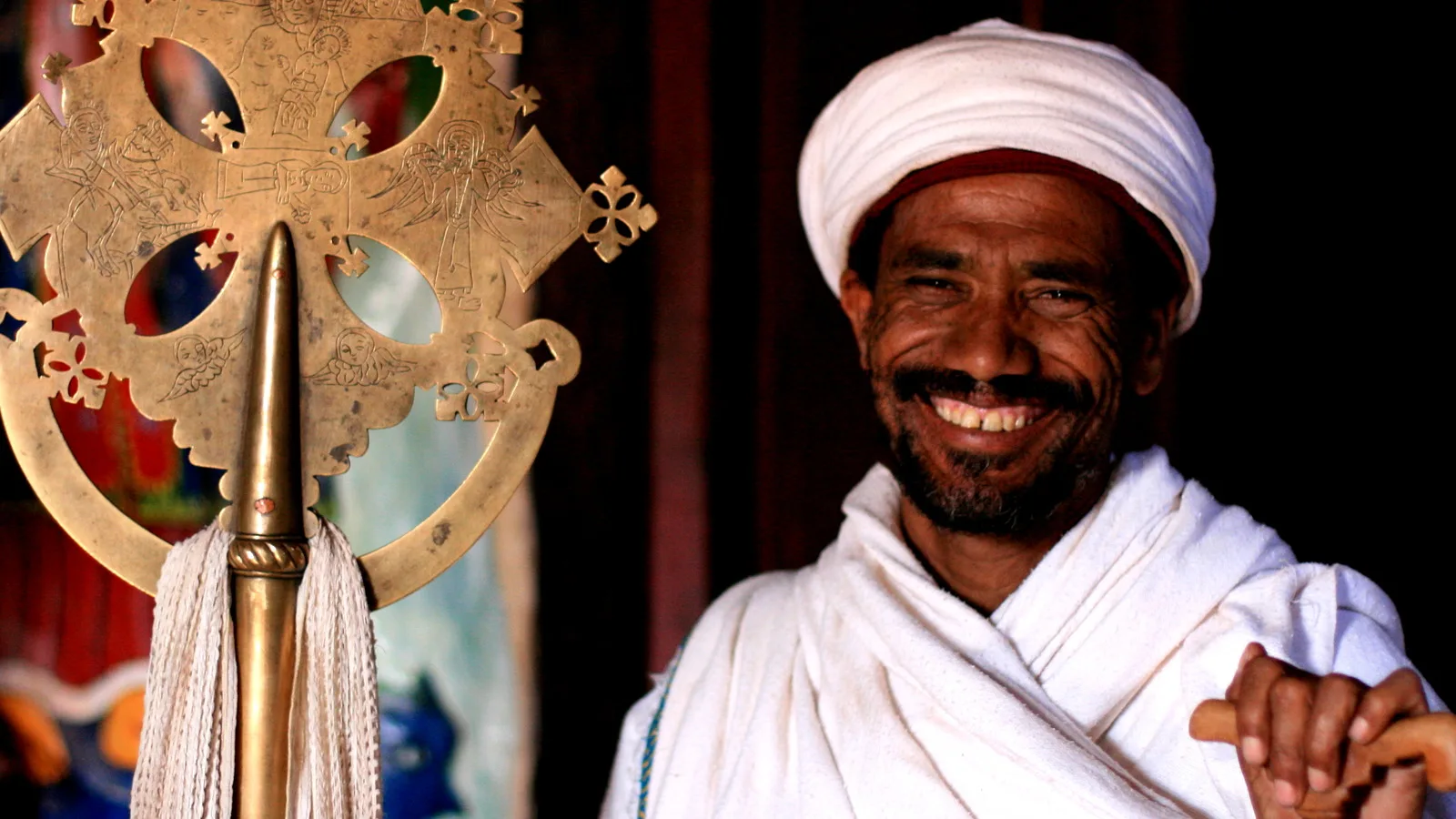
Credit Damien Halleux Radermecker, CC BY-SA 2.0, via Wikimedia Commons
Ethiopia is the one country on the continent that a visitor cannot approach through the usual colonial frame, because it was never formally colonized. That single fact runs through everything from the calendar on the wall to the way the country talks about itself, and it is the most useful thing to understand before arriving.
Faith, and how much of it there is
Ethiopian Orthodox Christianity and Islam are both ancient here rather than introduced. UNESCO records that Harar Jugol is said to be the fourth holiest city of Islam and counts eighty-two mosques within its walls, three of them dating from the tenth century, alongside one hundred and two shrines. It describes Lalibela as a high place of Ethiopian Christianity and still today a place of pilgrimage and devotion.
Both are living practice, not heritage. At churches, mosques and shrines, cover shoulders and knees, remove shoes where others do, and ask before photographing anyone at prayer. Where a place is closed to you, that is a rule of the place and not a negotiation.
At the practical level
- Greet properly and unhurriedly. A rushed greeting reads as a slight.
- Use the right hand for eating, giving and receiving.
- Ask before photographing people, and accept a refusal without argument.
- Dress modestly, particularly at religious sites and in Harar.
- Expect security checkpoints and comply with them calmly. The FCDO advises checking officials' credentials and then following instructions.
- Amharic is the working language of the federal government, and it is written in the Ge'ez script, which Ethiopia did not borrow from anywhere.
Sources
- UNESCO: Gada system of the Oromo, inscribed 2016
- UNESCO: Rock-Hewn Churches, Lalibela
- UK FCDO: Ethiopia safety and security
- UNESCO: intangible cultural heritage in Ethiopia
Heritage descriptions and the Gada account read from UNESCO on 20 August 2026: the Harar Jugol and Lalibela World Heritage inscriptions and the Gada system intangible heritage inscription. Security conduct advice from the UK FCDO safety and security page. Calendar and clock practice is given as general cultural context.