Heritage
Fort Jesus Mombasa: Visitor and Heritage Guide
Built in 1593 to take the Indian Ocean trade routes, and fought over for three centuries. What stands at Mombasa now, and how to visit it.
- Country Kenya
- Category Heritage
- Reviewed 16 August 2026
- Sources 2
- Length 2 min read
Credit Mutisya Maingi, CC BY-SA 4.0, via Wikimedia Commons
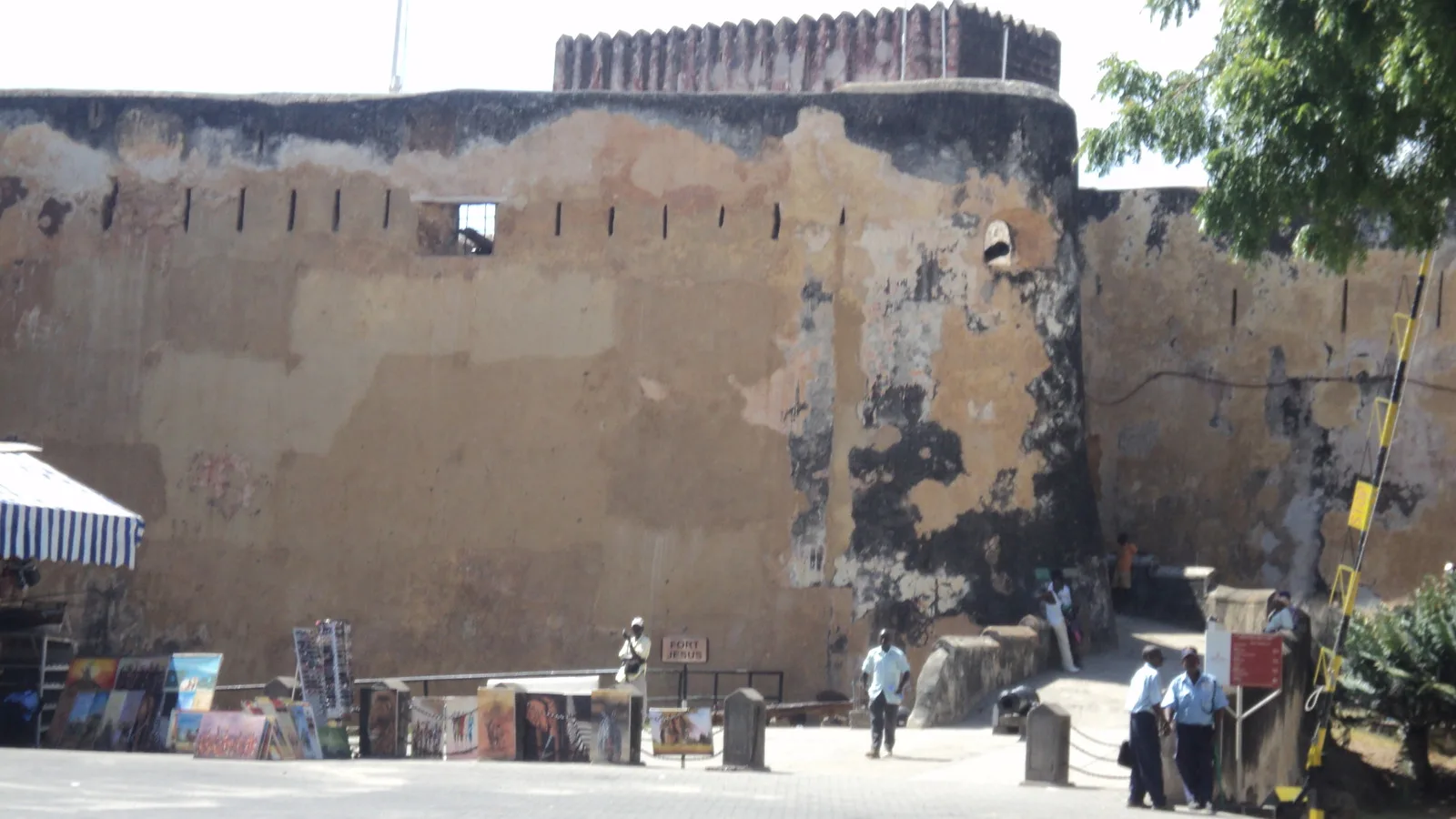
Fort Jesus sits on a spur of coral rock at the edge of Mombasa Old Town, above the harbor entrance it was built to control. It is the most visited historic building in Kenya, and the most consequential: it marks the moment Europe took the sea route that had belonged to others.
History
The Portuguese built it between 1593 and 1596, to designs by the Italian architect Giovanni Battista Cairati, and held it for roughly a century. UNESCO describes it as one of the most outstanding and best preserved examples of sixteenth century Portuguese military fortification, and as bearing testimony to the first successful attempt by Western civilization to rule the Indian Ocean trade routes, which until then had remained under Eastern influence.
It did not stay Portuguese. The fort changed hands repeatedly between Portuguese, Omani Arab and later British control, and its structures carry the alterations each made. UNESCO reads those transformations as physical evidence of the interchange between peoples of African, Arab, Turkish, Persian and European origin who fought for this port.
What you will see
The property covers 2.36 hectares including the moat and immediate surroundings. The plan is the thing to notice: five bastions, imposing walls, and proportions that were deliberate. The design reflects a Renaissance conviction that perfect proportion and geometric harmony are found in the human body, and the fort is laid out accordingly.
Inside are the Omani house, the cisterns, gun emplacements, and a museum holding material from the site and from the coast, including finds from a Portuguese ship wrecked below the walls. Some of the interior walls carry Portuguese paintings. Allow a couple of hours, and take the guided tour: the building does not explain itself.
Getting there
The fort is in Mombasa, at the edge of the Old Town, and is straightforward to reach: Mombasa is served by its own international airport and by the Madaraka Express railway from Nairobi. From most coastal hotels it is a short drive.
Do not treat it as a standalone stop. Mombasa Old Town begins at the fort gate, and the carved doors, balconies and narrow streets behind it are the other half of the visit. An hour in the fort and an hour in the streets is a better morning than two hours in either.
Visiting respectfully
- Go early: the coast is hot by the middle of the day and there is little shade on the walls
- Take a guide from the site rather than one who attaches himself at the gate
- The Old Town outside is residential, so ask before photographing people or doorways
- Cover shoulders and knees, which matters more in the Old Town than in the fort
- Watch your footing on the ramparts and steps, which are original and uneven
Sources
- UNESCO World Heritage Centre: Fort Jesus, Mombasa
- National Museums of Kenya: custodian of the national heritage sites
Dates, dimensions, the architect and the description of the property are UNESCO’s own wording for inscription 1295. Opening hours and fees are the National Museums of Kenya’s to publish and are deliberately not stated here.