Heritage
Harar Jugol: Visitor and Heritage Guide
A walled city said to be the fourth holiest in Islam, with 82 mosques inside it. It is also the one site in this cluster you can reach.
- Country Ethiopia
- Category Heritage
- Reviewed 20 August 2026
- Sources 4
- Length 3 min read
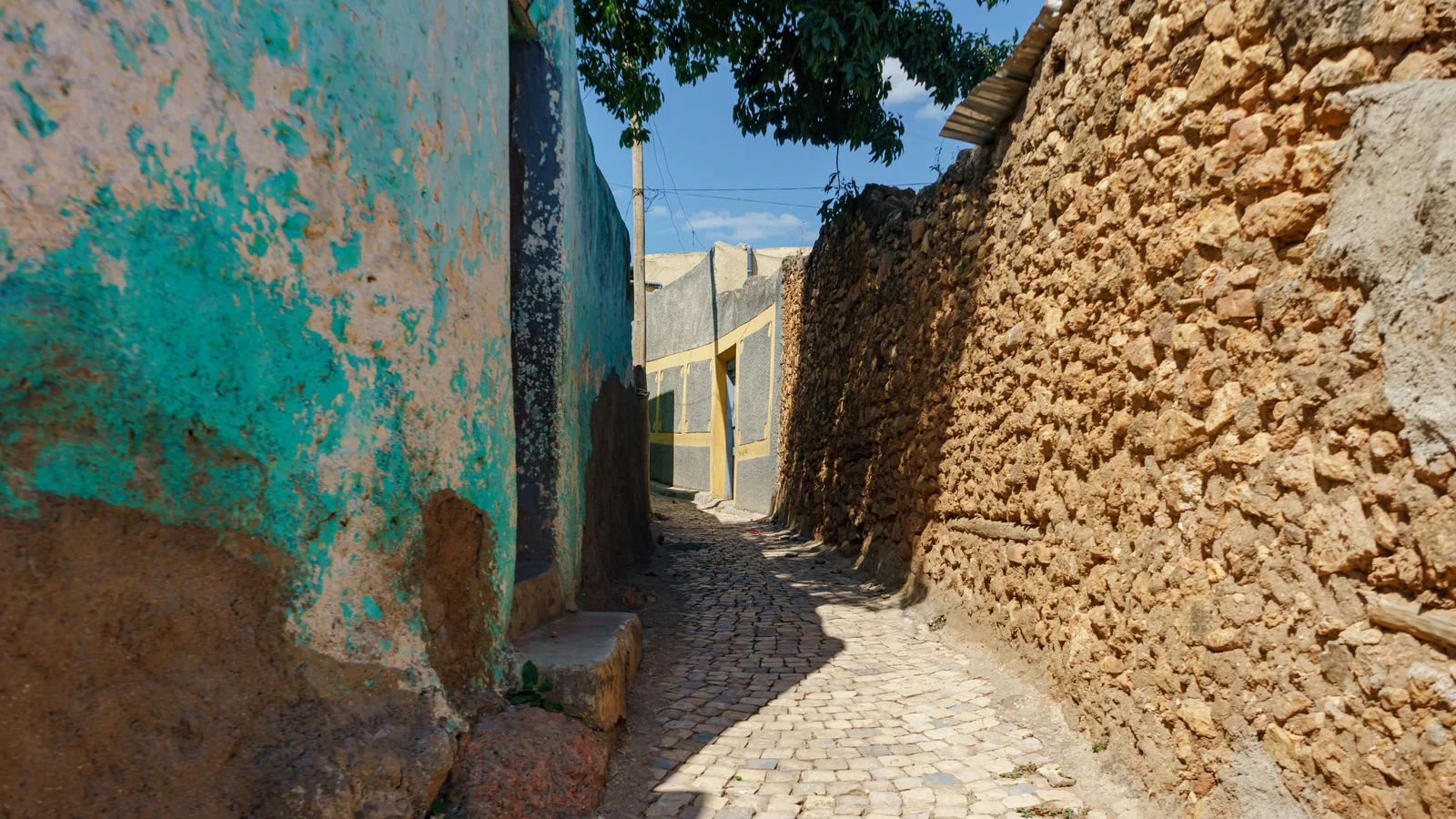
Credit Ninara31, CC BY 2.0, via Wikimedia Commons
The one that is open
Harar Jugol sits in the Harari region, which is named nowhere in the FCDO regional risks for Ethiopia. Of the five heritage sites in this cluster it is the only one carrying no travel restriction of its own, and we say so plainly because a reader trying to work out where they can actually go is better served by that sentence than by five pages of uniform caution.
The country-level advice still applies. Ethiopia is US Level 3, Reconsider Travel, and the FCDO records a threat of terrorism across the country. But there is no regional prohibition on Harar, and that makes it a different proposition from Lalibela or Aksum.
The city
A fortified historic town in the east of the country, standing on a plateau cut by deep gorges and surrounded by desert and savanna. The walls around this sacred Muslim city were built between the thirteenth and sixteenth centuries.
UNESCO records that Harar Jugol is said to be the fourth holiest city of Islam, and counts 82 mosques inside the walls, three of them dating from the tenth century, together with 102 shrines. Inscribed in 2006 under criteria two, three, four and five.
Shuwalid
UNESCO inscribed the Shuwalid festival on the Representative List of Intangible Cultural Heritage in 2023. It is a three day Harari festival marking the end of six days of fasting that compensate for omissions during Ramadan, celebrated at the shrines of Aw Shulum Ahmed and Aw Akebara, which stand at the main entrance gates of the walled city.
It opens with supplications and spiritual songs, moves through readings of scripture, music and dance, and closes with words of blessing, bringing together community members of all ages and genders and giving elders a platform to pass on what they know. It is the most reachable major festival in this cluster, for the same reason the city is.
Practical
- Dress modestly. This is a sacred city in ordinary daily use, not a museum quarter.
- The old town is narrow lanes and uneven ground, which matters for anyone with limited mobility.
- Ask before photographing people, houses or shrines, and accept a refusal.
- Harar lies below the CDC's 2,500 meter malaria transmission line. Take that to a travel clinic with your route.
- Cash. Card acceptance and ATMs are unreliable outside the largest cities.
Sources
- UNESCO: Harar Jugol, the Fortified Historic Town, inscribed 2006
- UNESCO: Shuwalid festival, inscribed 2023
- UK FCDO: Ethiopia regional risks
- UNESCO: World Heritage properties in Ethiopia
Site description and inscription details read from UNESCO on 20 August 2026, and the Shuwalid account from its 2023 intangible heritage inscription. The absence of a regional restriction was established by reading the UK FCDO Ethiopia regional risks page in full on the same day; Harari region appears nowhere in it. Malaria elevation from the US CDC destination page.