Food
Kenya Food Guide
Ugali, sukuma wiki, nyama choma and the Swahili coast. What Kenyans actually eat, and how the coast became a different cuisine.
- Country Kenya
- Category Food
- Reviewed 16 August 2026
- Sources 2
- Length 2 min read
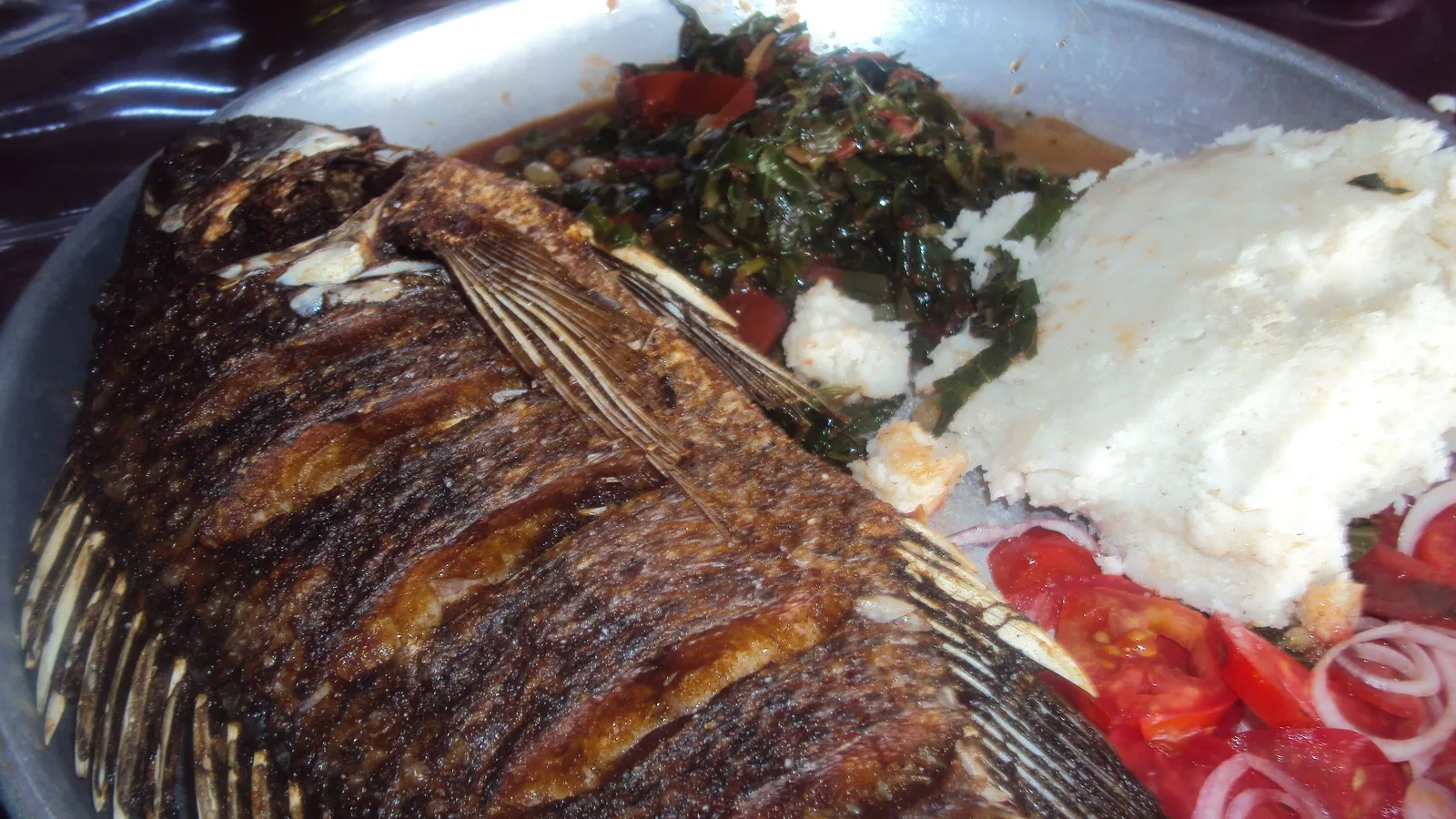
Credit Napendakukula, CC BY-SA 4.0, via Wikimedia Commons
Kenyan food divides roughly in two. Inland it is starch, greens and grilled meat, eaten in quantity and without ceremony. On the coast it is a Swahili cuisine of coconut, tamarind and spice that belongs to the Indian Ocean as much as to Africa. Most visitors only meet the first.
The staples
- Ugali: maize flour cooked stiff, the national staple, torn by hand and used to lift the rest
- Sukuma wiki: collard greens stewed with tomato and onion, the everyday vegetable
- Nyama choma: meat grilled slowly over charcoal, usually goat, and a social occasion
- Kachumbari: a fresh tomato and onion salad that cuts through everything else
- Githeri: maize and beans boiled together, plain, filling and genuinely good
- Chapati: soft, layered and a legacy of Indian Ocean and South Asian migration
- Mandazi: lightly sweet fried dough, eaten with tea at any hour
The Swahili coast is a different cuisine
From Mombasa to Lamu the cooking changes. Coconut milk, tamarind, cardamom, cumin and chilli arrive, and rice displaces ugali. Look for pilau and biryani, wali wa nazi, rice cooked in coconut milk, and mahamri, the cardamom doughnut eaten with bean stew for breakfast.
This is not fusion in the modern sense. It is what a thousand years of monsoon trade across the Indian Ocean produced, the same exchange that built the towns the heritage pages in this cluster are about. The food is the most legible surviving evidence of it.
Street food and where to eat
The place to seek out is a local eating house, often with a short menu and no printed one, where the right question is what is ready. Nyama choma is its own institution: a butchery where you choose the meat, it is weighed, grilled and brought to the table on a board with ugali and kachumbari, and the afternoon disappears.
On the street, look for roast maize, samosas, kebabs, and on the coast the evening food markets. The sensible approach is the usual one: eat where there is a queue of local customers, eat things cooked hot in front of you, and give your stomach a few days before raw salads and juices with ice.
Dietary needs
- Vegetarian: workable, since githeri, sukuma wiki, beans and chapati are everywhere
- Vegan: harder, because ghee, milk and stock are common. Ask specifically rather than generally
- Halal: widely available, and the norm on the coast and in Nairobi neighborhoods like Eastleigh
- Indian vegetarian food is excellent in Nairobi and Mombasa, and a reliable fallback
- Chilli: Kenyan food inland is not generally hot, so ask if you want it that way
- Allergies: carry a written explanation, since kitchens are busy and English is one of several languages
Drinks
Chai is the default: black tea boiled with milk and sugar, sweeter than most visitors expect and offered constantly. Refusing it is fine; accepting it is better. On the coast try tangawizi, the ginger tea, and fresh coconut cut in front of you.
Kenya grows some of the best coffee in the world and historically exported nearly all of it, which is why the cup in an ordinary cafe could be a disappointment. That has changed in Nairobi, where a real coffee culture now exists. Beer is widely available; traditional brews vary by region and are best approached through someone local.
Sources
- National Museums of Kenya: custodian of the national heritage sites
- UNESCO World Heritage Centre: Lamu Old Town
Dish names and preparations vary by region and household, and this article describes what is commonly served rather than a single authoritative version of any of it. The Indian Ocean exchange that shaped the coastal cuisine is described in UNESCO’s account of Lamu Old Town.