Events and Festivals
Kenya Festivals and Celebrations
Maulidi at Lamu has been held since the nineteenth century. What Kenya celebrates, when it falls, and how to attend without being a problem.
- Country Kenya
- Category Events and Festivals
- Reviewed 16 August 2026
- Sources 3
- Length 2 min read
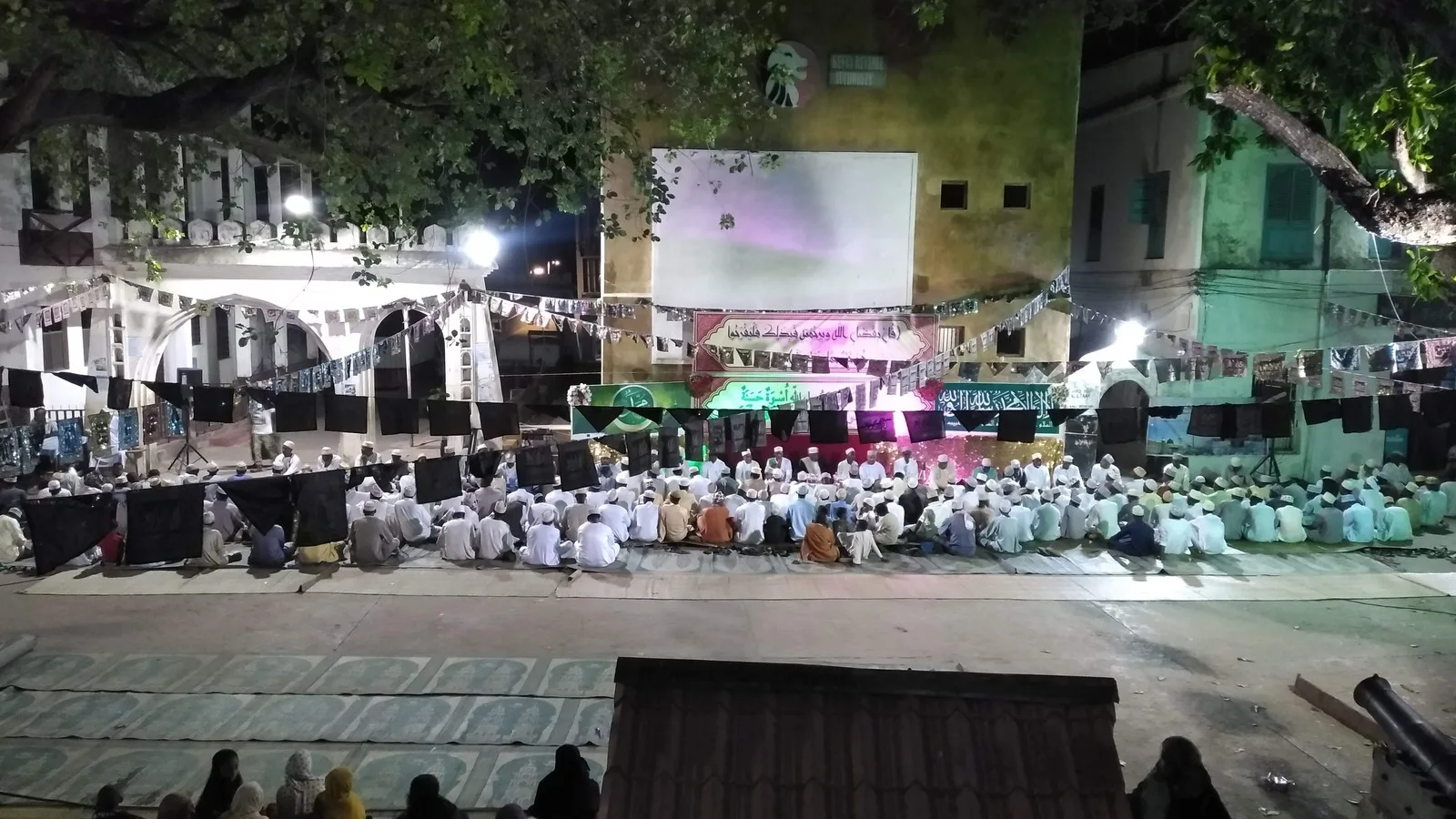
Credit Ahmedshayo14, CC BY-SA 4.0, via Wikimedia Commons
Kenya’s calendar has two quite different kinds of occasion on it: religious festivals that are centuries old and belong to the communities that hold them, and cultural festivals of more recent invention that exist partly to be visited. Both are worth going to. They ask different things of you.
Maulidi at Lamu
The oldest and the most striking is Maulidi, the commemoration of the birth of the Prophet Muhammad, held on Lamu island. UNESCO records that Lamu has hosted major Muslim religious festivals since the nineteenth century, and names the annual Maulidi and cultural festivals as part of what makes the town a center for Islamic and Swahili learning.
It draws pilgrims from across the region and fills an island with very little accommodation. Because it follows the Islamic lunar calendar it moves through the solar year, roughly eleven days earlier each time, so it cannot be pinned to a month in advance. Check the date, then book, in that order.
This is a religious occasion first. Visitors are received with the hospitality Lamu is known for, and that is a reason for more care rather than less.
Lamu has hosted major Muslim religious festivals since the 19th century, and has become a significant centre for the study of Islamic and Swahili cultures.UNESCO World Heritage Centre, on Lamu Old Town
The cultural festivals
Alongside it sits the Lamu Cultural Festival, a secular celebration of Swahili culture with dhow and donkey races, poetry and music, held annually and fixed to the solar calendar. It is the easier of the two to plan around and the more obviously welcoming to outsiders.
Elsewhere the pattern repeats: cultural festivals in the north around Lake Turkana bringing together communities who live at some distance from one another, coastal carnivals at Mombasa, and agricultural and county shows that are genuinely local events rather than performances. Ask locally what is on while you are there. The answer is often something that appears in no guidebook.
Planning a visit around one
Dates are the difficulty. A religious festival on the lunar calendar moves. A cultural festival can be moved or postponed by its organizers, sometimes at short notice, and occasionally by the security situation. Do not book a non refundable trip against a date you found on a blog.
Confirm with the organizers or a local operator close to the time, and book accommodation early in a festival town, because everyone with a connection to that place is also coming home. On Lamu that constraint is severe: it is a small island reached by boat.
Attending respectfully
- Ask before photographing anyone, and accept a refusal without negotiating it
- Never photograph a religious ritual without explicit permission, and often not even then
- Dress as you would for a serious public occasion, with shoulders and knees covered
- At a religious festival, follow what the crowd does, and stand back if unsure
- Do not stand in front of people who have come for this, in order to film it
- During Ramadan, do not eat or drink in the street in daylight on the coast
- A local guide is worth paying for, and will keep you from three mistakes before noon
Sources
- UNESCO World Heritage Centre: Lamu Old Town
- National Museums of Kenya: custodian of the national heritage sites
- UK FCDO: Kenya travel advice
Festival dates are set by the communities and organizers that hold them, and the lunar ones move. No specific date is given on this page, because a date written here would expire without any sign that it had. Confirm locally.