Travel Planning
Best Time to Visit Madagascar
Cyclones from November to April, cool dry highlands from May to October, and an east coast that rains all year. Timing a trip to Madagascar.
- Country Madagascar
- Category Travel Planning
- Reviewed 19 August 2026
- Sources 3
- Length 2 min read
Credit Hardscarf, CC BY-SA 3.0, via Wikimedia Commons
Madagascar has one broad seasonal pattern and at least three climates layered on top of it, so the useful question is not when to go but where you are going and what you want to be doing when you get there.
The broad pattern is simple enough. A hot wet season from November to April, a cooler dry one from May to October, and a cyclone season that sits inside the first of those.
The wet season, and the cyclones
November to April is hot, humid and green, and it is when the island looks the way the photographs promise. It is also the cyclone season, which the Foreign, Commonwealth and Development Office gives as November to April, and Madagascar takes more cyclones and takes them harder than its neighbors.
The consequence is not rain. It is roads. An unsurfaced route washed out by a storm can cut a region off for days rather than hours, and an itinerary with a tight connection at the end of it has no slack to absorb that. Travel in these months by all means, and build in spare days and buy insurance that covers delay.
The dry season, and what it costs you
May to October is the easier half of the year for moving around: drier roads, less humidity, and comfortable days. In the highlands it is genuinely cold at night, which visitors who packed for a tropical island discover on the first evening in Antananarivo.
What you give up is some of the wildlife. Many species are less active in the cool months and some are hard to see at all. The compromise most itineraries settle on is the shoulder, in April and May or in October and November, when the roads are usable and the forest is awake.
Choosing your window
- For wildlife and green landscape, come between November and April and insure for delay.
- For roads, walking and comfortable days, come between May and October.
- For the best of both, aim at the shoulders in April and May or October and November.
- For whale watching off the east coast, come between July and September.
- Pack a warm layer whenever you come. The highlands are cold at night all year.
- The eastern rainforest rains in every month. Bring the jacket regardless.
The east, the west and the middle
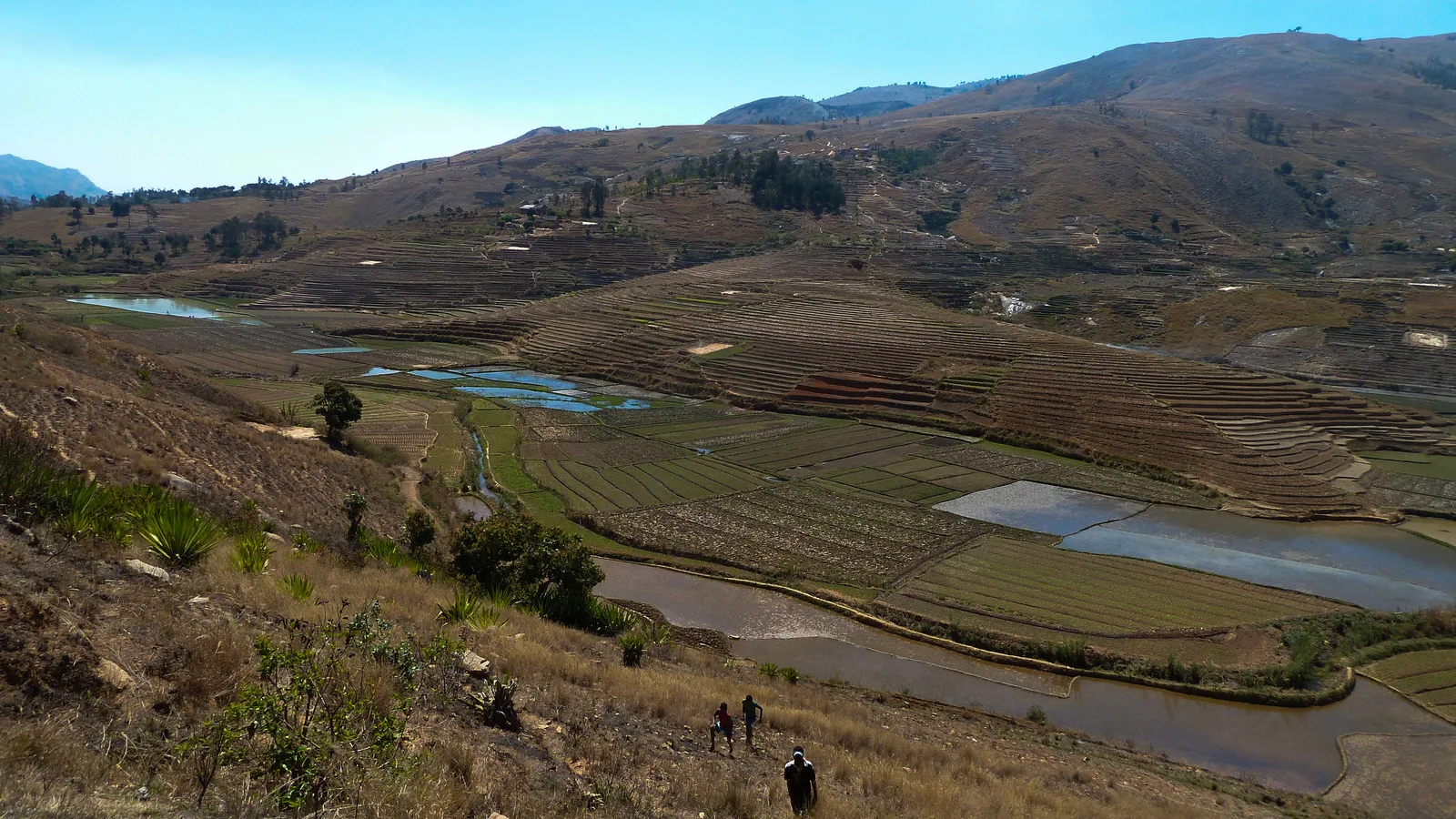
The eastern side of the island catches the trade winds and is wet all year, which is why the rainforest is there. The highlands in the middle sit above a thousand meters and are temperate rather than tropical, with terraced rice fields that look more like Southeast Asia than like Africa, which is a hint the diaspora article picks up. The southwest is dry to the point of desert and holds the spiny forest and the baobabs.
A trip that crosses all three in a fortnight is possible and is mostly a trip spent in a vehicle. Choosing two is usually the better journey.
Sources
- UK FCDO: Madagascar safety and security
- UK FCDO: Madagascar travel advice
- Madagascar destination guide
The cyclone season dates are the Foreign, Commonwealth and Development Office's, read on 19 August 2026, alongside its guidance on road conditions after storms.