Culture
Morocco Culture and Etiquette Guide
Morocco is Amazigh and Arab, and both languages are official. Knowing which greeting, which hand and which moment to photograph is most of what a visitor needs.
- Country Morocco
- Category Culture
- Reviewed 19 August 2026
- Sources 4
- Length 2 min read
Credit Jorge Franganillo, CC BY 2.0, via Wikimedia Commons
Morocco is an Arab country and an Amazigh one, and the constitution says both. Arabic and Tamazight are the official languages, French does a great deal of business and Spanish is common in the north. Which of those you hear depends on where you are standing, and none of them is a substitute for the others.
Say Amazigh rather than Berber. The older word came from outside and the people it describes did not choose it.
The medina is a neighborhood
The single most useful adjustment a visitor can make is to stop reading the old city as an attraction. UNESCO describes the Medina of Fez as transmitting a way of life, skills and a culture that persist and are renewed, and in the same document records an over-populated quarter and buildings threatened with collapse. Both halves are one fact: people live there.
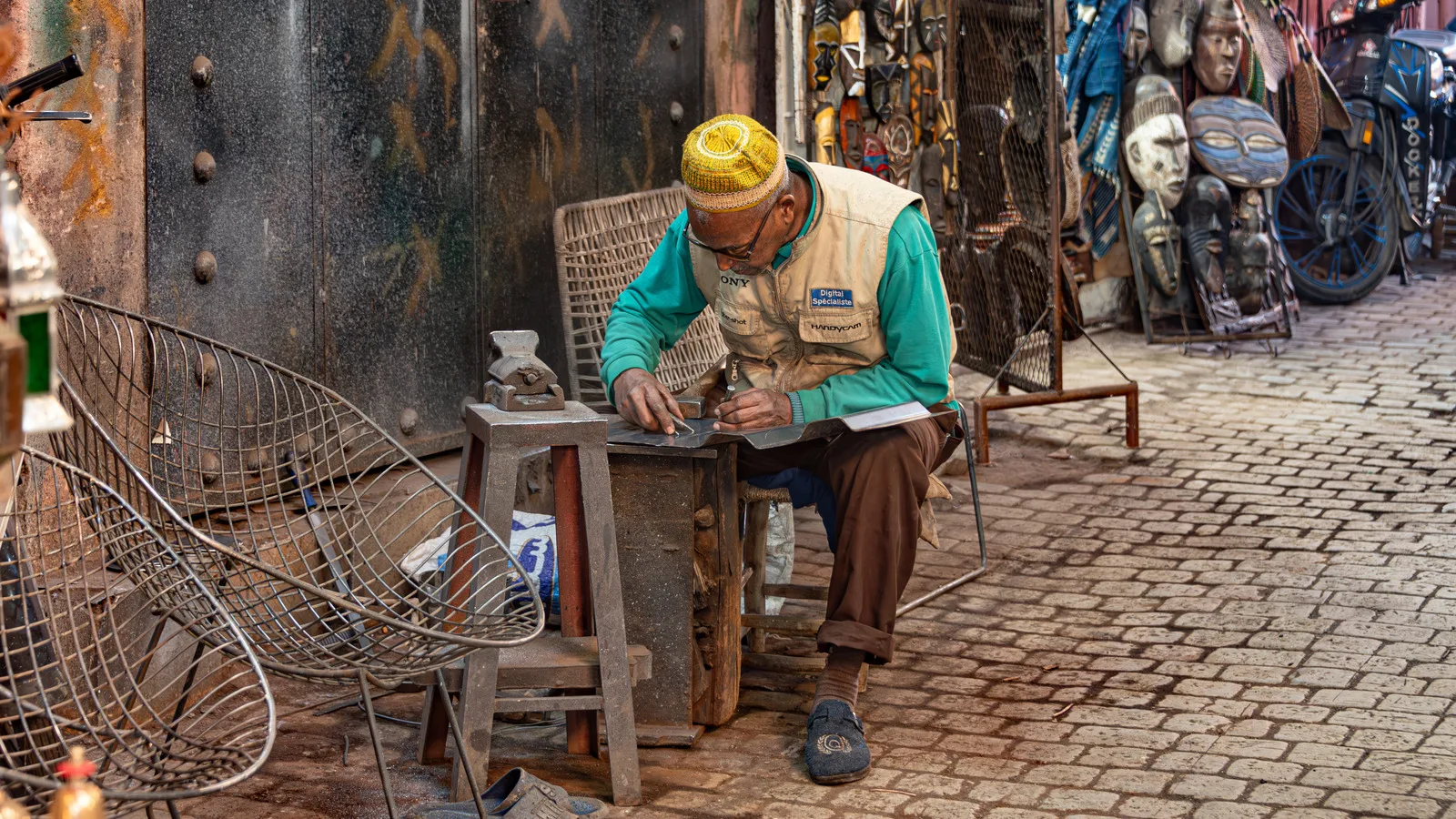
That changes what a walk through the tanneries is. It is a tour of a workplace, conducted at the pace of the work, and a good deal of what you are shown is somebody's front door. Ask before photographing, and accept no as an answer without negotiating it.
What is expected
The last of those is stated as law rather than as advice about who should travel.
- Cover shoulders and knees, particularly away from the coastal resorts and in small towns.
- Non-Muslims cannot enter most working mosques in Morocco. The Hassan II mosque in Casablanca is the notable exception.
- Greet before transacting. Going straight to the price is read as rude.
- Bargain in the souk, and do it as a conversation rather than a contest.
- Use the right hand for eating, giving and receiving.
- Ask before photographing people, and especially before photographing anyone at work or at prayer.
- Public displays of affection are unwise, and same-sex relations are illegal under Moroccan law.
Sources and references
- UNESCO World Heritage Centre: Medina of Fez
- UNESCO Intangible Cultural Heritage: Morocco
- Kingdom of Morocco: official national portal
- UK FCDO: Morocco travel advice
Language status is set by the 2011 constitution. The heritage described here is inscribed by UNESCO and was read at source on 19 August 2026, as was the FCDO guidance on local law and custom.