Heritage
Namib Sand Sea: Visitor and Heritage Guide
The Namib Sand Sea is the only coastal desert in the world whose dune landscape is shaped mainly by fog rather than by rain.
- Country Namibia
- Category Heritage
- Reviewed 18 August 2026
- Sources 3
- Length 2 min read
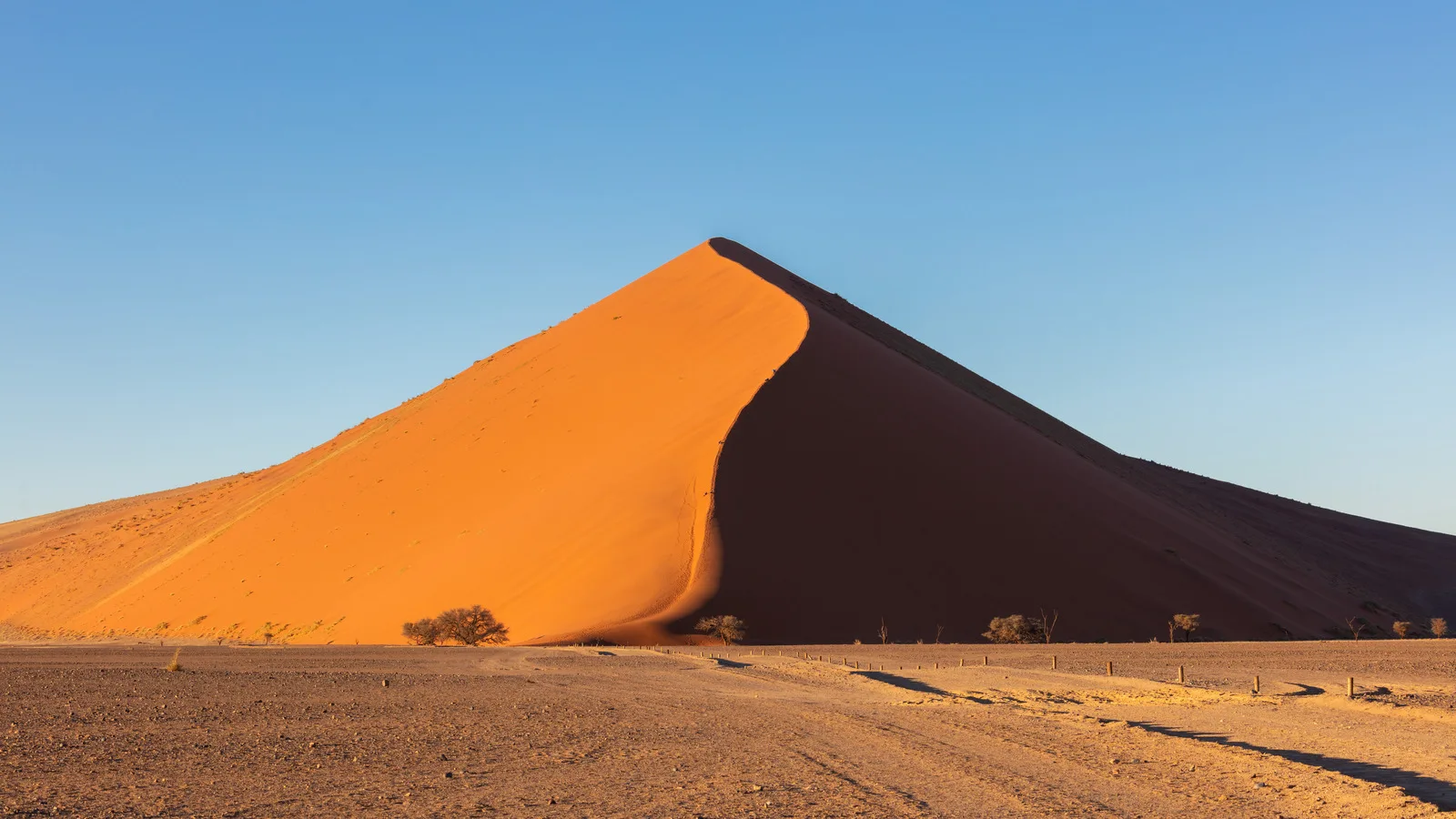
Credit Diego Delso, CC BY-SA 4.0, via Wikimedia Commons
Everyone photographs the dunes. Rather fewer people understand what is unusual about them, which is not their height or their color but where their water comes from.
What is inscribed
The Namib Sand Sea was inscribed on the World Heritage List in 2013, in the natural category. It is one of Namibia’s two inscribed properties, alongside Twyfelfontein, and it covers a very large area of the coastal desert in the west of the country.
The Namib is generally described as the oldest desert in the world, arid or semi arid for tens of millions of years, which is the reason so much of what lives in it lives nowhere else.
The fog is the point
Almost no rain falls here. What arrives instead is fog, pushed inland off the cold Benguela current that runs up this coast, and it is the fog that supports the ecosystem. Beetles, lizards, plants and the desert adapted larger animals all take water from it.
That is the characteristic that sets this dune field apart from every other coastal desert, and it is the substance of the inscription rather than a piece of trivia.
Sossusvlei and Dead Vlei
Sossusvlei is the clay pan at the end of the Tsauchab, which runs into the sand and stops. Dead Vlei beside it is the image everyone knows: blackened camel thorn trees standing on white clay under an orange dune. The trees died centuries ago and have not decayed, because it is too dry for the fungi that would rot them.
Big Daddy and Dune 45 are the dunes people climb. Both are hard work in soft sand and neither is necessary to understand the place: the sand sea is best comprehended from the road, from the pan, or from the air.
Practicalities
The last stretch to Sossusvlei is deep sand, and two wheel drive vehicles stop at a car park where a shuttle takes over. Gates open early and the light at the start of the day is the reason to be there.
Carry far more water than you think. The advisories are explicit that the climate here causes dehydration and skin problems, and the dunes give no shade at all.
Understanding the sand sea
- Inscribed 2013, in the natural category
- Fog rather than rain is what sustains it, and that is why it is inscribed
- Dead Vlei’s trees have not decayed because it is too dry for rot
- You do not have to climb a dune to see it properly
- The last stretch is deep sand and needs the shuttle from the two wheel drive car park
- Carry far more water than you expect to drink
Sources
- UNESCO World Heritage Centre: the Namib Sand Sea, inscription 1430
- UNESCO World Heritage Centre: Namibia, its inscribed properties and its Tentative List
- UK FCDO: Namibia health advice
The inscription year and category were read from the World Heritage Centre’s own record.