Namibia
A desert that drinks fog, engravings older than writing, and a history still being argued over
- Region Southern Africa
- Country Namibia
- Type Country
- Reviewed 10 August 2026
- Sources 3
- Length 3 min read
Credit photo-1597342809356-6dc1115906c1, via Unsplash
Why Namibia
Namibia is among the least densely populated countries on earth and it feels like it. The draw is scale and emptiness, but the emptiness has a history, and a visitor who reads the landscape as simply untouched will misread it.
What the country offers without argument is a set of environments that exist almost nowhere else, roads good enough to reach them independently, and a public culture that conducts its arguments about its own past in the open.
A desert that drinks fog
The Namib Sand Sea is the only coastal desert in the world whose dune fields are shaped by fog. Cold Atlantic water drives fog inland, and that fog, not rain, is the primary source of water for the beetles, reptiles and plants living in it. The sand itself traveled thousands of kilometers by river, ocean current and wind before anything built dunes out of it.
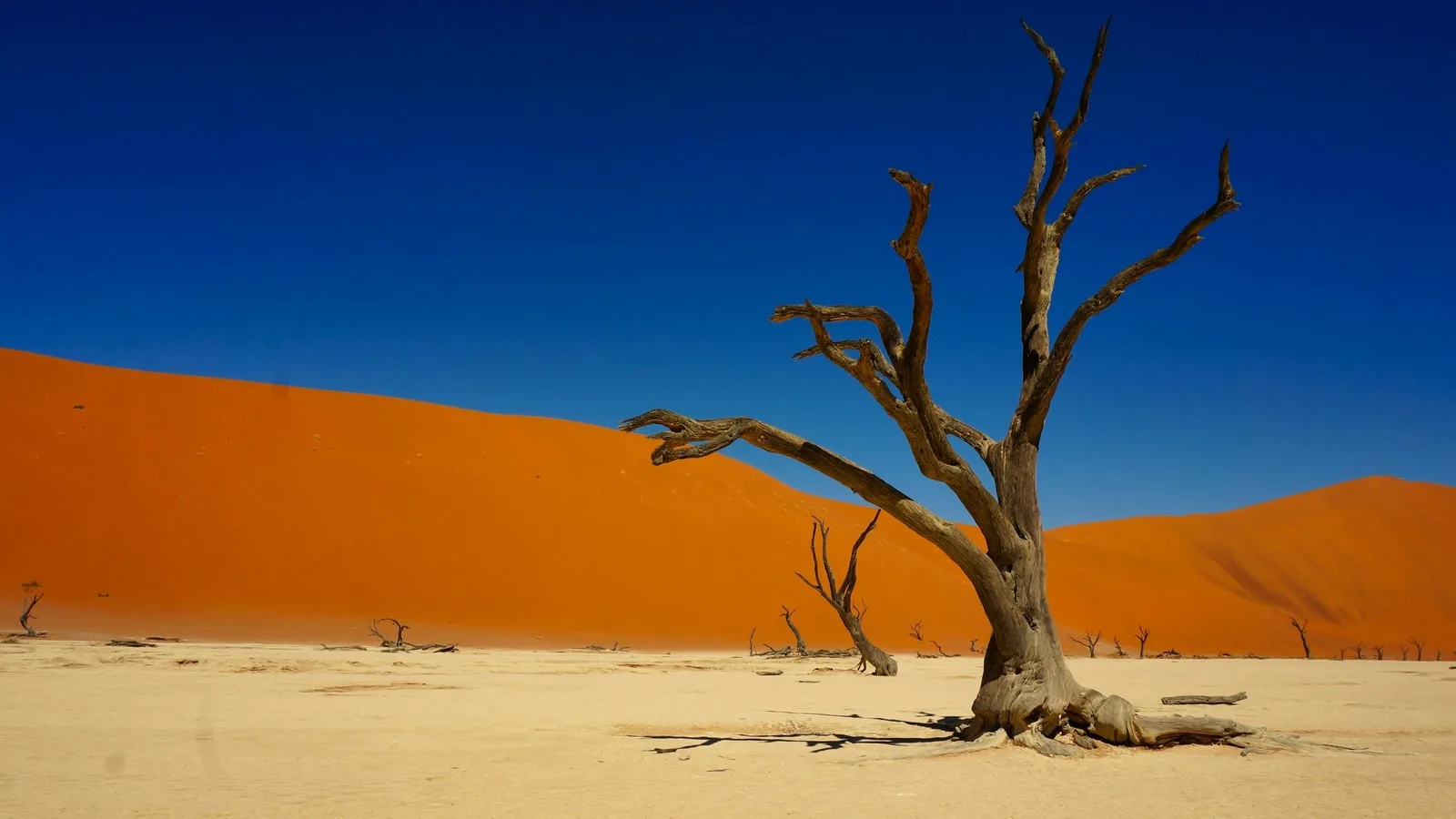
The inscribed area runs to more than three million hectares inside the Namib-Naukluft Park, and it holds two dune systems stacked on one another: an ancient, semi-consolidated one with a younger, still-moving one on top. Sossusvlei and the white clay pan at Deadvlei are where most visitors meet it.
Twyfelfontein, or /Ui-//aes
UNESCO inscribes this site under both of its names, and the second (/Ui-//aes, written with the click consonants of the languages that name it) is the one worth learning to see written down. It carries one of the largest concentrations of rock engravings in Africa: rhinoceros, elephant, ostrich and giraffe, along with human and animal footprints, plus six shelters painted with figures in red ochre.
The engravings record ritual practice among hunter-gatherer communities across at least two thousand years, and UNESCO’s own reasoning ties that practice to the reliability of the water beneath the site. People came back because the water did.
Food
Namibian eating is shaped by cattle, by the Atlantic and by a century of German presence. Game meat is ordinary rather than exotic, oysters from Walvis Bay are very good and cheap by most standards, and bratwurst and dense bread are sold without irony alongside oshifima, the millet porridge that is the staple across the north.
Practical orientation
English is the official language, though Afrikaans, German and Oshiwambo are all widely spoken. The currency is the Namibian dollar, pegged to and interchangeable with the South African rand. Distances are long, fuel stops are far apart, and a great deal of the country is driven on gravel. Plan days around driving time rather than map distance.
Entry and health requirements vary by nationality and change. Consult the official source and your own government before you travel.
Sources and references
- UNESCO World Heritage Centre: Namib Sand Sea
- UNESCO World Heritage Centre: Twyfelfontein or /Ui-//aes
- Museums Association of Namibia
The heritage facts on this page are taken from the UNESCO World Heritage Centre inscriptions listed above, read at source rather than summarized from memory. Practical details change: the official bodies listed here are authoritative and this page is not.