Food
Namibia Food Guide
Namibian food is German butchery, Afrikaner farming and Ovambo staples on the same plate, and the country is honest about all three.
- Country Namibia
- Category Food
- Reviewed 18 August 2026
- Sources 3
- Length 2 min read
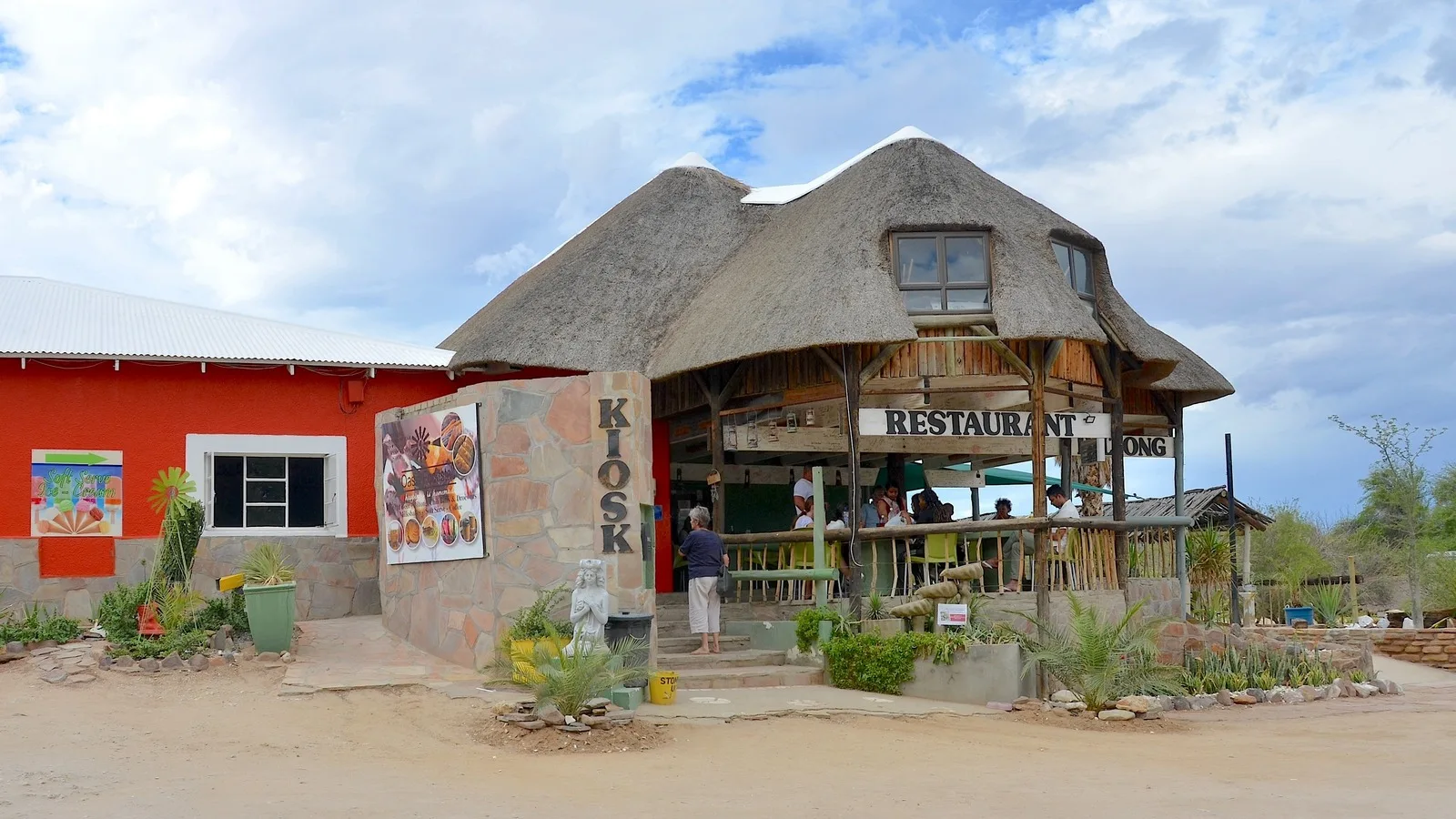
Credit Olga Ernst, CC BY-SA 4.0, via Wikimedia Commons
You can eat a very good schnitzel in a desert town in Namibia, and that sentence contains most of the country’s history. The food here is layered in a way that is unusual even in southern Africa, and none of the layers has replaced another.
The German layer
Namibia was a German colony until the First World War, and the culinary residue is everywhere: bakeries, sausage, smoked and cured meat, and beer brewed to the German purity law. Swakopmund is the concentrated version, where the cafés and the architecture agree with each other.
It is worth eating and it is worth knowing what you are eating: this is the pleasant residue of a colonial period whose other residue is the subject of the diaspora article on this site.
The farming layer
Namibia is cattle and game country and the meat is exceptional. Beef is the everyday answer. Game meat, particularly oryx, kudu and springbok, appears on almost every menu and is farmed or culled rather than hunted for the table.
Biltong, air dried and spiced, is the national road food. Every fuel station of any size sells it. On a country of long drives it is more than a snack.
The staple layer
North of the veterinary fence the food changes. Oshifima, a stiff porridge of mahangu, which is pearl millet, is the staple across the Ovambo north, eaten with meat, fish or greens. Mahangu is grown because it will tolerate a season that maize will not.
Omajowa, the giant termite mound mushrooms that appear after the first rains, are a seasonal delicacy sold at the roadside and worth stopping for. Dried mopane worms are sold by weight in the northern markets alongside salt and dried fish, and are a serious source of protein rather than a curiosity.
Drinking, and the coast
Namibian beer is a genuine point of national pride. Oshikundu, a fermented mahangu drink in the north, is the traditional counterpart.
On the coast, eat the oysters. Walvis Bay oysters are farmed in the cold nutrient rich Benguela water and are among the best in Africa, which is a sentence that surprises people who arrive expecting only desert.
Eating well here
- Game meat, particularly oryx and kudu, which are on almost every menu
- Biltong from a fuel station before a long drive
- Oshifima with a relish if you are traveling in the north
- Omajowa mushrooms if you are there just after the first rains
- Walvis Bay oysters on the coast
- Ask before photographing a market stall or anyone’s food
Sources
- Visit Namibia: the national tourism site
- UK FCDO: Namibia health advice
- US CDC: health information for travelers to Namibia
Food and water safety advice changes and depends on where you are traveling.