Heritage
Ngorongoro Conservation Area: A History Between Human, Heritage and Wildlife
Beyond its celebrated crater, Ngorongoro is a vast cultural and ecological landscape shaped by volcanoes, wildlife migrations, pastoral traditions and nearly four million years of human history.
- Region East Africa
- Country Tanzania
- Category Heritage
- Reviewed 5 August 2026
- Sources 5
- Length 7 min read
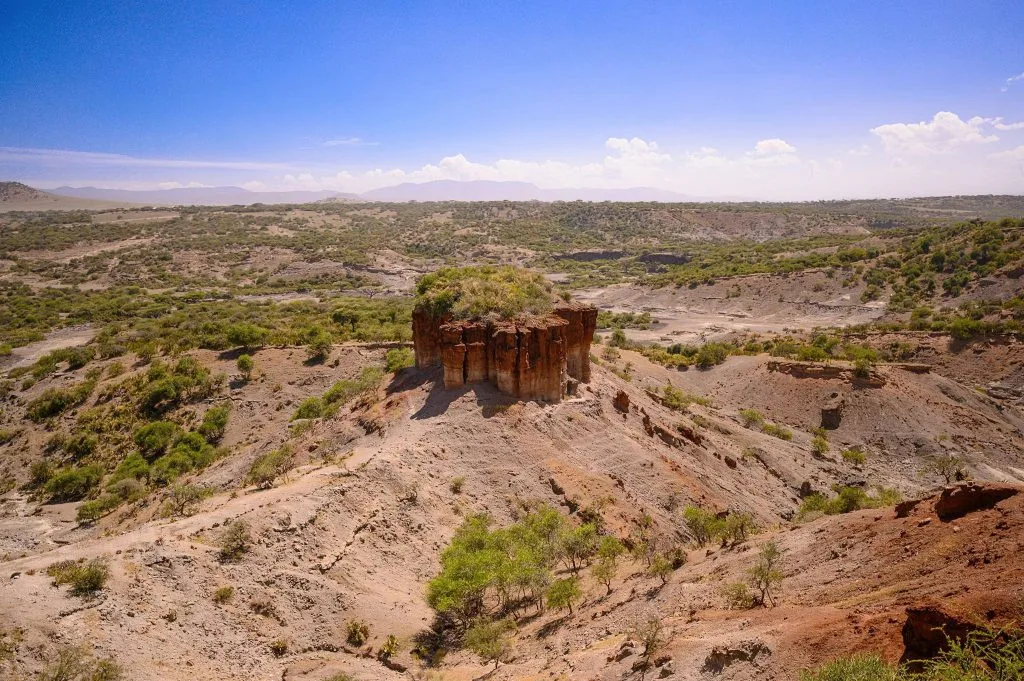
Olduvai Gorge, a major paleoanthropological landscape within the Ngorongoro Conservation Area. · Credit Photo: Ngorongoro Conservation Area Authority
From the rim of Ngorongoro Crater, the landscape opens like a natural amphitheater: grasslands, forest, soda lake and steep volcanic walls gathered into a single view. Yet the crater is only one part of the Ngorongoro Conservation Area. The wider World Heritage property covers 809,440 hectares of highland plains, savanna, woodland and forest between the Serengeti ecosystem and the eastern branch of the Great Rift Valley. UNESCO recognizes it for both natural and cultural importance.
Ngorongoro was established in 1959 as a multiple-land-use area in which wildlife conservation and Maasai pastoralism were intended to coexist. The name itself is often explained through local oral tradition as an imitation of the resonant sound of a cattle bell (ngorongoro), an interpretation that reflects the long relationship between cattle, people and place. Because this explanation comes from oral tradition rather than a single written record, it is best understood as part of the region’s living cultural memory.
To understand why Ngorongoro matters, travelers must look beyond the familiar image of safari vehicles on the crater floor. This is also a landscape of volcanic change, seasonal migration, archaeological discovery, community life and continuing debate about how conservation should serve both nature and people.
Ngorongoro is not only a crater. It is a living landscape in which natural history and human history remain inseparable.
A Landscape Formed by Fire
Ngorongoro belongs to a chain of volcanic features in northern Tanzania. UNESCO describes the main crater as the world’s largest unbroken caldera. Nearby Olmoti and Empakaai craters, the Rift Valley escarpment and the active volcano Oldoinyo Lengai reveal the geological forces that shaped the highlands.
Empakaai offers a different experience from the main crater. Its steep rim encloses a deep soda lake that can attract flamingos, while clear weather may reveal Oldoinyo Lengai to the northeast. Across the wider Ngorongoro-Lengai landscape, volcanic ash contributed to the fertile short-grass plains that support wildlife and pastoral livelihoods. The result is a place where geology is not simply background scenery; it influences water, vegetation, animal movement and human settlement.
Ngorongoro Crater
The crater floor is dominated by open grassland, marshes, a soda lake and the Lerai Forest, whose acacia woodland provides shade and cover for elephants, monkeys, birds and other animals. UNESCO reports that the conservation area supports about 25,000 large animals, mostly ungulates, as well as a high density of mammalian predators. Globally threatened species, including the black rhinoceros, are part of the area’s conservation importance.
Visitors often arrive hoping to see many species in a single game drive, and the crater’s enclosed geography can make wildlife encounters feel remarkably concentrated. That concentration should not be mistaken for a controlled display. Animals move according to water, food, weather and disturbance, and sightings are never guaranteed. Responsible guiding therefore emphasizes patience and ecological understanding rather than a checklist.
The crater and the wider property also face management pressures. UNESCO identifies invasive species, tourism pressure, infrastructure, traffic, waste and disturbance to wildlife as continuing concerns. Protecting the quality of the landscape requires limits on visitor behavior as well as long-term cooperation among conservation authorities, communities, researchers and tourism businesses.
Wildlife and the Great Migration
Ngorongoro is part of the larger Serengeti-Mara ecosystem. UNESCO’s World Heritage description refers to an annual movement of more than one million wildebeest, tens of thousands of zebra and hundreds of thousands of gazelles through the northern plains of the property. The migration does not remain inside the crater; it moves across a much larger landscape in response to rainfall and fresh grass.
From roughly November to April, the short-grass plains in and around Ndutu become especially important. The Ngorongoro Conservation Area Authority notes that the wet season brings breeding wildebeest, predators, migratory birds and flowering plants, with late February and March often offering strong migration viewing. Exact timing varies from year to year because rainfall, not a fixed calendar, directs the herds.
Birdlife is equally important. Forests, grasslands, lakes and marshes support resident and migratory species, including flamingos, crowned cranes, kori bustards, ostriches, storks, wagtails and raptors. For travelers who slow down, the seasonal arrival of birds can be as revealing as the movement of large mammals.
The People of Ngorongoro
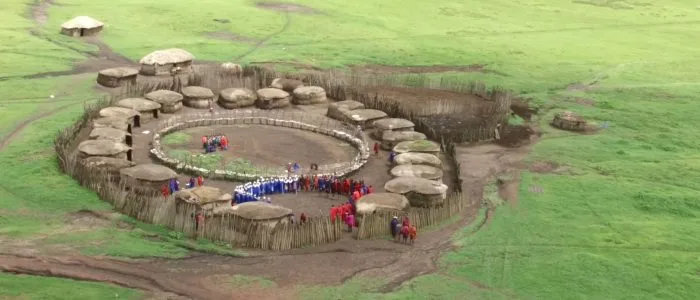
The human history of Ngorongoro did not end with the archaeological record. Maasai communities have maintained pastoral connections to the highlands for generations, and livestock, seasonal grazing, family life and cultural knowledge remain part of the wider conservation landscape. Traditional red shukas, beadwork and ceremonies are visible expressions of identity, but they should not be treated as the whole of Maasai life. Like all living communities, Maasai society is diverse and contemporary, shaped by education, markets, conservation policies and changing access to land and services.
The wider northern Tanzanian region is also connected to Datoga and Hadza communities, particularly around Lake Eyasi. Datoga communities are known for pastoral and agro-pastoral livelihoods and metalworking traditions, while some Hadza families continue to maintain hunting-and-gathering knowledge alongside other forms of work and exchange. These communities should be described as present-day peoples with agency, not as unchanged survivors of an earlier age.
Coexistence and a Contemporary Conservation Debate
Ngorongoro’s multiple-land-use model has always required negotiation among conservation, tourism and community needs. Questions about grazing, population, infrastructure, livelihoods and relocation are sensitive because they affect both a World Heritage landscape and the rights of people who live within it.
In April 2026, UNESCO stated that forced evictions are unacceptable and that any voluntary resettlement must be guided by free, prior and informed consent, respect for human rights and inclusive participation by communities and other rightsholders. UNESCO also emphasized that conservation should improve living conditions rather than harm the daily lives of local people. For a travel journal, the responsible approach is neither to ignore this debate nor to reduce it to a slogan. It is to acknowledge that the future of Ngorongoro depends on solutions that protect ecological and cultural values together.
Cultural Heritage of Ngorongoro
The Ngorongoro Conservation Area contains one of the world’s most important records of human evolution. At Laetoli, fossilized footprints dating to about 3.6 million years ago provide evidence of early bipedal movement. At Olduvai Gorge, long sequences of fossils, stone tools and sediments document changing hominin species, technologies and environments over immense spans of time. UNESCO notes that archaeological research across the property has produced evidence extending from nearly four million years ago to the early modern era.
Olduvai is therefore more than a stop between wildlife destinations. Its layered gorge helps visitors see human history as part of environmental history. Climate shifts, volcanic deposits, water, animals and human adaptation are preserved together. The strongest interpretation connects the museum and landscape to the wider story of how people learned, moved and responded to changing conditions.
Planning a Responsible Visit
Five things worth settling before you travel.
- Know the geography. Ngorongoro Crater, the wider Conservation Area, the Ndutu plains, Olduvai Gorge and the highland craters are distinct places. A single crater drive does not represent the whole property.
- Prepare for altitude and changing weather. NCAA advises that temperatures vary greatly with elevation, nights on the rim can be cold, and June through August are generally the coldest months.
- Follow current access rules. NCAA requires a licensed or official guide for crater visitors, limits driving to designated roads, prohibits feeding or disturbing animals, and generally requires visitors to remain in vehicles except in designated places.
- Photograph responsibly. Keep a respectful distance from wildlife, avoid crowding sightings, and never use noise or objects to attract an animal's attention. For photographs of people, follow NCAA rules and obtain clear consent.
- Choose depth over speed. A responsible itinerary allows time for wildlife, geology, archaeology and community perspectives rather than treating Ngorongoro as a brief stop on a checklist.
Conclusion
Ngorongoro’s importance cannot be measured only by the number of animals visible on the crater floor. Its deeper meaning lies in the connections among geology, wildlife, human history and living communities. Travelers who recognize those connections leave with more than photographs. They gain a clearer understanding of why this landscape is celebrated, why it is contested and why its future depends on respect for both nature and people.
Sources and further reading
- UNESCO World Heritage Centre: Ngorongoro Conservation Area
- Ngorongoro Conservation Area Authority: Visitor Guidelines and Procedures
- Ngorongoro Conservation Area Authority: Frequently Asked Questions
- Ngorongoro Conservation Area Authority: Information (weather and visitor guidance)
- UNESCO World Heritage Centre: Statement on Ngorongoro Conservation Area, 23 April 2026
Facts were checked against the following sources, accessed 5 August 2026.