Heritage
Tanzania: A Land That Echoes with Rich and Diverse History and Heritage
From early human landscapes and rock art to Kiswahili coastal cities, Tanzania’s heritage reveals centuries of movement, exchange, creativity and resilience.
- Region East Africa
- Country Tanzania
- Category Heritage
- Reviewed 5 August 2026
- Sources 11
- Length 7 min read
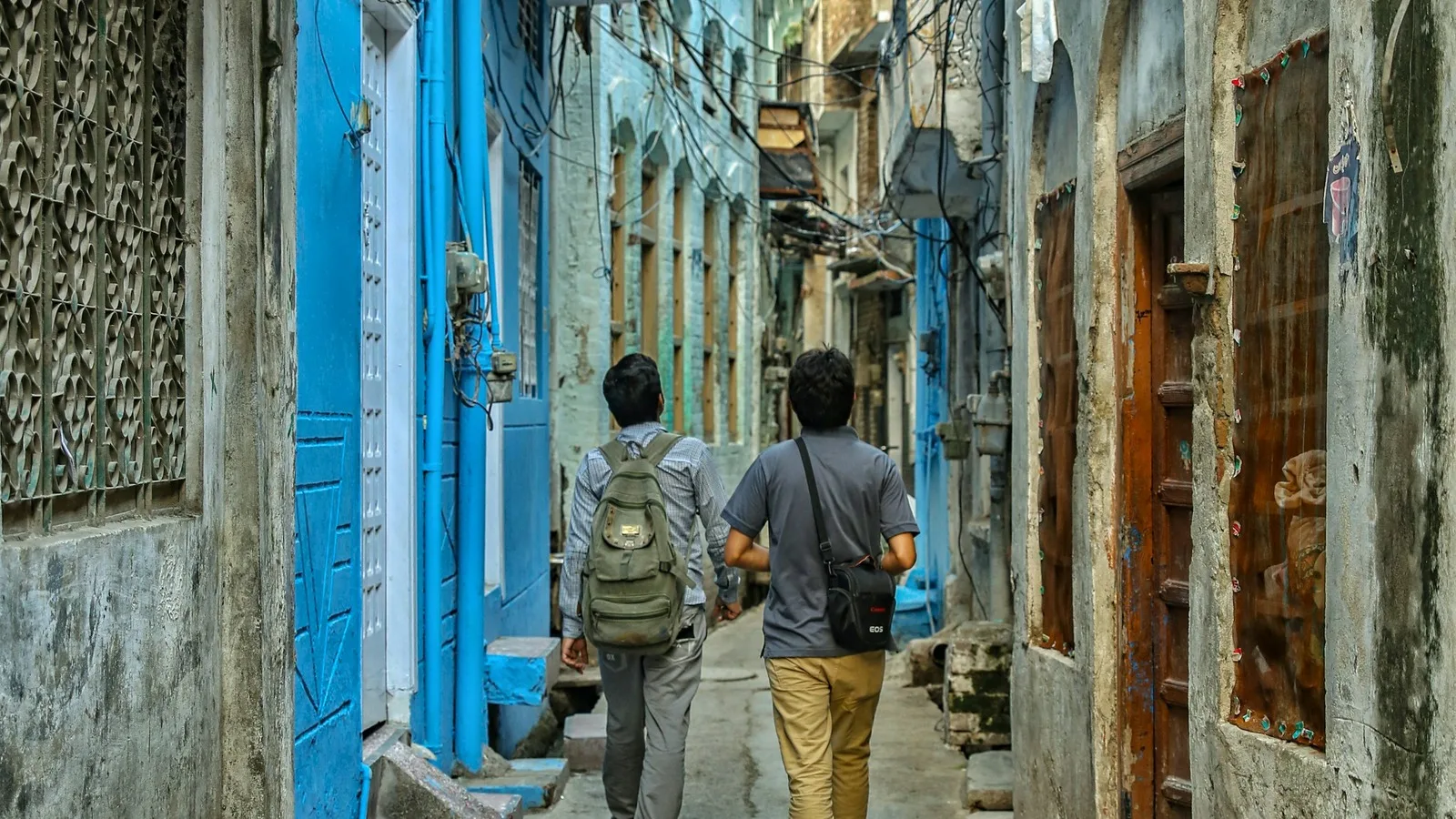
A stone alleyway in Stone Town, Zanzibar. · Credit Unsplash
Tanzania is often introduced through mountains, wildlife and Indian Ocean beaches. Its cultural landscape is equally remarkable. Archaeological sites preserve evidence of early human life; rock shelters record changing communities and beliefs; coastal towns reveal long histories of African and Indian Ocean exchange; and Kiswahili connects people across regions and national borders.
The modern United Republic of Tanzania was formed on 26 April 1964 through the union of Tanganyika and Zanzibar. The 2022 Population and Housing Census recorded 61,741,120 people, reflecting a country of great regional, linguistic and cultural diversity. These communities should not be reduced to a single story. Tanzania’s heritage is best understood as a series of connected histories shaped by migration, trade, adaptation, conflict and collaboration.
Tanzania’s heritage is a network of living histories shaped by movement, exchange, memory and place.
Early People of Tanzania
The earliest chapters of Tanzania’s human story reach far beyond the modern nation. Olduvai Gorge and Laetoli preserve evidence related to human evolution over millions of years, while later archaeological and linguistic records show communities developing different ways of living across grasslands, highlands, lake regions and the coast.
Tanzania is home to speakers of Bantu, Nilotic and Cushitic languages, as well as languages such as Hadzane and Sandawe that do not fit neatly into those larger groupings. These categories are linguistic, not racial, and they should not be presented as four fixed waves of people replacing one another. Historical research instead points to long periods of movement, intermarriage, exchange and local adaptation.
Many Hadza families in northern Tanzania retain detailed knowledge of wild foods, hunting, honey gathering and seasonal landscapes, even as their lives also engage with schooling, tourism, markets and land pressures. UNESCO describes Hadzane as a living language and a store of ecological knowledge. Datoga communities in the wider northern region are associated with pastoral and agro-pastoral livelihoods and metalworking traditions. Maasai and other pastoral communities, Bantu-speaking farming societies, and coastal and island populations have all contributed to Tanzania’s changing social landscape.
Kiswahili and the Swahili World
Kiswahili is a Bantu language that developed along the East African coast and was enriched through centuries of contact among African communities and traders from Arabia, Persia, India and elsewhere. Arabic contributed many loanwords, especially in religion, commerce and administration, but Kiswahili’s grammar and core structure are Bantu. The language later spread inland through trade, education, government, broadcasting and regional exchange.
Today Kiswahili is one of Africa’s most widely spoken languages. UNESCO states that it connects more than 200 million speakers across East, Central and Southern Africa and beyond. In Tanzania, its national role has helped people from many linguistic backgrounds communicate in public life while local languages continue to carry family histories, oral traditions and regional identity.
The term Swahili civilization refers to the African coastal societies that built towns, ports and networks along the Indian Ocean. Their architecture, faith, food, clothing, music and language reflect local foundations shaped by external exchange. UNESCO describes Stone Town of Zanzibar as an outstanding Swahili trading town whose buildings combine Swahili, Indian, Arab and European influences. The result is not a borrowed culture but a distinctive coastal civilization created through centuries of interaction.
Heritage Landscapes Across Tanzania
Tanzania’s heritage sites are not isolated monuments. They are parts of living landscapes connected to nearby communities, memories and contemporary livelihoods. The following places offer different windows into the country’s long history.
Ngorongoro Conservation Area
Ngorongoro is Tanzania’s only mixed UNESCO World Heritage property, recognized for both natural and cultural values. Its volcanic landscape supports wildlife and pastoral communities, while Olduvai Gorge and Laetoli preserve an exceptional record of human evolution and human-environment relationships extending across nearly four million years. Travelers who visit only the crater floor miss an important part of the story: Ngorongoro is also a landscape of archaeology, geology and living culture.
Kondoa Rock-Art Sites
On the eastern slopes of the Maasai Escarpment in central Tanzania, natural shelters and overhanging rock faces preserve one of the country’s most significant collections of rock paintings. UNESCO reports images in more than 150 shelters across a large cultural landscape, with painting traditions extending over at least two millennia.
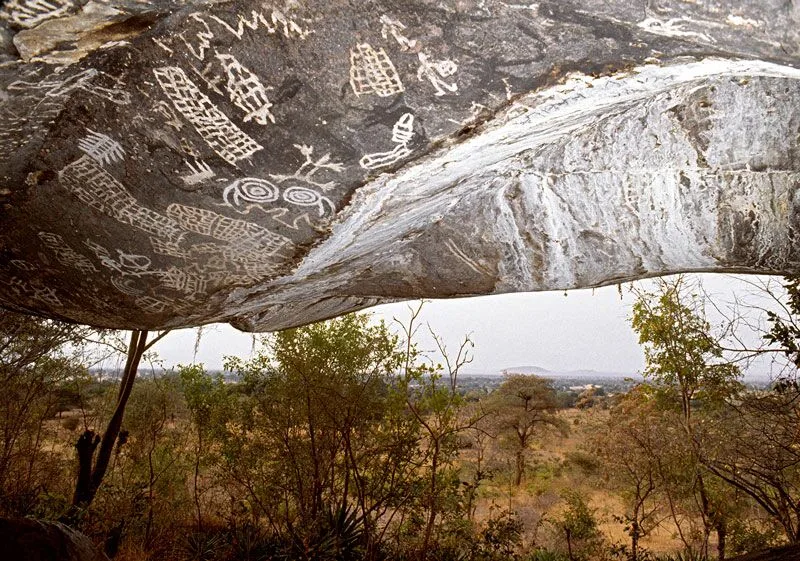
The images provide evidence of changing social and economic life, including hunter-gatherer and agro-pastoral traditions. Some shelters also retain ritual significance for nearby communities, linking the paintings to living practices rather than treating them only as relics. Visitors should never touch, trace, wet or mark the images, and access should follow local heritage guidance.
Bagamoyo and the Central Slave and Ivory Trade Route
Bagamoyo became an important coastal port connected to caravan routes from the interior. Tanzania’s UNESCO Tentative List identifies it as the coastal terminal of the Central Slave and Ivory Trade Route from Ujiji, a route associated with forced movement, human suffering, commerce and colonial expansion. The town’s surviving buildings and memorial sites help visitors confront this difficult history without turning it into spectacle.
The name Bagamoyo is often explained through oral interpretations associated with laying down or losing one’s heart. Because several explanations circulate, it should be presented as oral tradition rather than settled linguistic fact. What is certain is that Bagamoyo became a major place of memory for the East African slave trade and for the later German colonial administration.
Kaole Ruins
A few kilometers south of Bagamoyo, the Kaole Ruins preserve remains of mosques, tombs, wells and a former coastal settlement. Tanzania Forest Services dates the principal remains to the thirteenth and fifteenth centuries and describes the site as evidence of coastal trade before Bagamoyo rose to prominence. Rather than labeling every structure as “Arab,” it is more accurate to understand Kaole within the wider Swahili coast, where African communities participated in Indian Ocean commerce and Islamic life.
Zanzibar: Memory, Trade and the House of Wonders
Stone Town developed through intense seaborne trade and cultural exchange. UNESCO recognizes it for an urban fabric that brings together African, Arab, Indian and European influences. The town also carries the memory of slavery. Christ Church Anglican Cathedral stands on the site of the former slave market, and nearby memorials invite visitors to reflect on the people who were bought, sold and transported through the Indian Ocean system.
Beit al-Ajaib, or the House of Wonders, was built in 1883 by Sultan Barghash as a ceremonial palace. UNESCO notes that it was among the first buildings in East Africa to receive electricity and piped water. A large section of the building collapsed in December 2020. Current conservation work should therefore be described carefully: UNESCO’s 2024 decision referred to continuing rehabilitation planning and monitoring rather than a completed restoration.
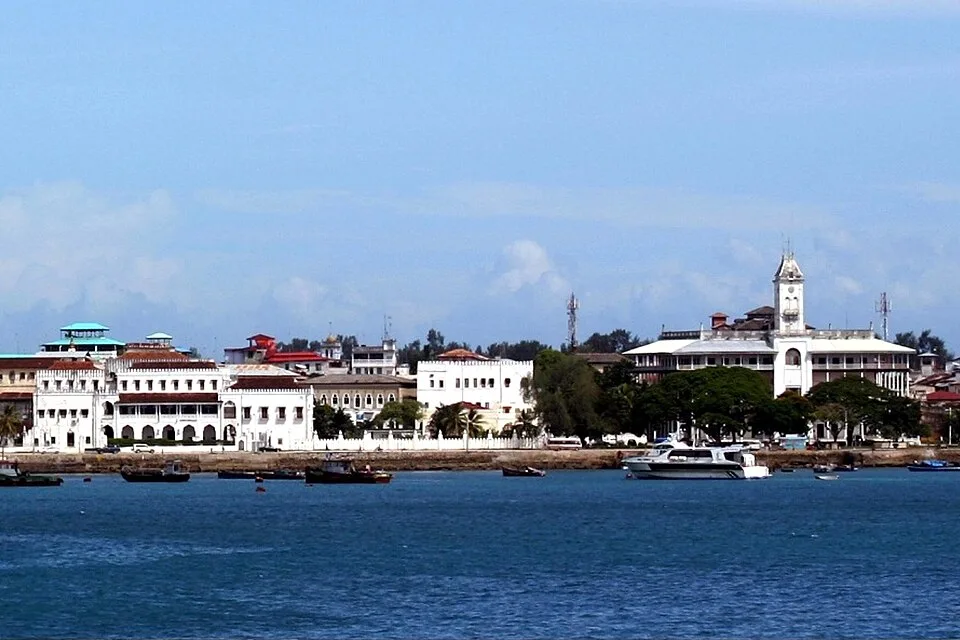
The House of Wonders remains important not because it was simply grand or technologically advanced, but because it forms part of Stone Town’s complex history of power, trade, architecture and cultural exchange.
Planning a Responsible Heritage Journey
Five things worth settling before you travel.
- Use qualified local guides. At archaeological, rock-art and historic sites, local interpretation connects monuments to community history and helps travelers avoid damaging fragile places.
- Ask before photographing people. Cultural identity is not a public exhibit. Clear consent is essential, especially during community visits, ceremonies and demonstrations.
- Protect the sites. Do not touch rock paintings, remove stones or artifacts, climb unstable ruins or ignore barriers. Heritage survives only when visitors accept limits.
- Check current access. Restoration, conservation work and local regulations may affect opening hours or which buildings can be entered, especially at the House of Wonders.
- Support living heritage. Buy from local craftspeople, use community-based guides and allow time for museums, oral histories, food, music and neighborhoods.
Conclusion
Tanzania’s heritage is not one uninterrupted national story. It is a network of human histories: early footprints at Laetoli, knowledge carried by living communities, paintings at Kondoa, Kiswahili words spoken across a continent, caravan routes ending at Bagamoyo and coral-stone streets facing the Indian Ocean. Travelers who approach these places with accuracy, humility and respect can see Tanzania not only as a destination, but as a country whose many pasts continue to shape the present.
Sources and further reading
- Government of the United Republic of Tanzania: Union Matters
- National Bureau of Statistics: 2022 Population and Housing Census
- UNESCO: More Than Words: How Ancient Language Can Transform a Community
- UNESCO: World Kiswahili Language Day
- UNESCO World Heritage Centre: Stone Town of Zanzibar
- UNESCO World Heritage Centre: Ngorongoro Conservation Area
- UNESCO World Heritage Centre: Kondoa Rock-Art Sites
- UNESCO World Heritage Centre: The Central Slave and Ivory Trade Route
- Tanzania Forest Services: Kaole Ruins
- UNESCO Urban Heritage Atlas: Stone Town of Zanzibar
- UNESCO World Heritage Committee Decision 46 COM 7B.24 (2024)
Facts were checked against the following sources, accessed 5 August 2026.