Heritage
Sacred Mijikenda Kaya Forests: Visitor and Heritage Guide
Ten forest sites along 200km of the Kenyan coast, holding the remains of Mijikenda villages. Sacred ground first, and a visitor site only rarely.
- Country Kenya
- Category Heritage
- Reviewed 16 August 2026
- Sources 3
- Length 3 min read
Credit Ninara, CC BY 2.0, via Wikimedia Commons
This is the entry on this site most likely to end with you not going. The Sacred Mijikenda Kaya Forests are a World Heritage property, they are extraordinary, and most of them are not open to you. That is not an access problem waiting to be solved. It is what the place is.
What was inscribed
UNESCO added the property to the World Heritage List in 2008. It is a serial inscription: ten separate forest sites spread over some 200 kilometers of the Kenyan coast, mostly on low hills, each of them between about 30 and 300 hectares, together covering 1,538 hectares.
Inside them are the remains of fortified villages, kayas, of the Mijikenda peoples. UNESCO dates them from the sixteenth century and records that they were abandoned by the 1940s. The ten inscribed sites represent more than thirty surviving kayas, so even the World Heritage listing is a selection rather than the whole.
Why the forest is still standing
The kayas stopped being places people lived in and became places people revere: the abodes of ancestors, maintained by councils of elders, with restrictions on who may enter and on what may be taken out.
The consequence is ecological as well as spiritual, and UNESCO says so plainly. The forest around the kayas was nurtured by the Mijikenda to protect the graves and groves inside, and it is now almost the only remaining fragment of the coastal lowland forest that once ran the length of this coast. The sacred restriction is the reason the trees are there. Nothing else on that coastline held.
Visiting, and the one that receives visitors
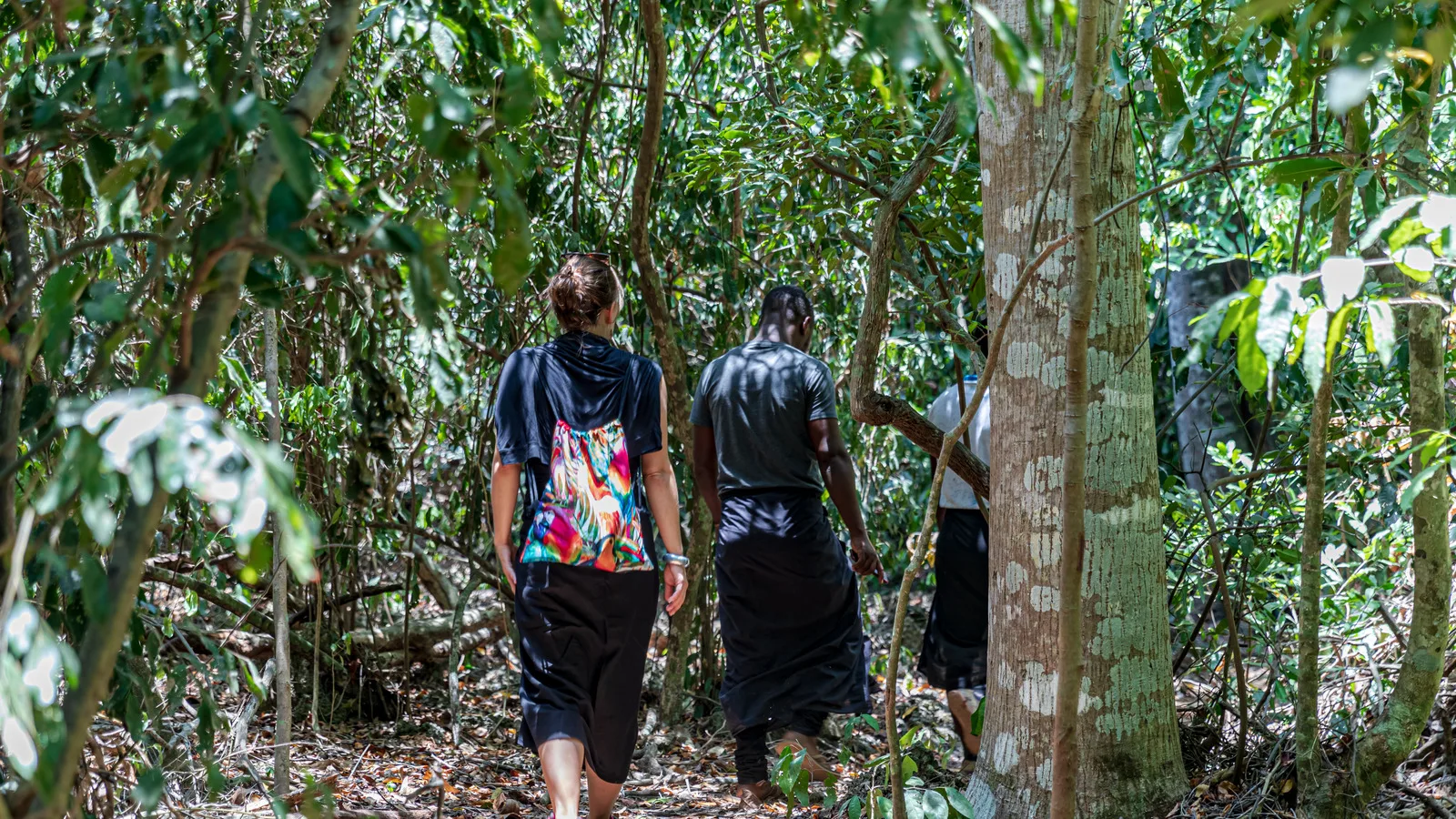
There is no gate and no single site. Kaya Kinondo, the forest in the photograph at the top of this page, is the one that has a community scheme and is generally the one a visitor can arrange to walk, with a guide from the community and wearing the dark wrap the scheme asks for.
UNESCO records the cost of that in the same paragraph in which it assesses the property, and it belongs here rather than in a footnote: the integrity of the kayas depends on their forest surroundings staying intact, and at Kaya Kinondo that has been compromised. The kaya you can most easily see is the one where visiting has already left a mark. Hold both halves of that at once.
For any other kaya, assume the answer is no until the National Museums of Kenya or a community guide tells you otherwise, and plan the trip around the answer rather than around the hope.
If you do go
None of that is ceremony invented for outsiders. The restrictions on access and on taking things out are the mechanism UNESCO credits with keeping the forest alive.
- Ask first whether the kaya you have in mind receives visitors at all. Most do not, and the answer is not yours to overrule
- Go with a guide from the community. There is no version of this that works as a wander
- Expect to be asked to cover up or to wear something over your clothes, and do it without negotiating
- Ask before photographing anything, and treat a no as final
- Take nothing out. Not a leaf, not a stone. The restriction on removing anything from the forest is old, deliberate and the reason the forest exists
- These are burial grounds. Behave the way you would in a cemetery, because that is where you are standing
Sources
- UNESCO World Heritage Centre: Sacred Mijikenda Kaya Forests, inscription 1231
- UNESCO World Heritage Centre: the eight properties inscribed in Kenya
- National Museums of Kenya: custodian of the national heritage sites
Every date, dimension and description of the property is UNESCO’s own wording for inscription 1231, read on 2026-08-16, including the assessment of Kaya Kinondo. Which kayas receive visitors, and on what terms, is for the National Museums of Kenya and the kaya elders to say and is deliberately not stated here.