Heritage
Sān Living Cultural Landscape: Visitor and Heritage Guide
UNESCO calls the San the first inhabitants of southern Africa. In one Namibian district the communities themselves hold the land and manage its wildlife.
- Country Namibia
- Category Heritage
- Reviewed 18 August 2026
- Sources 6
- Length 4 min read
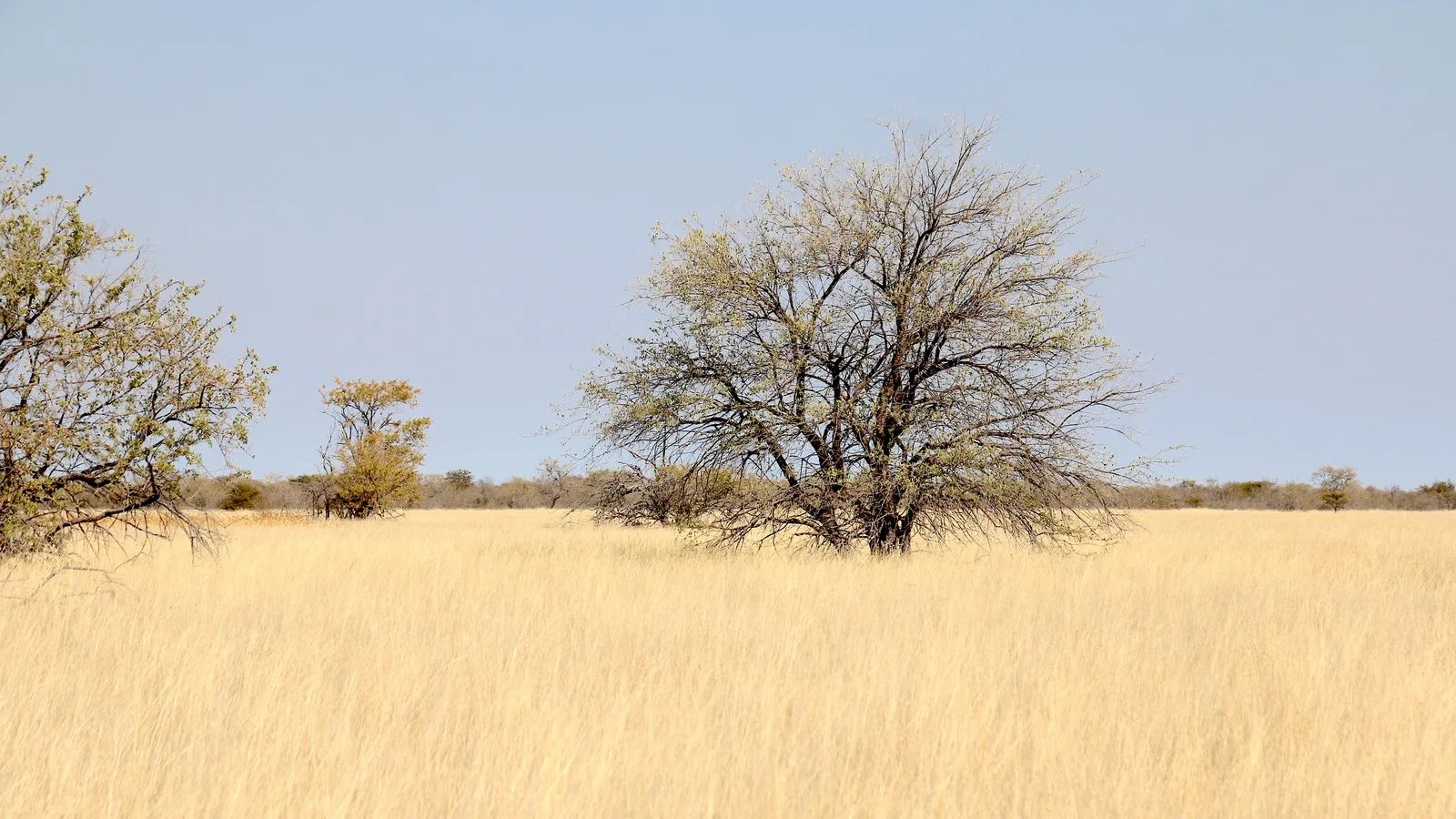
Credit Hp.Baumeler, CC BY-SA 4.0, via Wikimedia Commons
Two of Namibia’s three heritage pages on this site are about rock art, and the people who made it are not on either of them. This page is about their descendants, who are still here, and about the one part of Namibia where they hold the land.
What Namibia has proposed
The property is filed as the Sān Living Cultural Landscape. It was submitted on 18 March 2016 by the Namibia National Commission for UNESCO, as a cultural property, in the Otjozondjupa Region. It is a proposal on the tentative list, not an inscription.
One thing about the record is worth flagging, because a reader who checks it will notice. Its header lists criteria (v) and (vi); the justification underneath argues criteria (iii), (v) and (x). The two do not agree. That is UNESCO’s own document and it is not corrected here, so this page describes what the argument says rather than asserting which criteria apply.
Who the record is describing
UNESCO describes the Sān as the first inhabitants of southern Africa, across what is now Angola, Botswana, Lesotho, Namibia, South Africa, Eswatini and Zimbabwe. It is careful to say they are not one people: the record calls them linguistically, culturally and economically diverse, with distinct histories.
Namibia is home to between 30,000 and 35,000 Sān, in three major language groupings that the record calls Southern, Central and Northern. Within them it names the Haiǁom, the Juǀ'hoansi, the ǃKung, the Naro, the Khwe and the ǃXóõ. Those punctuation marks are click consonants and they are letters, not decoration.
The record notes that most Sān in Namibia have adopted the working life of whatever region they live in, and that the largest communities are in Otjozondjupa, Ohangwena, Oshikoto and a fourth region it names by the older name Caprivi.
Tsumkwe District, and why the land tenure matters
Tsumkwe, in Otjozondjupa, is the only administrative district in Namibia where the large majority of people are Sān: the record counts around 1,600 Juǀ'hoansi and around 1,800 ǃKung. It is also, with the region it calls Caprivi, one of only two places where communities still take most of their living from hunting and gathering.
The part that makes this a heritage proposal rather than a description is legal. Both communities hold authority over their ancestral land under Namibian law, and their rights over wildlife and plants run through the country’s community based natural resource management legislation. In practice that means the Nyae Nyae Conservancy, of 8,992 square kilometers, and the Nǂa-Jaqna Conservancy, of 9,120 square kilometers, for wildlife, and the Nyae Nyae and Mkata Community Forests for plants.
UNESCO’s argument is that this arrangement is what allows the hunting and gathering tradition to continue at all. The land is not held for the communities; it is held by them.
What the record does not romanticize
The most creditable paragraph in the nomination is the one that declines to sell the lifestyle. Subsistence hunting and gathering, it says, is difficult, with periods of hunger as frequent as times of plenty, and it attributes that judgment to Sān communities themselves. It records that they have a long history of taking up other work when it makes sense to.
And it frames adaptation as a right rather than a loss: changes that come from living in the modern world are described as an inalienable right of self determination. Hunting and gathering remains central to Sān identity, the record says, and is usually combined with other ways of making a living.
A visitor who arrives expecting a museum of the past has misread the proposal. The word in the title is living.
Visiting Tsumkwe respectfully
- This is a district where people live and work, not an exhibit, and the conservancy is a landholder
- Arrange any cultural activity through the conservancy or a community operator, and expect to pay the community
- Ask before photographing anyone, and accept a refusal without pressing it
- Do not ask to see hunting, and do not treat a demonstration as evidence of how anyone lives
- Buy crafts from the makers rather than from a roadside intermediary
- Tsumkwe is remote, largely unsurfaced and far from fuel: plan the drive as a serious undertaking
- Read the FCDO advice on self drive travel and on malaria, which in Namibia is regional rather than national
Where the land questions stand
Land and resource rights in this part of Namibia are not a settled subject. Conservancy boundaries, grazing pressure from outside, and who may use what have all been disputed, and some of it has gone to court. None of that is described here, because none of it was read from a primary source, and a travel page reciting a legal position from memory would be doing the communities no favors.
The ministry and the conservancy support organizations linked below publish their own accounts, which is where a reader who wants the current position should go.
Sources
- UNESCO World Heritage Centre: San Living Cultural Landscape, tentative list ref 6096
- UNESCO World Heritage Centre: World Heritage and tentative list properties in Namibia
- Namibian Ministry of Environment, Forestry and Tourism: the national authority for parks and conservancies
- NACSO: the Namibian Association of CBNRM Support Organisations, which reports on the communal conservancies
- Namibia Tourism Board: the national tourism authority
- UK Foreign, Commonwealth and Development Office: Namibia travel advice
The population figures, community names, conservancy areas and the framing of hunting and gathering on this page are read from the UNESCO tentative list record of 2016. Where that record uses a regional name that has since changed, this page says so rather than substituting one.