Food
Senegal Food Guide
The national dish is inscribed by UNESCO, and the amount of care that goes into your bowl is a measure of how welcome you have been made.
- Country Senegal
- Category Food
- Reviewed 20 August 2026
- Sources 3
- Length 1 min read
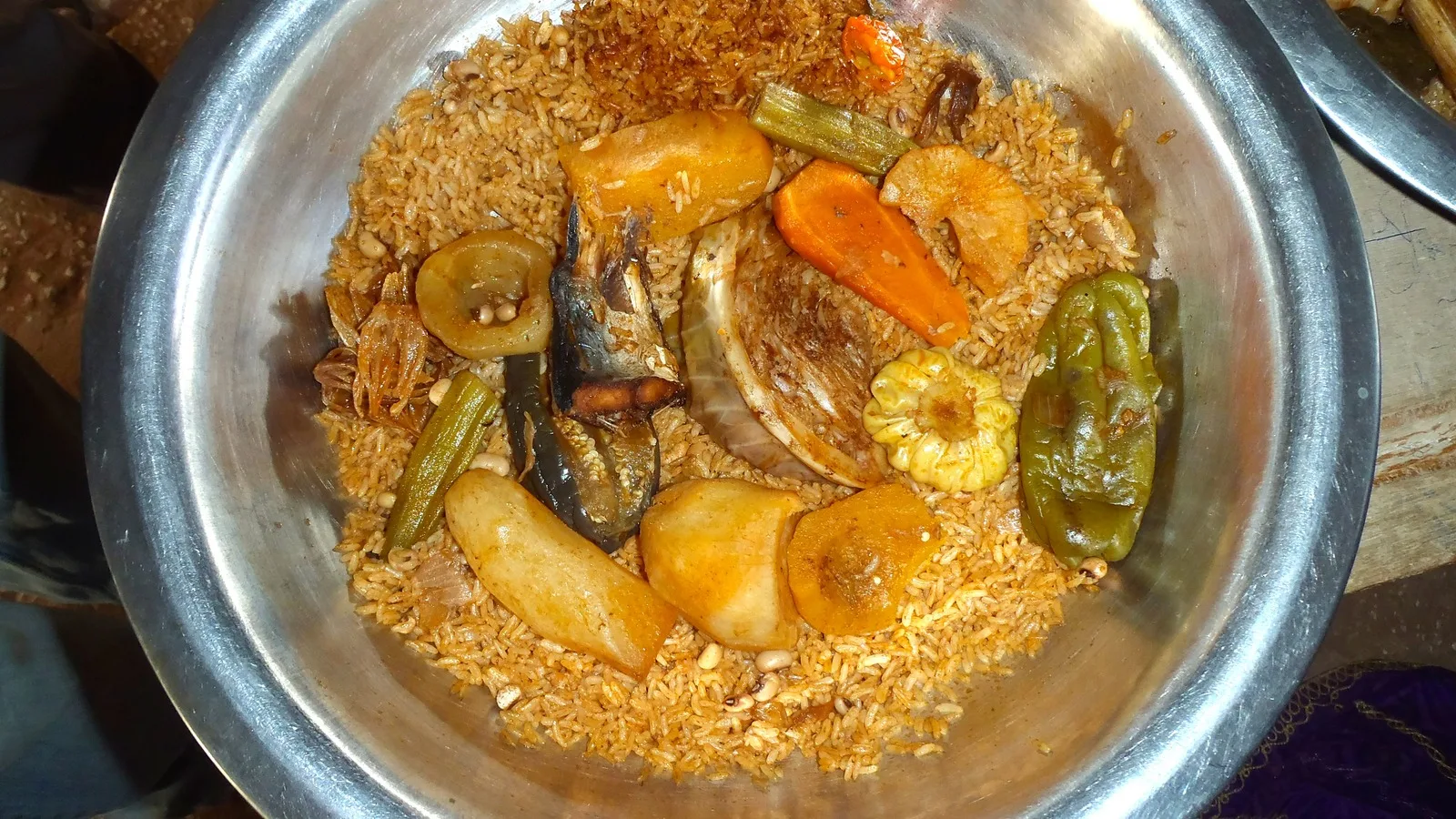
Credit Mariel.cg, CC BY-SA 4.0, via Wikimedia Commons
Ceebu jën is fish and rice. That description is accurate and tells you almost nothing, in the way that describing a Sunday roast as meat and potatoes is accurate.
UNESCO inscribed it on the Representative List of the Intangible Cultural Heritage of Humanity, and its description of the dish contains one line that explains more about Senegalese hospitality than a chapter of etiquette advice could.
What is in it, and what that says
The dish originated in the fishing communities on the Island of Saint-Louis, which is a World Heritage property and has its own page in this cluster. Recipes vary from region to region. It is typically made with fish steak, broken rice, dried fish, mollusc and seasonal vegetables: onions, parsley, garlic, chili pepper, tomatoes, carrots, eggplant, white cabbage, cassava, sweet potato, okra and bay leaf.
And then UNESCO says this: the quality of the fish and the choice of vegetables are determined by the importance of the event, or by the degree of affection one has for the guest.
The bowl is a statement. If you are served generously in Senegal you have been told something, and the correct response is to notice.
Eating well here
- Ceebu jën is the dish to eat first, and the one to eat in Saint-Louis if the itinerary allows it.
- Sharing from a communal dish is normal. Eat from the part of the bowl in front of you.
- The right hand is the eating hand.
- Expect to be offered more than you can eat, and expect it to be meant.
- Alcohol is served in bars and restaurants, but Senegal is a majority Muslim country and drunkenness is considered offensive.
Sources
- UNESCO: Ceebu jën, a culinary art of Senegal
- UNESCO: Island of Saint-Louis
- UK FCDO: Senegal safety and security
The origin, ingredients and the line about the guest are from the UNESCO inscription for Ceebu jën, inscribed in 2021 on the Representative List. Saint-Louis is UNESCO ref 956. The note on alcohol is from the FCDO safety and security page. All read on 20 August 2026.