Culture
South Africa Culture and Etiquette Guide
Twelve official languages, a country that talks openly about its own history, and a set of courtesies that are easy to learn and matter more than usual.
- Country South Africa
- Category Culture
- Reviewed 16 August 2026
- Sources 3
- Length 2 min read
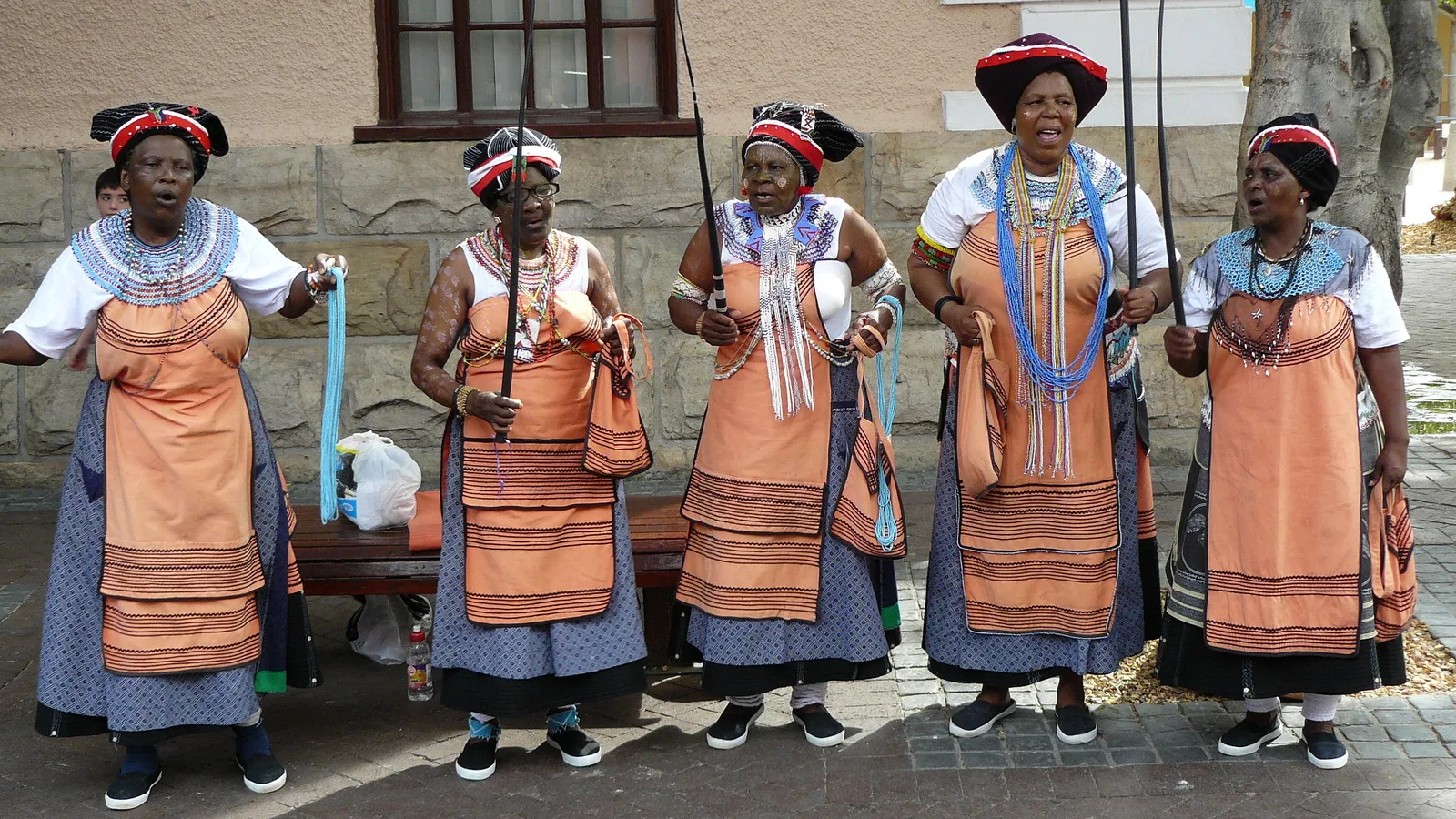
Credit Chell Hill, CC BY-SA 3.0, via Wikimedia Commons
South Africa is unusually easy to travel in and unusually easy to be clumsy in. The language is shared, the welcome is real, and the history is close enough to the surface that a casual remark can land much harder than it would elsewhere.
Twelve official languages
The Constitution recognizes twelve official languages: English, Afrikaans, isiNdebele, isiZulu, isiXhosa, Siswati, Sepedi, Setswana, Sesotho, Xitsonga, Tshivenda and South African Sign Language. The last of those is a recent and deliberate addition, and it matters: very few countries have given a sign language that status.
English is the common working language and you will be understood everywhere, which means the effort of learning a greeting is noticed precisely because nobody requires it of you. Sawubona in isiZulu, molo in isiXhosa, dumela in Setswana and Sesotho. Getting the language right for the region is part of the courtesy.
Greetings take longer here
A greeting is not a formality to be got through. Ask how somebody is and wait for the answer, then expect to be asked back. Beginning a transaction with a request rather than a hello reads as brusque in a way it might not at home.
Handshakes are common and often held longer than northern visitors expect. In several communities the free hand supports the shaking forearm, which is a mark of respect and easy to return. Age is treated with deference; address older people first.
Talking about the past, and the present
South Africans discuss their own history with a directness that surprises people. Apartheid ended within living memory for most adults here, and the conversation about what followed it is loud, ongoing and entirely public. You will be asked what you think.
The useful posture is to listen far more than you talk. Being interested is welcome; arriving with a settled opinion about a country you landed in on Tuesday is not. Race is discussed openly and in terms that can sound blunt to an outsider, and the vocabulary is specific and historically grounded rather than careless.
Poverty and inequality are visible, immediately and everywhere. Photographing people or their homes without asking is the single most common thing visitors do wrong.
Practical courtesies
- Ask before photographing anybody, and accept a refusal without negotiating
- Greet before you ask for anything, including in shops
- Both hands, or the right hand supported at the wrist, when giving or receiving
- Do not photograph inside museums of the apartheid period unless it is explicitly allowed
- Tipping is part of how many people are paid rather than a bonus, so budget for it
- Township visits are welcomed through a local guide and intrusive without one
- Dress is relaxed almost everywhere, and smarter in city restaurants in the evening
Ubuntu, and what it actually means
You will meet the word ubuntu, usually rendered as the idea that a person is a person through other people. It is a real philosophical tradition and it was central to how the country framed its own transition, rather than a slogan invented for visitors.
It is also, like any idea that has been printed on souvenirs, easy to reduce. Treat it as something people here have thought about seriously, and it will repay attention.
Sources
- South African Government: South Africa's people, including the official languages
- South African Tourism: the national tourism authority
- UK FCDO: South Africa travel advice
The orientation article What to Know Before Visiting South Africa covers how to sequence a trip that takes the history seriously.