Heritage
Stone Circles of Senegambia: Visitor and Heritage Guide
Over a thousand stone circles stand along a single river, built across more than fifteen centuries by a society we know mainly from its graves.
- Country Senegal
- Category Heritage
- Reviewed 20 August 2026
- Sources 2
- Length 1 min read
Credit Tobias 67, CC BY-SA 4.0, via Wikimedia Commons
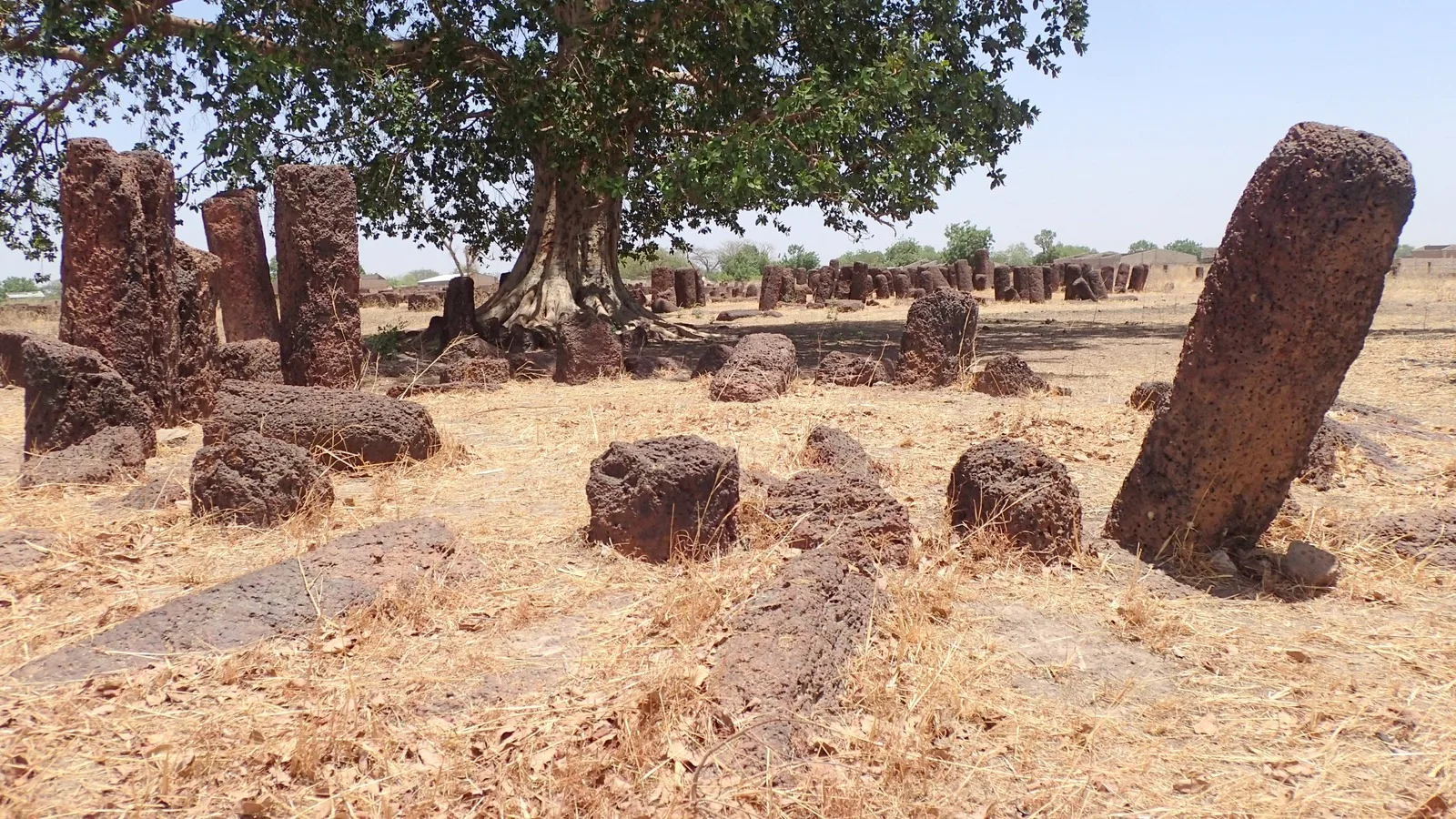
Four groups of megalithic circles stand between the River Gambia and the River Senegal, in a band about 100 kilometers wide and some 350 kilometers long. UNESCO counts more than 1,000 monuments across it. The four inscribed groups comprise 93 circles and numerous tumuli.
Two of the four, Sine Ngayène and Wanar, are in Senegal. The other two, Wassu and Kerbatch, are in the Gambia. The property is shared between the two countries and was inscribed in 2006 under criteria (i) and (iii).
Visiting
- The Senegalese sites are Sine Ngayène and Wanar. Both are fenced and staffed.
- There is an interpretation center at Sine Ngayène and a welcome space at both sites.
- The ground is open and uneven, and there is very little shade.
- The quarry near Sine Ngayène is outside the inscribed property.
- Seeing all four groups means crossing into the Gambia, which is a separate country and a separate border.
Sources
All figures above are from the UNESCO listing for the Stone Circles of Senegambia, ref 1226, read on 20 August 2026, and the property is shared between Senegal and the Gambia.