Heritage
Twyfelfontein or /Ui-//aes: Visitor and Heritage Guide
Twyfelfontein carries one of the largest concentrations of rock engravings in Africa, and its second name is older than its first.
- Country Namibia
- Category Heritage
- Reviewed 18 August 2026
- Sources 3
- Length 2 min read
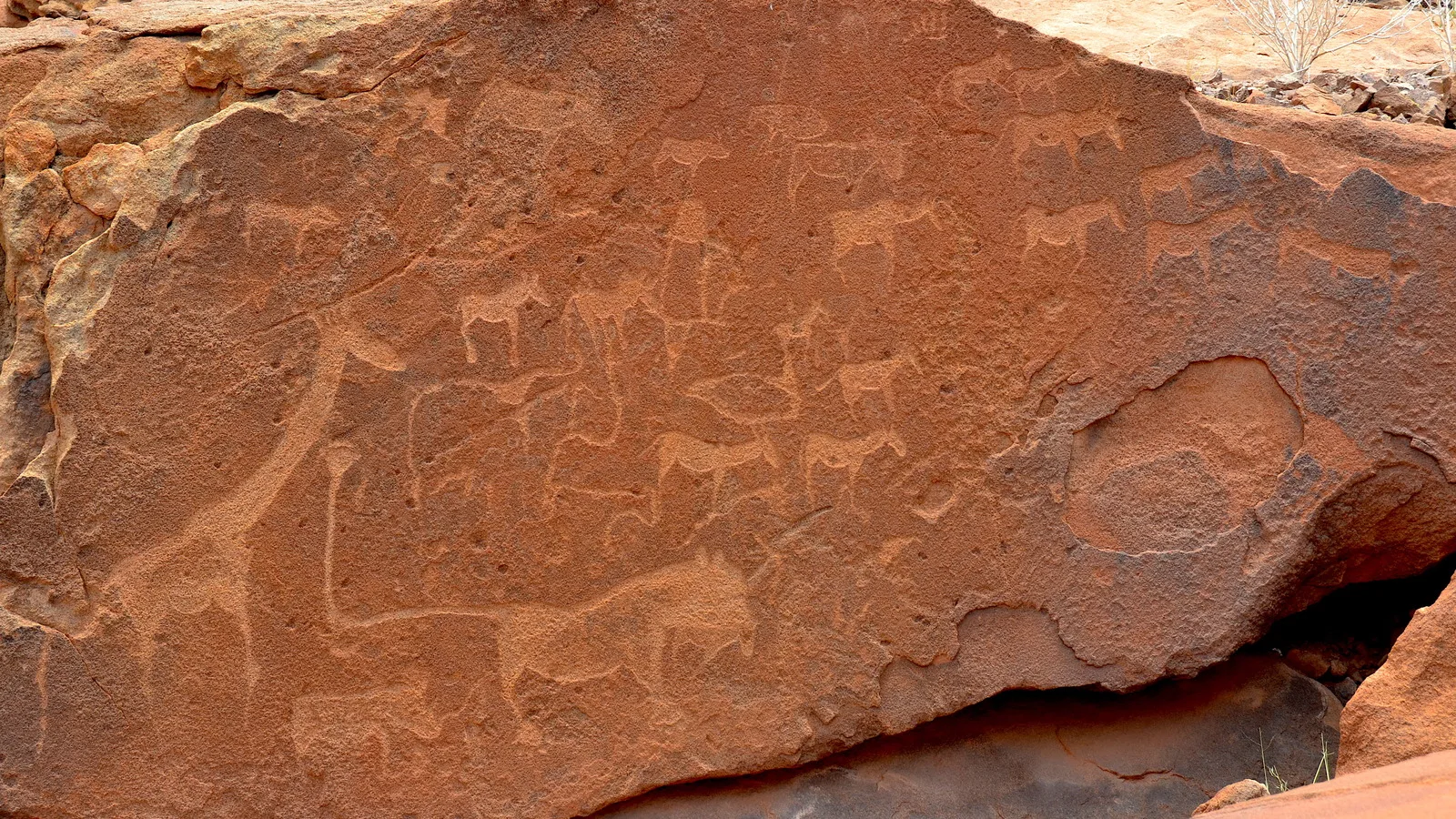
Credit Olga Ernst, CC BY-SA 4.0, via Wikimedia Commons
The site has two names on its inscription and the order they are usually given in is the reverse of the order they arrived in. Twyfelfontein is Afrikaans, and it means doubtful spring. /Ui-//aes is the Damara name, and it was there first.
What is inscribed
Twyfelfontein or /Ui-//aes was inscribed on the World Heritage List in 2007, in the cultural category. It is one of Namibia’s two World Heritage properties; the other, the Namib Sand Sea, is natural and was inscribed in 2013.
Note the year, because it is often given wrongly as 2001. It is 2007.
Engravings, not paintings
The distinction matters and visitors routinely get it wrong. The images here are petroglyphs: pecked and ground into the surface of the sandstone rather than painted onto it. That is why they read as pale shapes in red rock rather than as pigment, and it is why they have survived exposed for so long.
The subjects are overwhelmingly animals: giraffe, rhinoceros, elephant, ostrich, lion, and human and animal footprints repeated across the panels. The famous Lion Man panel and the Dancing Kudu are the images that reproduce best, and there are hundreds of others.
Interpretations of what the engravings were for vary and are contested among specialists. This page does not pick one.
Visiting
Guides are mandatory, and this is one of the places where that rule is doing real work: the panels are spread over uneven rock and unaccompanied visitors damage them, mostly by touching. Skin oils are why a surface that lasted thousands of years does not last a thousand tourists.
The routes involve rock, steps and gradients, and some panels are far more accessible than others. Go early: the site is in Damaraland, the light is better at the start of the day, and by mid afternoon the rock is extremely hot.
What else is nearby
Damaraland holds the Organ Pipes, the Petrified Forest and Burnt Mountain within a short drive, and desert adapted elephant range through the area. Brandberg, with its own enormous body of rock art, is further south and is on Namibia’s Tentative List rather than inscribed.
Visiting Twyfelfontein
- Inscribed in 2007, not 2001, in the cultural category
- These are engravings, pecked into the rock, not paintings
- A guide is mandatory, and the reason is conservation
- Never touch a panel
- Go early, because the rock gets very hot and the light is better
- Ask which panels are reachable if steps and gradients are a problem
Sources
- UNESCO World Heritage Centre: Twyfelfontein or /Ui-//aes, inscription 1255
- UNESCO World Heritage Centre: Namibia, its inscribed properties and its Tentative List
- Namibia Ministry of Environment, Forestry and Tourism
The inscription year and category were read from the World Heritage Centre’s own record.