Algeria
Seven World Heritage sites, and the most famous of them is in a desert the advisory closes
- Region North Africa
- Country Algeria
- Type Country
- Reviewed 13 August 2026
- Sources 4
- Length 3 min read
Credit Bernard Gagnon, CC BY 4.0, via Wikimedia Commons
Why Algeria
The largest country in Africa, and seven World Heritage properties, which is more than any other country in this set. They are not variations on a theme.
Three are Roman: Djemila, Timgad and Tipasa. One is the medieval Islamic fortified city of Al Qal’a of Beni Hammad. One is the Kasbah of Algiers. One is the M’Zab Valley, five fortified ksour built by the Mozabites in the tenth century. And one is Tassili n’Ajjer, which is prehistoric rock art in the deep desert, and which the advisory block above closes.
Djemila
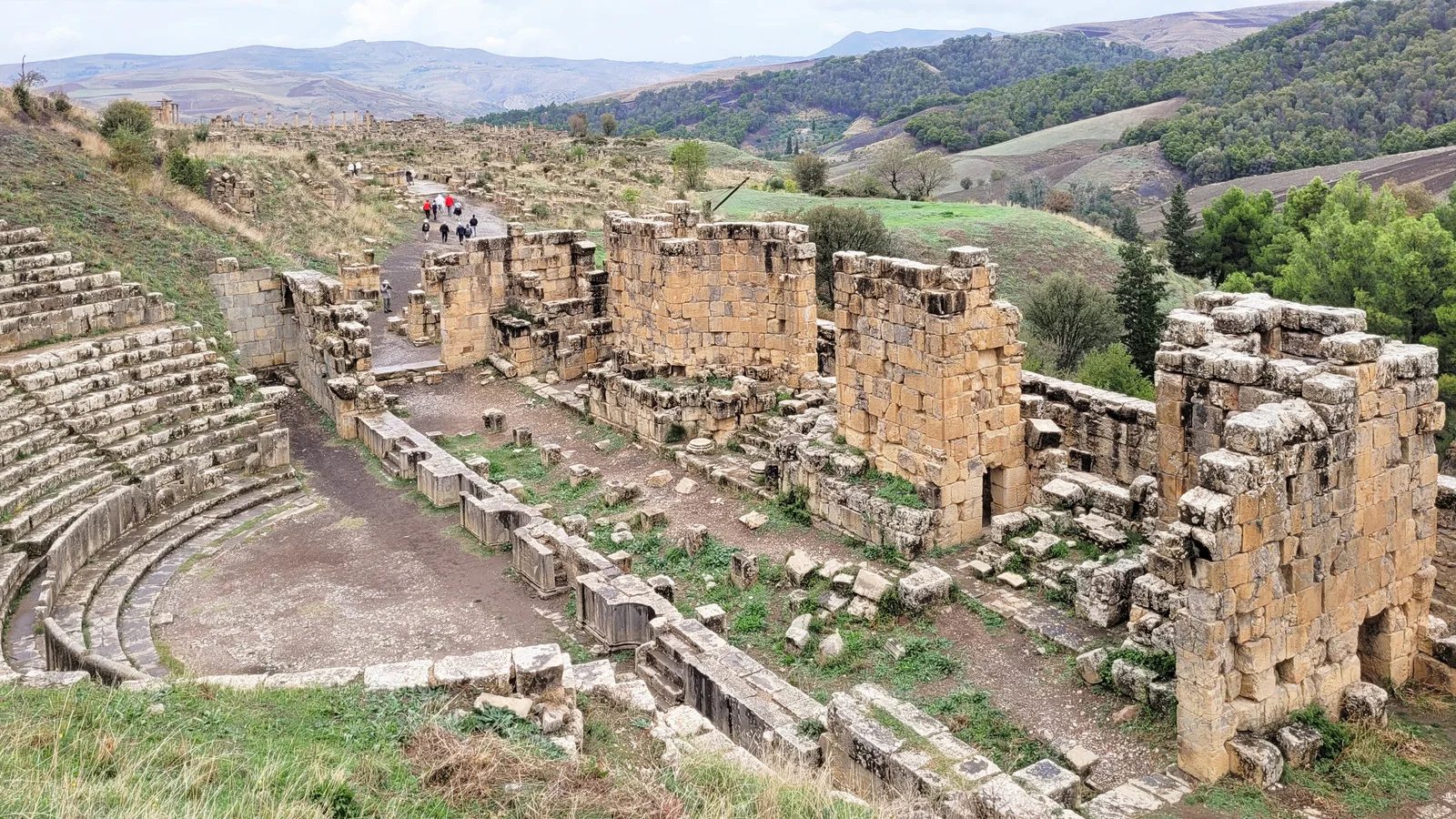
Djemila sits at 900 meters in the mountains of Setif province, and it is a Roman town adapted to a landscape Roman town planning was not designed for. The standard grid was bent around the terrain rather than imposed on it, which is much of why it is inscribed.
The photograph at the top of this page is its theater, cut into the hillside. Around it stand a forum, temples, basilicas, arches, houses and streets, in one of the better preserved groups of Roman remains anywhere in North Africa.
Food
Couscous is the center, and the argument over whose is best runs the width of the Maghreb. Chorba, the soup, opens most meals in Ramadan and many outside it. Mechoui is slow-roasted lamb. The pastry tradition is French-inflected and taken seriously.
Practical orientation
Arabic and Tamazight are both official and French is widely used. The currency is the dinar. Algiers has the main international airport, and the six accessible inscriptions are all reachable from the northern cities.
Entry requirements vary by nationality and change, and Algeria is stricter than most of its neighbors about them. This page is not the authority on them.
This page states no entry, health or security requirements, and is not advice. Check your own government’s current guidance before making any decision.
Sources and references
- UNESCO World Heritage Centre: Algeria, States Parties
- UNESCO World Heritage Centre: Djemila
- UNESCO World Heritage Centre: Tassili n Ajjer
- UNESCO Intangible Cultural Heritage: browse the Lists
These are the authoritative references for the heritage this page discusses; each was checked at source on 13 August 2026. Practical details (entry rules, health guidance, opening times) change constantly. The bodies listed here are authoritative and this page is not.