Angola
The capital of a kingdom that lasted five centuries, and a way of drawing that mathematicians now teach
- Region Central Africa
- Country Angola
- Type Country
- Reviewed 13 August 2026
- Sources 4
- Length 3 min read
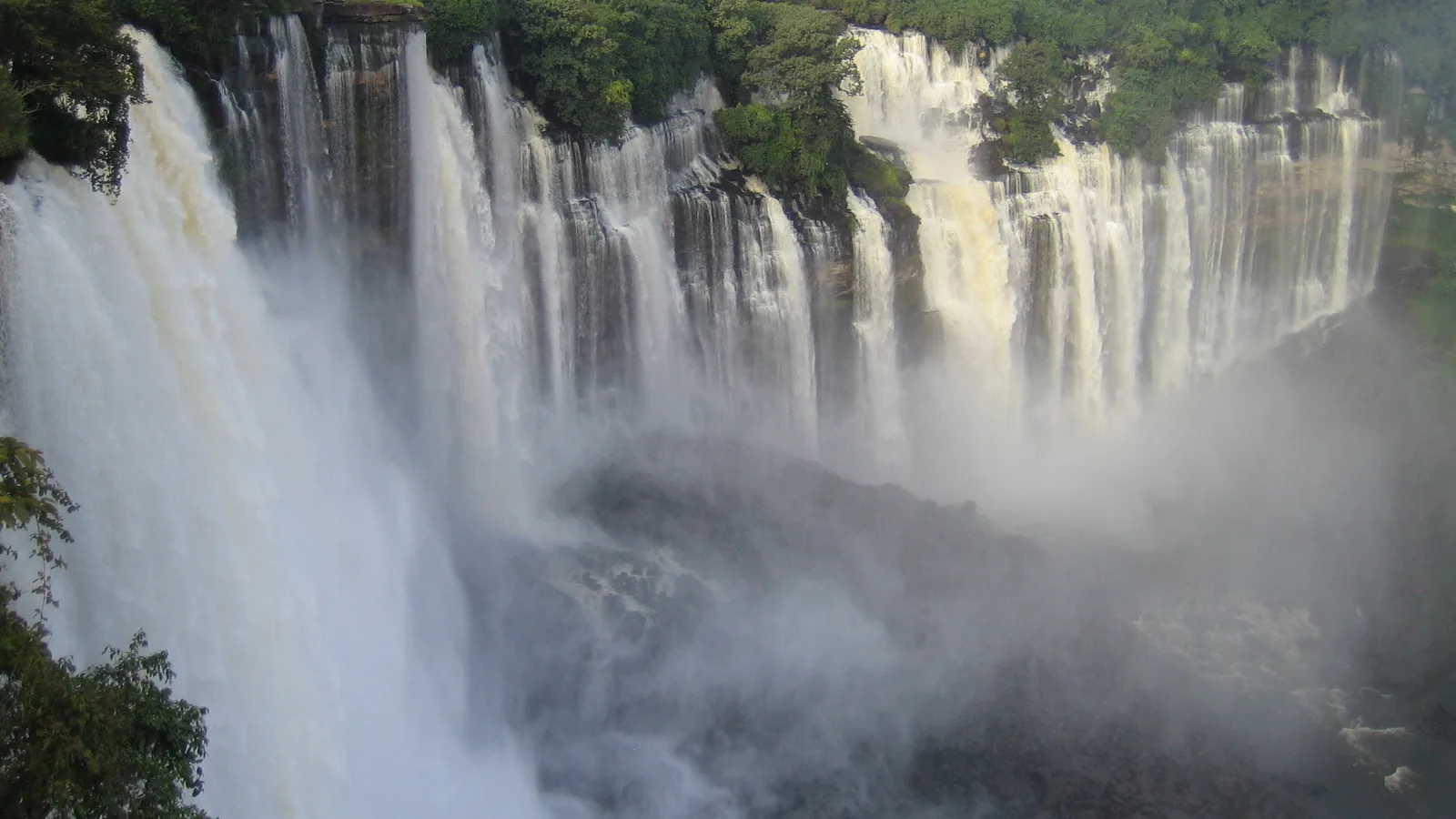
Credit Paulo César Santos, CC0, via Wikimedia Commons
Why Angola
Angola is large, Portuguese speaking and, for most of the last fifty years, has not been somewhere people arrived as visitors. It has one World Heritage property, which is few for its size, and one element on the intangible heritage lists.
The photograph at the top of this page is Kalandula, on the Lucala river in Malanje, and it is a landscape rather than the inscription. That is a limitation of what has been photographed, not a judgment about what matters here.
Mbanza Kongo
Mbanza Kongo sits on a plateau at 570 meters and was the political and spiritual capital of the Kingdom of Kongo, which UNESCO describes as one of the largest constituted states in the region from the fourteenth century to the nineteenth. Five hundred years is a long institutional life by any standard.
The historical area grew around four things: the royal residence, the customary court, the holy tree and the royal burial places. When the Portuguese arrived in the fifteenth century they added stone buildings, made by European methods, to a city already built in local materials.
The citation makes a large claim for it, and it is worth quoting the shape of it: Mbanza Kongo illustrates, more than anywhere else in sub-Saharan Africa, the profound changes caused by the introduction of Christianity and the arrival of the Portuguese in Central Africa. The two building traditions are still standing in the same streets.
Food
Funge is the cassava or maize porridge that anchors the plate. Muamba de galinha is chicken cooked with palm oil, okra and squash, close cousin to the palm nut dishes of the countries north of here. Calulu is dried fish or meat cooked with greens. The Portuguese half of the kitchen shows up in the bread and the coffee.
Practical orientation
Portuguese is the official language. The currency is the kwanza. Luanda has the main international airport, and Mbanza Kongo is in the far north, in Zaire province, close to the border with the Democratic Republic of the Congo.
The US advisory of 23 September 2024 places Angola at Level 2, exercise increased caution, and names four risks: crime, health, unrest and landmines. It describes violent crime including armed robbery, assault, carjacking and homicide as common, and health facilities as under-resourced, particularly outside the large cities. The landmine risk is the one that most affects where you can walk, and it is a legacy rather than a current conflict.
Entry requirements vary by nationality and change. The government of Angola is the authority on them, and this page is not.
This page states no entry, health or security requirements, and is not advice. Check your own government’s current guidance before making any decision.
Sources and references
- UNESCO World Heritage Centre: Angola, States Parties
- UNESCO World Heritage Centre: Mbanza Kongo, Vestiges of the Capital of the former Kingdom of Kongo
- UNESCO Intangible Cultural Heritage: Sona, drawings and geometric figures on sand
- US Department of State: Angola Travel Advisory
These are the authoritative references for the heritage this page discusses; each was checked at source on 13 August 2026. Practical details (entry rules, health guidance, opening times) change constantly. The bodies listed here are authoritative and this page is not.