Republic of the Congo
The richest primate diversity in Central Africa, and a forest that is still taking back the savanna
- Region Central Africa
- Country Republic of the Congo
- Type Country
- Reviewed 13 August 2026
- Sources 5
- Length 3 min read
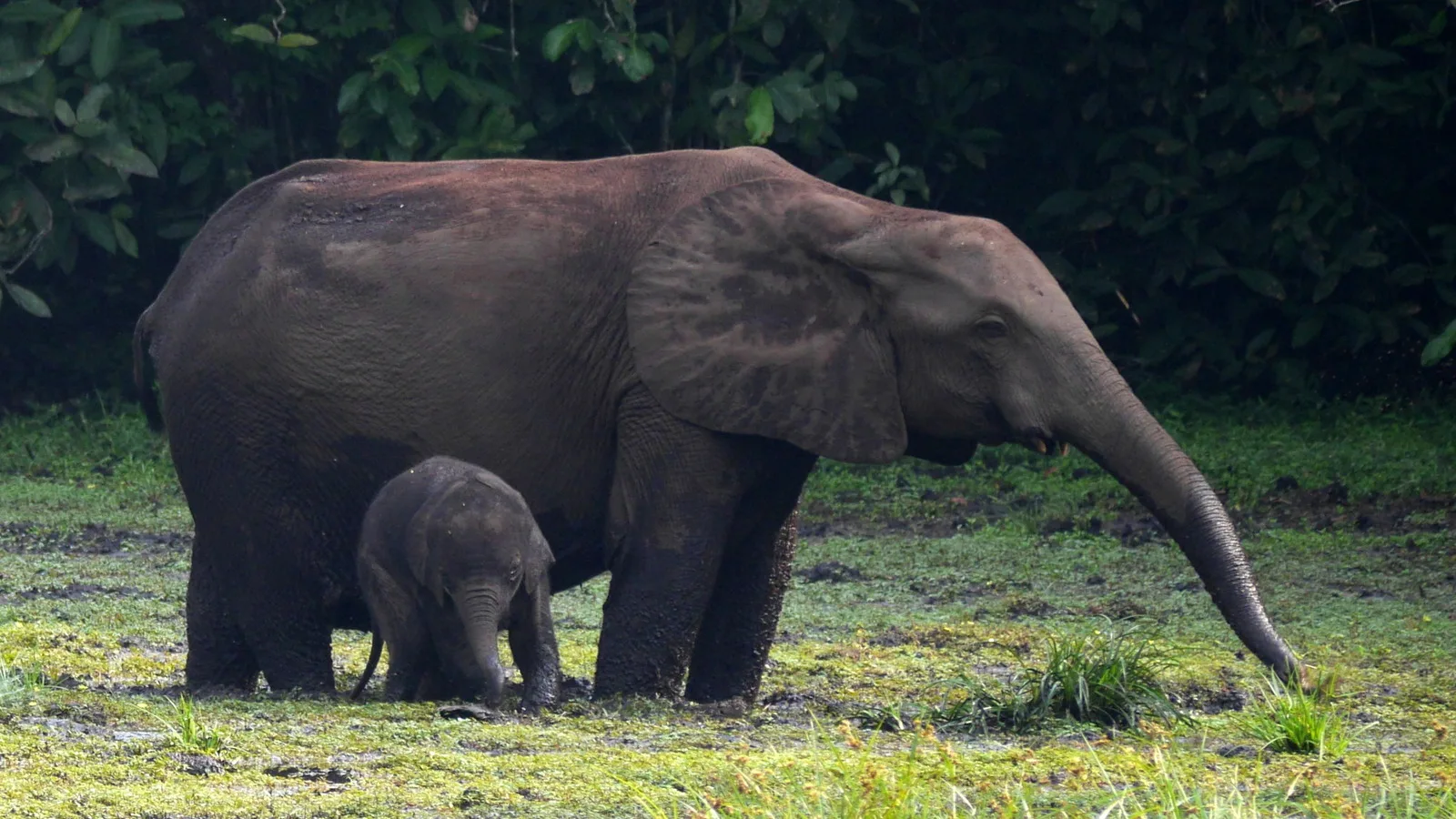
Credit Matt Muir, CC BY 4.0, via Wikimedia Commons
Why the Republic of the Congo
Two things are worth settling first. This is the Republic of the Congo, the smaller of the two, with its capital at Brazzaville. It is not the Democratic Republic of the Congo across the river, which is a different country with a different advisory.
And its current US advisory is the mildest in this batch: Level 2 for crime, with no Do Not Travel area anywhere. That is not what most readers expect from the word Congo, and it is worth saying plainly.
Odzala-Kokoua
The Forest Massif of Odzala-Kokoua is inscribed for something slow: it is an exceptionally large-scale example of forest taking back savanna after the last glacial period. Three ecosystem types converge here, the Congolese Forest, the Lower Guinean Forest and savanna, and the forest inside it is of many different ages at once, which is what gives the park its ecology.
Two superlatives come out of that. UNESCO calls it one of the most important strongholds for forest elephants in Central Africa, and recognizes it as the park with the richest primate diversity in the region. The photograph at the top of this page is a forest elephant and her calf at the edge of a clearing.
Food
Saka saka is cassava leaves pounded and cooked long, dark green and slightly bitter, and it appears at most meals in one form or another. Poulet moambe is chicken in palm nut sauce, the same idea as Gabon’s nyembwe under a different name. River fish is grilled or smoked, and cassava in its various forms does the work bread does elsewhere.
Practical orientation
French is the official language and Lingala and Kituba are widely spoken. The currency is the CFA franc. Brazzaville has the main international airport and Pointe Noire is the coastal city.
The US advisory of 2 October 2024 places the country at Level 2 for crime, and describes violent crime as a concern without being common. Two details in it are more useful than the level. It says US government employees must use two vehicles for all overland travel outside Brazzaville, and that in Pointe Noire they are restricted to the beaches next to their hotels. If you are planning to reach Odzala overland, the first of those tells you more about the roads than any brochure will.
Entry requirements vary by nationality and change. The government of the Republic of the Congo is the authority on them, and this page is not.
This page states no entry, health or security requirements, and is not advice. Check your own government’s current guidance before making any decision.
Sources and references
- UNESCO World Heritage Centre: Congo, States Parties
- UNESCO World Heritage Centre: Forest Massif of Odzala-Kokoua
- UNESCO World Heritage Centre: Sangha Trinational
- US Department of State: Republic of the Congo Travel Advisory
- Government of the Republic of the Congo
These are the authoritative references for the heritage this page discusses; each was checked at source on 13 August 2026. Practical details (entry rules, health guidance, opening times) change constantly. The bodies listed here are authoritative and this page is not.