Mozambique
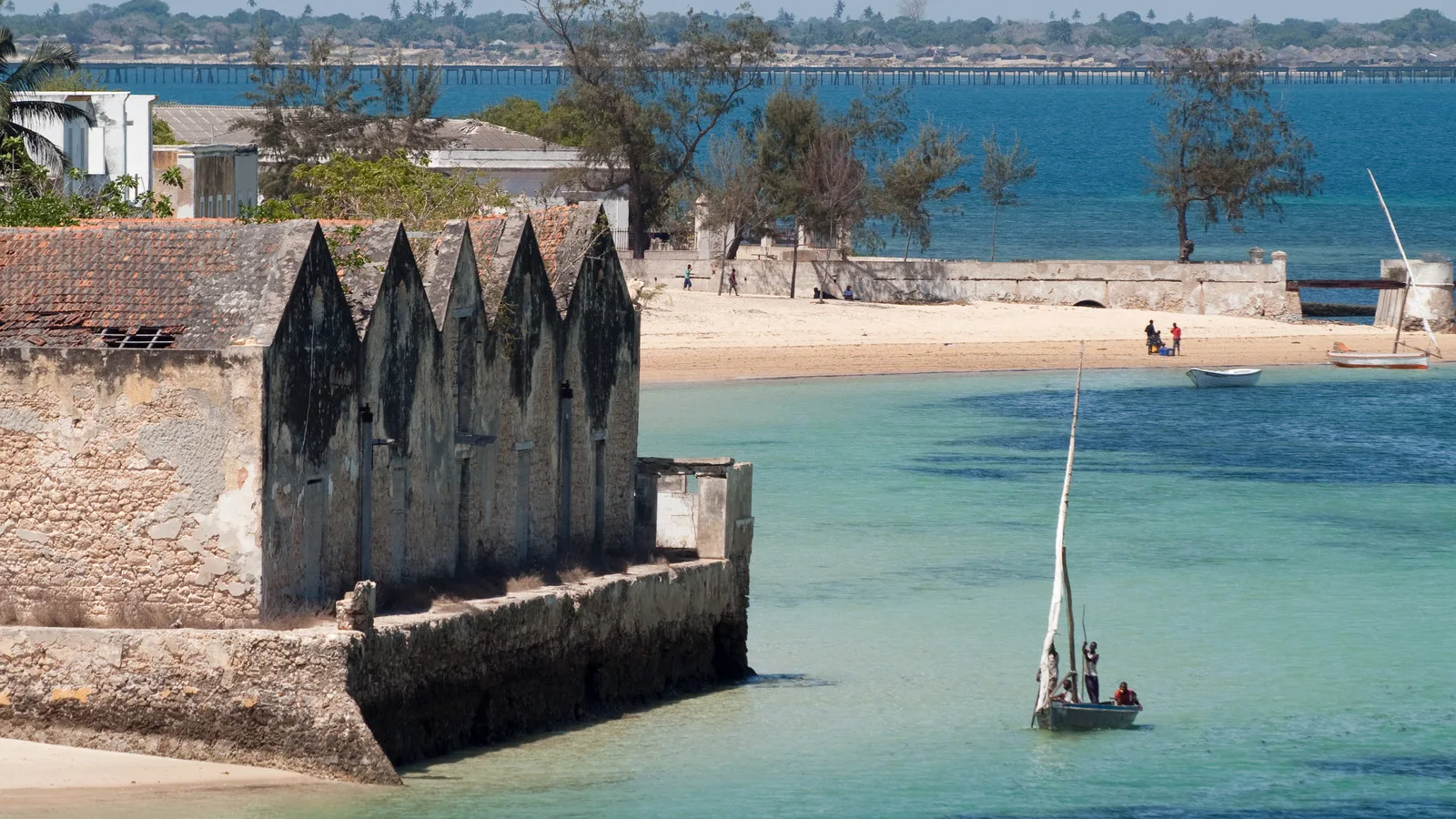
A fortified island on the route to India, in a province the current advisory partly closes
- Region Southern Africa
- Country Mozambique
- Type Country
- Reviewed 13 August 2026
- Sources 4
- Length 3 min read
Credit Stig Nygaard, CC BY 2.0, via Wikimedia Commons
Why Mozambique
Mozambique has two World Heritage properties and they could hardly be less alike. One is a fortified island town of coral stone. The other is a natural property shared with South Africa, joining the iSimangaliso Wetland Park and Maputo National Park across the border.
The country is long. The distance from Maputo in the south to the Island of Mozambique is comparable to crossing several European countries, and the advisory applies differently along the way.
The Island of Mozambique
The island carries a fortified city that was a Portuguese trading post on the route to India. What UNESCO singles out is not any single building but the consistency: since the sixteenth century the same building techniques, the same materials and the same decorative principles have been used, which gives the place what the citation calls a remarkable architectural unity.
The materials are worth naming, because they are the town’s social history in shorthand: stone or macuti. Macuti is palm thatch, and the half of the island built in it is where most of the population lives.
Food
Peri peri is the thing Mozambique exports to the rest of the world, chili and garlic and oil, and prawns cooked in it are the dish visitors are steered toward for good reason. Matapa is cassava leaves ground with peanut and coconut, slow and green and much more everyday. Portuguese bread turns up at breakfast and has not gone anywhere in fifty years.
Practical orientation
Portuguese is the official language and is genuinely useful here in a way that carries across the region less than you would expect. The currency is the metical. Maputo has the main international airport and Nampula and Pemba have their own.
Mozambique operates an official eVisa and eTA portal. Requirements vary by nationality and change, and that portal is the authority on them, not this page.
This page states no entry, health or security requirements, and is not advice. Check your own government’s current guidance before making any decision.
Sources and references
- UNESCO World Heritage Centre: Mozambique, States Parties
- UNESCO World Heritage Centre: Island of Mozambique
- UNESCO Intangible Cultural Heritage: browse the Lists
- Mozambique eVisa and eTA, official portal
These are the authoritative references for the heritage this page discusses; each was checked at source on 13 August 2026. Practical details (entry rules, health guidance, opening times) change constantly. The bodies listed here are authoritative and this page is not.