Côte d'Ivoire
A first capital planned with separate quarters for Europeans and Africans, and five inscriptions in all
- Region West Africa
- Country Côte d'Ivoire
- Type Country
- Reviewed 13 August 2026
- Sources 3
- Length 4 min read
Credit Wikimedia Commons, CC0
Why Cote d Ivoire
Five World Heritage properties is a lot, and they are unusually varied: one colonial town, one set of mosques, and three protected natural areas, one of which is shared with Guinea.
The country is also the largest cocoa producer in the world, which is the single fact that explains most of its economy and a good deal of its history. Read the advisory block above before planning around the northern half.
Grand-Bassam
Grand-Bassam was the first capital, and UNESCO’s description of it is unusually exact about how it was built. It was a planned colonial town of the late nineteenth and early twentieth centuries, laid out in quarters that specialized: one for commerce, one for administration, one for housing Europeans, and one for housing Africans.
That is segregation described in the language of town planning, and it is in the citation rather than in this page’s reading of it. Alongside the colonial architecture, with its galleries, verandas and gardens, stands the N’zima African fishing village, which was there and remains there.
UNESCO says the town bears witness to the complex social relations between Europeans and Africans and to the independence movement that followed. It was the most important port and the economic and judicial center of the territory, and it drew people from across Africa, Europe and the Mediterranean Levant.
Food
Attieke with grilled fish is the national plate and the reason to arrive hungry. Garba is attieke with fried tuna, sold from stalls, and is the everyday version. Kedjenou is chicken cooked slowly in a sealed pot with vegetables and almost no added liquid, so it steams in what it releases.
Practical orientation
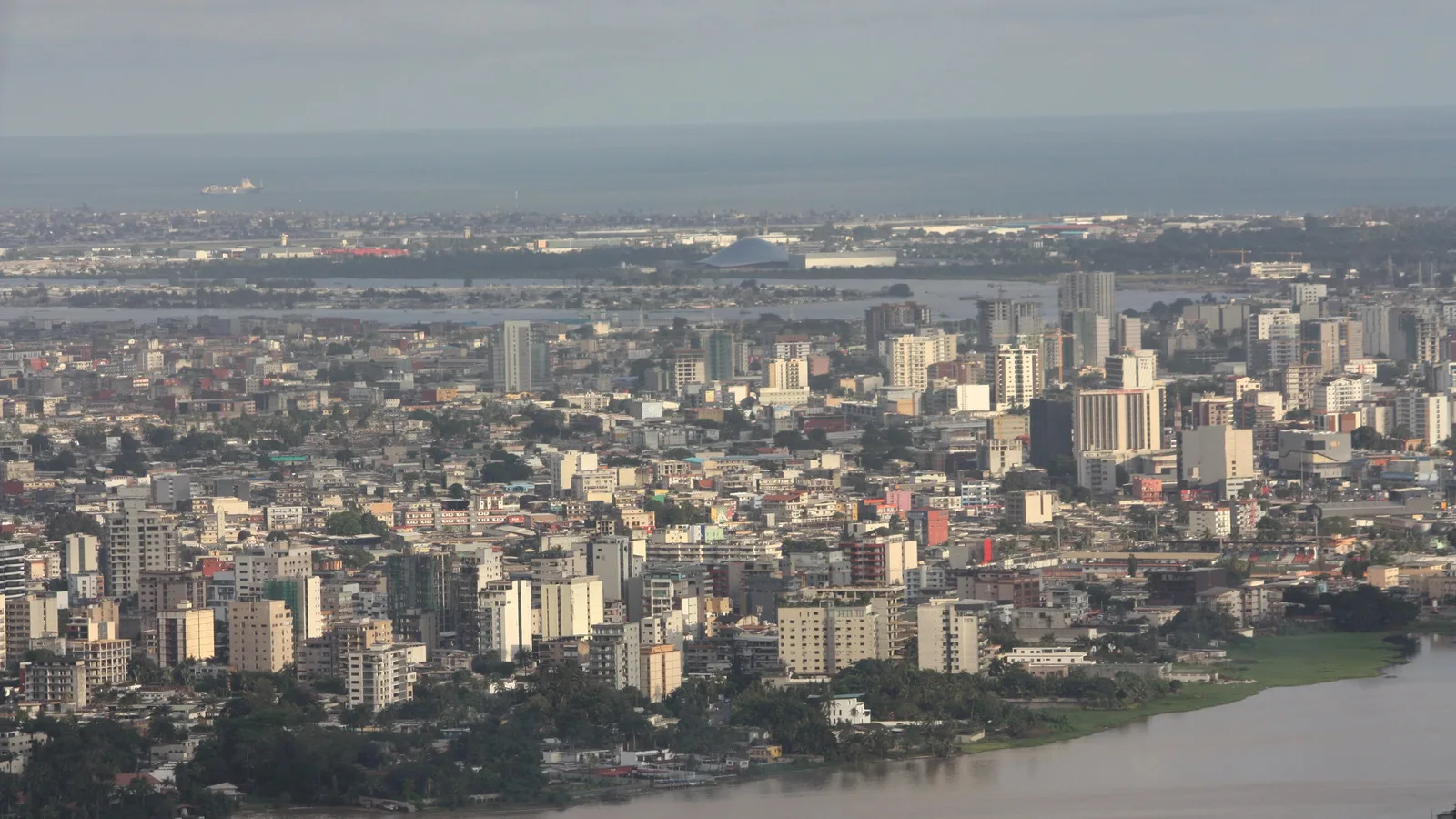
French is the official language and there are around sixty others. The currency is the CFA franc. Abidjan is the economic capital and has the main international airport; Yamoussoukro is the political capital.
Beyond the northern restriction in the advisory block above, the advisory also names piracy in nearby waters, which is a Gulf of Guinea issue rather than a coastal one and affects shipping more than visitors.
Entry requirements vary by nationality and change. This page is not the authority on them.
This page states no entry, health or security requirements, and is not advice. Check your own government’s current guidance before making any decision.
Sources and references
- UNESCO World Heritage Centre: Cote d Ivoire, States Parties
- UNESCO World Heritage Centre: Historic Town of Grand-Bassam
- UNESCO Intangible Cultural Heritage: browse the Lists
These are the authoritative references for the heritage this page discusses; each was checked at source on 13 August 2026. Practical details (entry rules, health guidance, opening times) change constantly. The bodies listed here are authoritative and this page is not.