Guinea-Bissau
One World Heritage site, inscribed in 2025, and it is the archipelago itself
- Region West Africa
- Country Guinea-Bissau
- Type Country
- Reviewed 14 August 2026
- Sources 3
- Length 3 min read
Credit Nammarci, CC BY 3.0, via Wikimedia Commons
Why Guinea-Bissau
A small Atlantic country between Senegal and Guinea whose coast dissolves into islands. The Bijagos lie off the mouth of the Geba, and the boundary between land and sea moves with the tide across much of it.
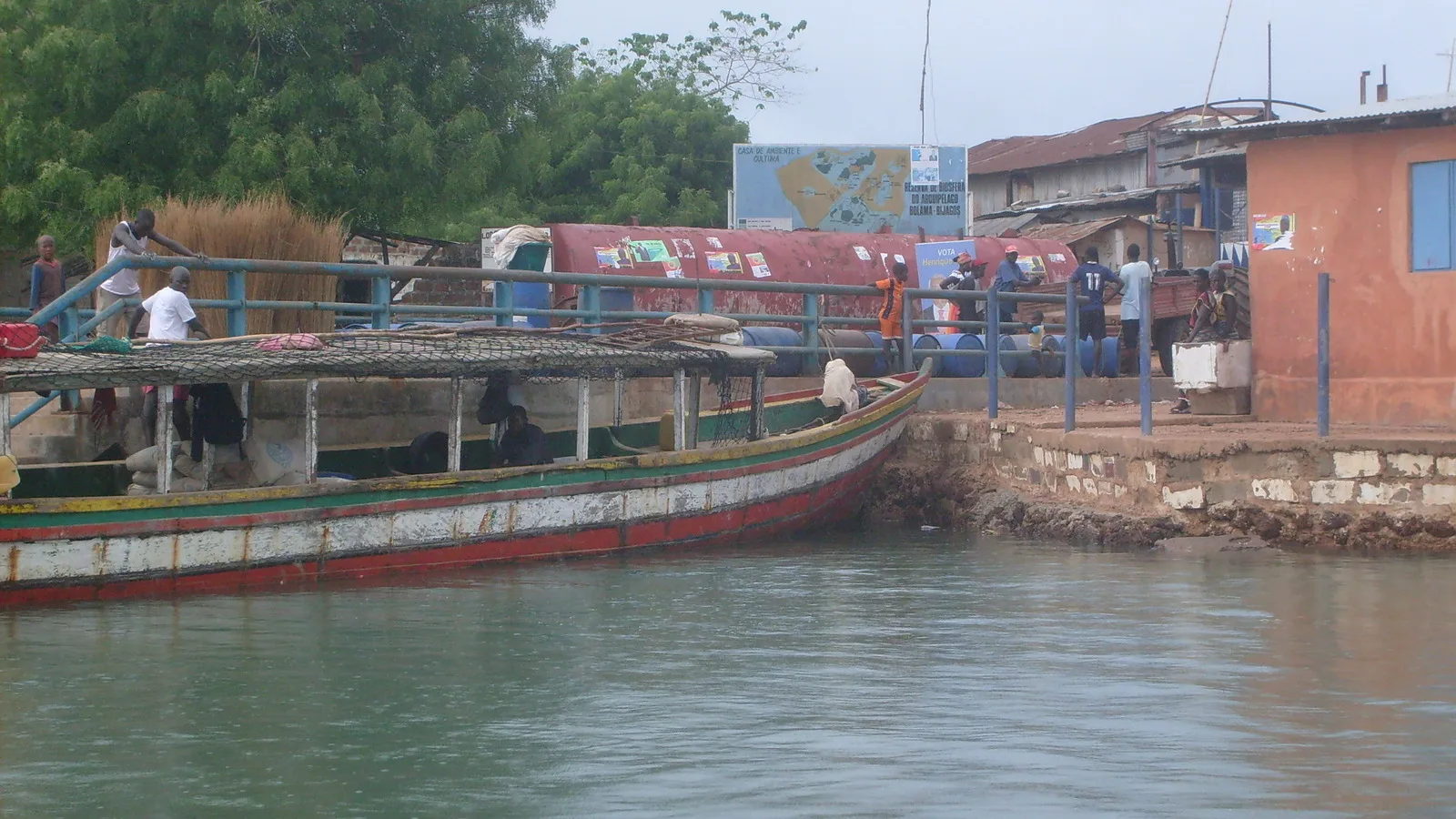
The photograph at the top of this page is the quay at Bubaque, one of the inhabited islands: a wooden passenger boat, fuel drums, a signboard for the biosphere reserve. Reaching the archipelago is a boat journey, and that is the ordinary condition of travel here rather than an adventure being sold.
Food
Rice is the staple and palm oil is the fat that flavors most of what goes with it. Fish and shellfish are everywhere near the coast and the islands. Cashew dominates the farmed economy, and the fruit as well as the nut has a place at the table.
Practical orientation
Portuguese is the official language and Guinea-Bissau Creole is the common one. The currency is the West African CFA franc. Bissau has the international airport, and the islands are reached by boat.
Entry requirements vary by nationality and change. This page is not the authority on them.
This page states no entry, health or security requirements, and is not advice. Check your own government’s current guidance before making any decision.
Sources and references
- UNESCO World Heritage Centre: Guinea-Bissau, States Parties
- UNESCO World Heritage Centre: Coastal and Marine Ecosystems of the Bijagos Archipelago
- US Department of State: Guinea-Bissau Travel Advisory
These are the authoritative references for the heritage this page discusses; each was checked at source on 14 August 2026. Practical details (entry rules, health guidance, opening times) change constantly. The bodies listed here are authoritative and this page is not.