Zambia
The Zambezi, the Copperbelt, and a country that lets you have it to yourself
- Region Southern Africa
- Country Zambia
- Type Country
- Reviewed 10 August 2026
- Sources 3
- Length 3 min read
Credit Eston Oboch, via Unsplash
Why Zambia
Zambia is a large, landlocked country that most visitors experience through a single sight, and it is worth saying plainly that the sight is worth it. But treating the country as a day trip to a waterfall misses what it is actually good at, which is space, water, and being left alone in the middle of both.
English is an official language and the national manner is unhurried. The parks are big and, by regional standards, lightly visited. Zambia asks for time and returns more to the people who give it.
Mosi-oa-Tunya and the Zambezi
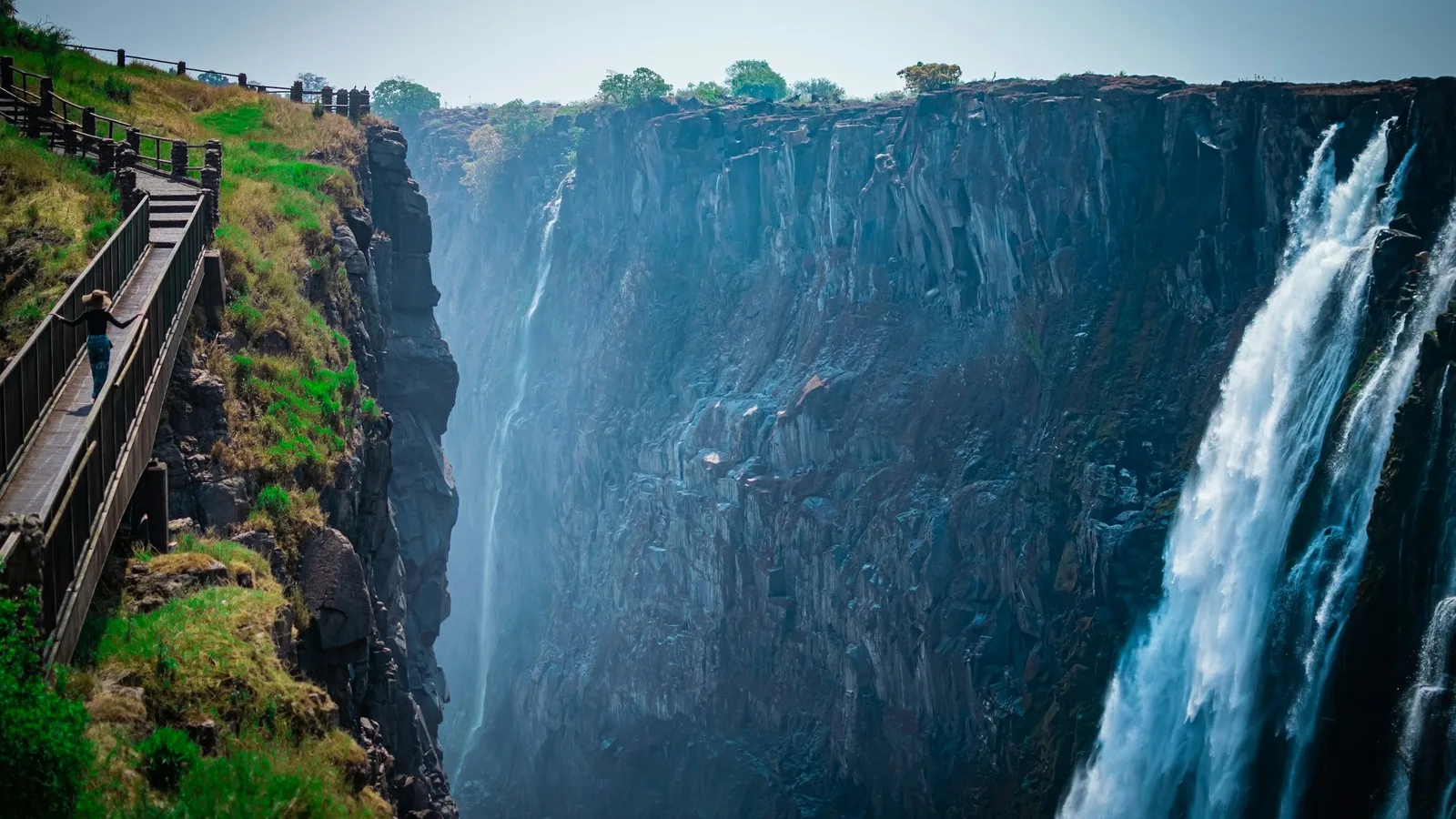
The Zambezi is more than two kilometers wide where it arrives at the falls, and it drops into a series of basalt gorges that the river has been cutting for a very long time. On the Zambian side the protected area is Mosi-oa-Tunya National Park; the spray, in high water, is visible from tens of kilometers away.
The volume changes enormously through the year. At peak flow the viewpoints are drenched and you see almost nothing but water and mist; at low water whole sections of the lip run dry and the geology the falls are built on becomes visible instead. Neither is the real Victoria Falls. Both are worth understanding before you commit to a month.
Copper, and the cities it built
Zambia’s urban map was drawn by mining. The Copperbelt towns in the north exist because of what is underneath them, and the rail line linking them to Lusaka is still the spine of the country. Independence came in 1964, and the politics of copper (who owns it, who profits from it, what happens when the price falls) has shaped national life ever since.
For a visitor this mostly explains the shape of the place: a line of substantial working towns, long distances between them, and a capital that is a center of business rather than a showpiece. Lusaka is not trying to charm anyone, and it is more interesting for that.
Food
The staple is nshima, a stiff maize porridge eaten by hand with relish, a word that covers everything from pounded groundnut greens to dried kapenta fish to beef stew. Ifisashi, greens cooked down in groundnut sauce, is the dish to ask for by name. A Zambian meal is not a plate of separate things. It is nshima plus what goes with it, and the proportions are part of the point.
Practical orientation
English is the official language and is used in government and business; Bemba, Nyanja, Tonga and Lozi are widely spoken. The currency is the Zambian kwacha. The dry season runs roughly May to October; the rains fall from about December to March, when some park roads close and the falls run at their heaviest.
Entry and health requirements vary by nationality and change. Consult the Department of Immigration and your own government before you travel.
Sources and references
- UNESCO World Heritage Centre: Mosi-oa-Tunya / Victoria Falls
- UNESCO World Heritage Convention: Zambia
- Zambia Department of Immigration
The heritage facts on this page are taken from the UNESCO World Heritage Centre inscriptions listed above, read at source rather than summarized from memory. Practical details change: the official bodies listed here are authoritative and this page is not.