Zimbabwe
Five World Heritage sites, one of them a waterfall this site has so far only shown you from the other bank
- Region Southern Africa
- Country Zimbabwe
- Type Country
- Reviewed 13 August 2026
- Sources 5
- Length 3 min read
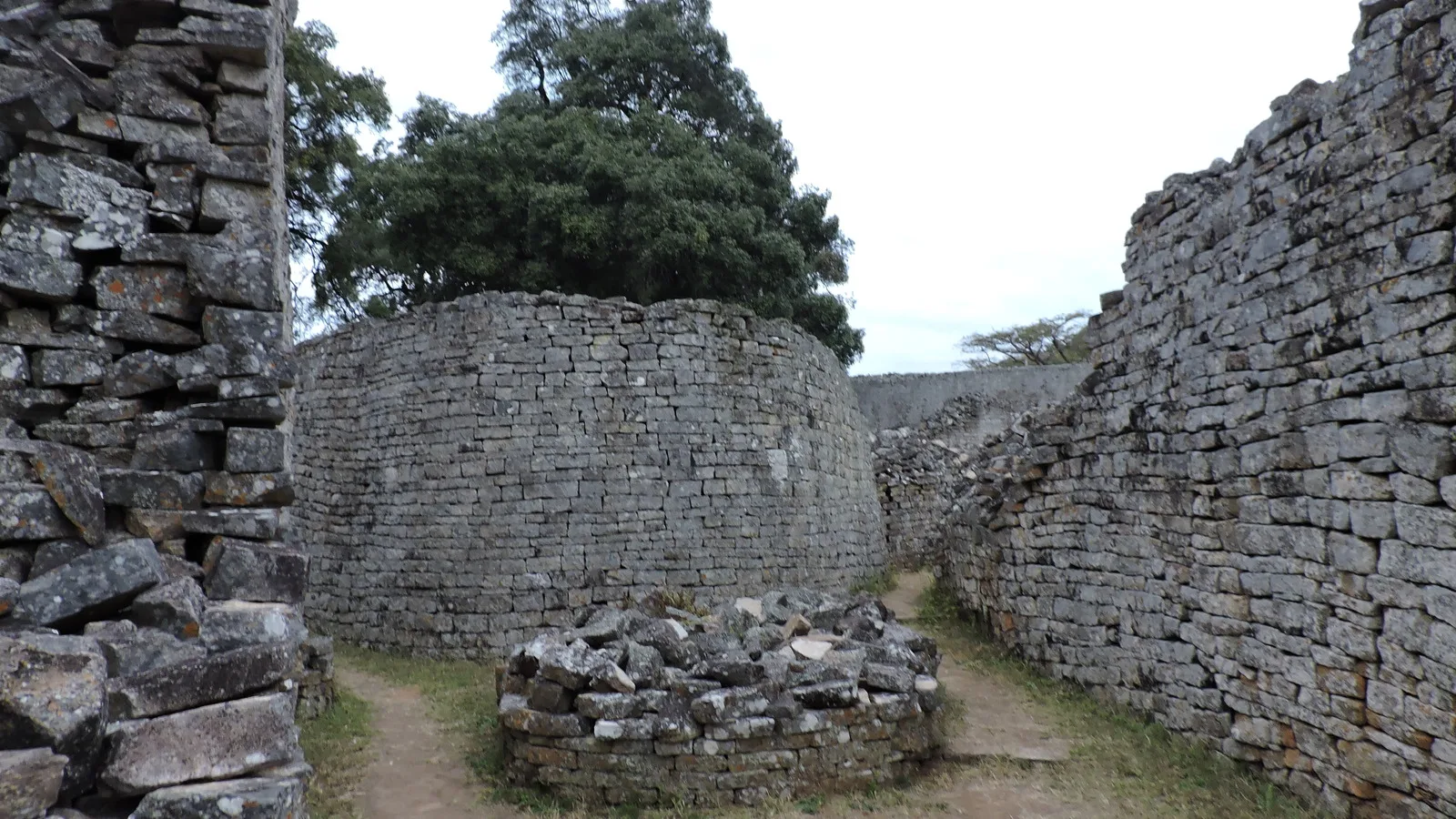
Credit Mike from Vancouver, CC BY 2.0, via Wikimedia Commons
Why Zimbabwe
Zimbabwe has five World Heritage properties, which is a lot for a country of its size and more than any of its neighbors in this batch. Two are stone cities, Great Zimbabwe and Khami. One is a granite landscape, the Matobo Hills. One is a river wilderness, Mana Pools with the Sapi and Chewore safari areas. And one is Mosi-oa-Tunya.
That last one this site has already published, from the other side. The Zambia hub covers the same waterfall, because the property is shared and the river is the border. Reading the two together is the point.
Great Zimbabwe
UNESCO’s description of Great Zimbabwe does something unusual. It opens by reporting that an age-old legend made this the capital of the Queen of Sheba, and then states, in the same sentence, that the ruins are a unique testimony to the Bantu civilization of the Shona between the eleventh and fifteenth centuries.
Both halves are in the citation, and the distance between them is the most interesting thing on the page. The site covers nearly 80 hectares. It was an important trading center and was renowned from the Middle Ages onward. The walls are dry-stone, laid without mortar, and the photograph at the top of this page is the Great Enclosure from inside it.
Mosi-oa-Tunya, from the Zimbabwean bank
The Zambezi is more than two kilometers wide where it reaches the edge, and it goes down into a series of basalt gorges. The spray rises far enough to be seen more than twenty kilometers away, which is what the Lozi name records.
The property is inscribed for Zambia and Zimbabwe together. Which bank you stand on changes what you see and not what it is.
Food
Sadza is the maize meal that anchors most plates, stiff enough to lift and use. Muriwo is greens, often with peanut butter stirred through until the sauce goes thick. Kapenta, the small dried fish from the lake, is fried and eaten whole with sadza and is the flavor people who grew up there tend to name first.
Practical orientation
English, Shona and Ndebele are all official. Harare has the main international airport and Victoria Falls has its own, which is the practical way to reach the waterfall.
The US advisory places Zimbabwe at Level 2, exercise increased caution, for crime and for official harassment of US citizens. It describes opportunistic crime as common and notes that violent crime also occurs. Read it in full and note its date: it was reissued on 27 June 2023, so it is a three year old assessment, which is weaker evidence than a recent one either way.
Entry requirements vary by nationality and change. Zimbabwe operates an official eVisa platform, and that platform is the authority on them, not this page.
This page states no entry, health or security requirements, and is not advice. Check your own government’s current guidance before making any decision.
Sources and references
- UNESCO World Heritage Centre: Zimbabwe, States Parties
- UNESCO World Heritage Centre: Great Zimbabwe National Monument
- UNESCO World Heritage Centre: Mosi-oa-Tunya and Victoria Falls
- UNESCO Intangible Cultural Heritage: browse the Lists
- Zimbabwe eVisa Platform, Government of Zimbabwe
These are the authoritative references for the heritage this page discusses; each was checked at source on 13 August 2026. Practical details (entry rules, health guidance, opening times) change constantly. The bodies listed here are authoritative and this page is not.