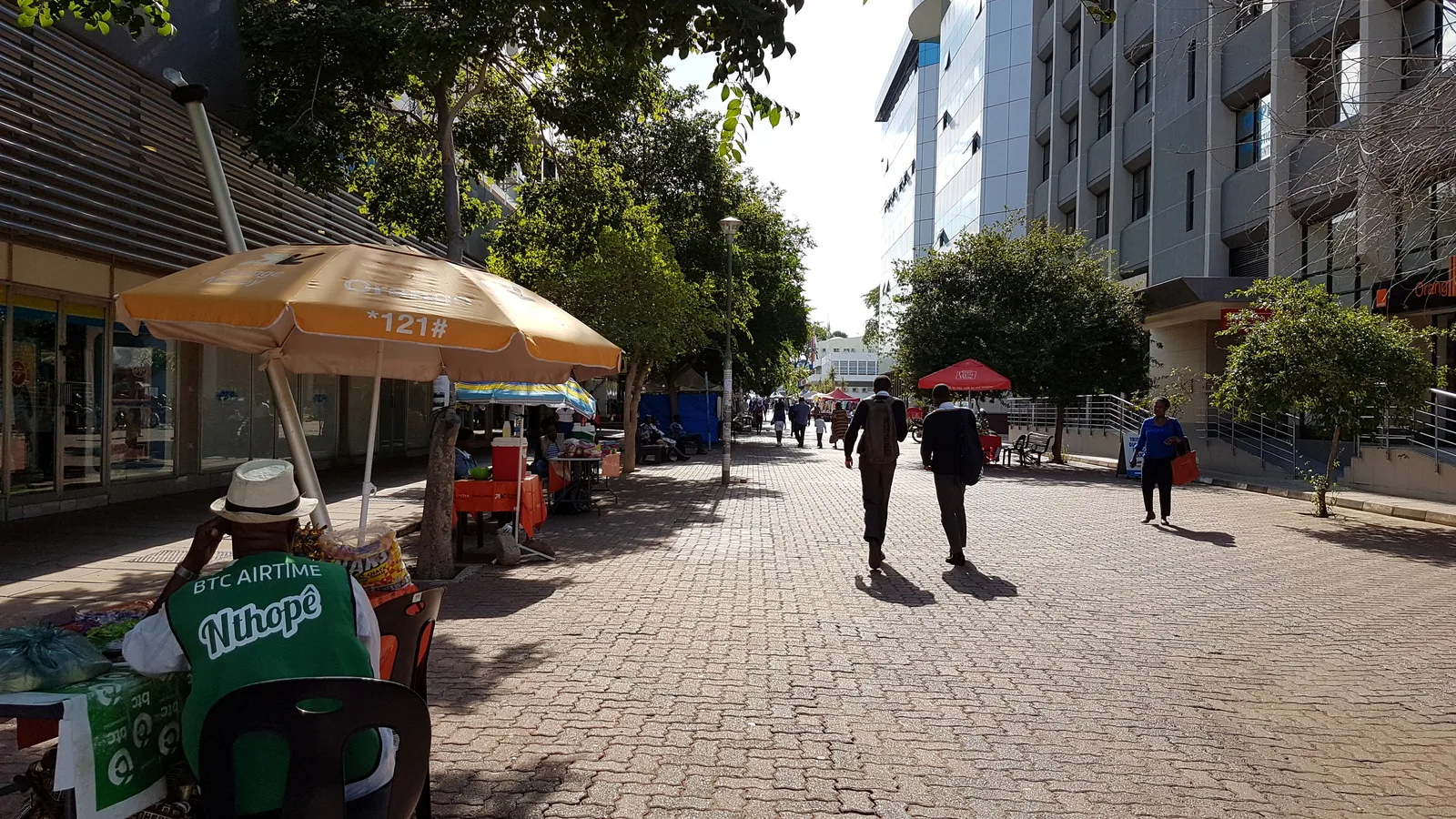
Botswana Currency and Money Guide
- Country Botswana
- Guide Budget
- Reviewed 18 August 2026
- Length 2 min read
Credit CNJerem, CC BY 4.0, via Wikimedia Commons
Last reviewed 18 August 2026
Botswana is one of the more comfortable countries in the region to handle money in, and it is also one of the more expensive to travel in. Both facts come from the same place, and it is worth understanding why before you look at a quote and flinch.
The pula, and what its name means
The currency is the pula, issued by the Bank of Botswana, and it divides into thebe. Pula means rain. It is also the national motto and the word a room calls out at the end of a speech. Thebe means shield.
In a country that is largely Kalahari, naming your money after rain is not whimsy. It is a statement about what is actually valuable, and it is the single most useful thing to know about Botswana before you arrive.
No exchange rate appears on this page. A rate printed in an article is wrong within weeks and the reader cannot tell how stale it is. Look it up on the day.
Why the trip costs what it costs
Botswana runs a stated policy of high value, low volume tourism. Access to the delta and the parks is deliberately limited, camps are small, concession fees are high and the number of beds is capped. The price is the policy working, not an operator being greedy, and the emptiness you are paying for is the thing you came to see.
The practical consequence is that most of a Botswana safari is prepaid before you arrive. Flights, camps, transfers, park fees and often drinks are settled in advance, which means the cash advice here is the opposite of most destinations: you probably need less than you think.
Cards, cash and where each stops
Cards work in Gaborone, Francistown, Maun and Kasane, in supermarkets, fuel stations and established lodges. Away from those, cash. Curio stalls, community craft cooperatives, tips and small purchases in villages are cash, and change for a large note is a real problem rather than an inconvenience.
Draw pula in a town before a long leg. Between Maun and the camps there is no machine, and the camps are not banks.
Tipping
Guides, trackers, mokoro polers and camp staff are usually tipped at the end of a stay, often into a shared box that is divided among everyone including the people you never met. Your camp will tell you what is customary if you ask, and asking is better than guessing.
Tip in pula where you can. A pile of foreign notes is harder for the recipient to use than it looks.
Money, practically
- Look up the rate on the day rather than trusting a printed one
- Expect most of a safari to be prepaid, and carry less cash than you would elsewhere
- Draw pula in a town before any leg that ends at a camp
- Carry small denominations for crafts, tips and village purchases
- Tip in pula, into the shared box if the camp uses one
- Tell your bank you are traveling, because a blocked card is a long way from help