Botswana
A delta that never reaches the sea, and a country that priced its wilderness on purpose
- Region Southern Africa
- Country Botswana
- Type Country
- Reviewed 10 August 2026
- Sources 3
- Length 3 min read
Credit Wynand Uys, via Unsplash
Why Botswana
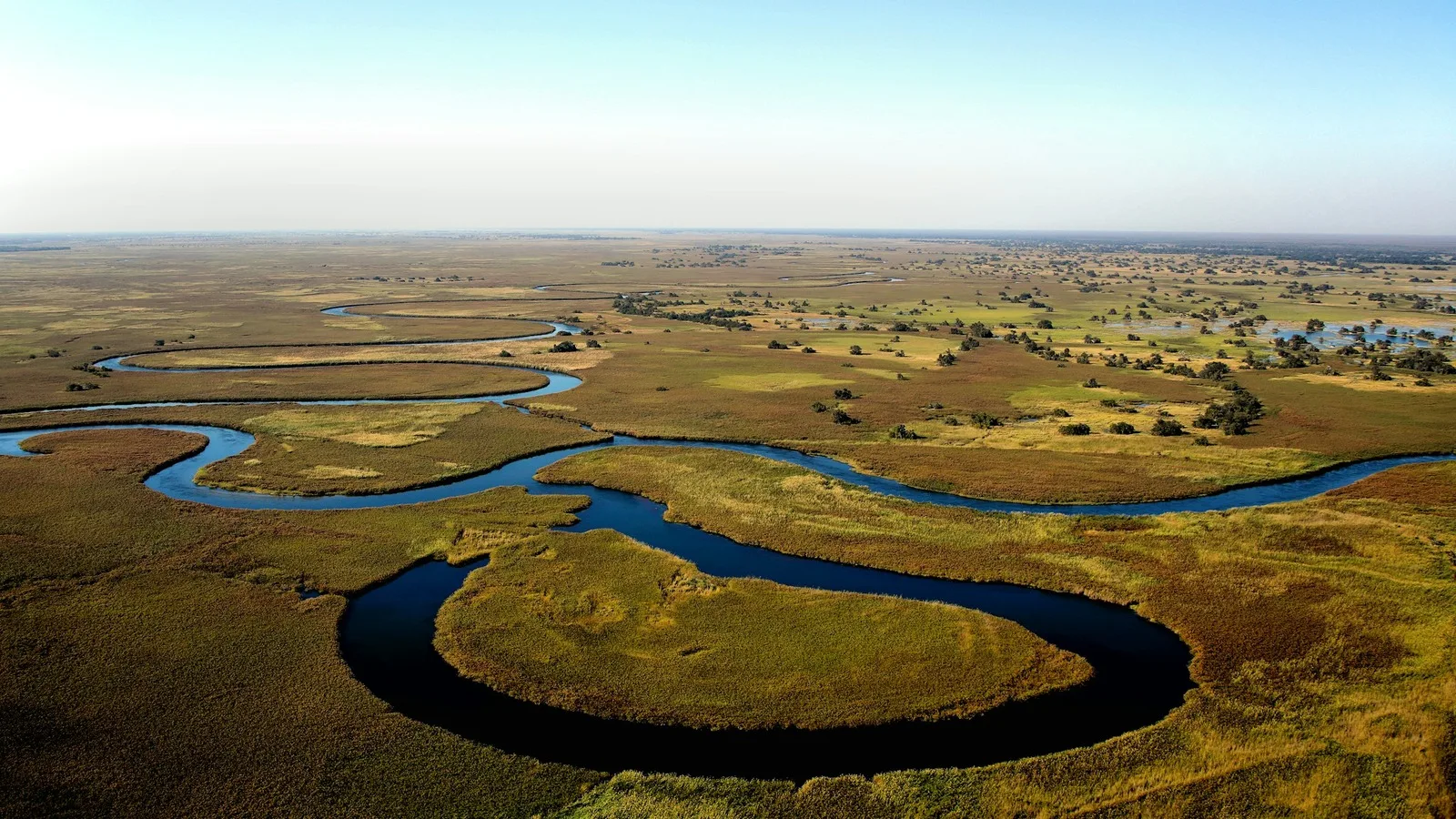
Botswana is mostly Kalahari, and its defining feature is water arriving where it has no business being. The Okavango rises in the Angolan highlands, crosses the strip of Namibia between them, and spreads out over the sand of northern Botswana until it evaporates. It never reaches the sea. UNESCO describes it as one of very few large inland delta systems without an outlet, and it is the largest of its kind on the continent.
The country has also made a choice a visitor feels immediately: tourism here is deliberately high-value and low-volume: fewer people, higher prices, more land under conservation. Whether that trade is the right one is argued about inside Botswana. It is worth arriving knowing it is an argument and not a slogan.
The flood that arrives in the dry season
The delta’s central fact is an inversion. The annual flood reaches Botswana during the dry season, months after the rain that caused it fell in Angola. Plants and animals have synchronized their cycles to that lag rather than to local rainfall, and UNESCO describes the result as an exceptional example of climatic, hydrological and biological processes interacting.
In practice the delta is fullest when the country around it is driest, and animals concentrate accordingly. It also means the best time to visit depends entirely on which of those two things you came for. Permanent swamp covers something like 600,000 hectares; seasonally flooded grassland can add well over a million more.
Tsodilo, and a hundred thousand years
In the northwest, near the Namibian border, quartzite hills rise out of the Kalahari carrying more than 4,500 rock paintings in about ten square kilometers, one of the highest concentrations anywhere, which is why Tsodilo is sometimes called the Louvre of the Desert. The archaeological record there accounts for human activity and environmental change across at least 100,000 years.
The span is the point. It is not a monument to one moment but a record of people returning to the same place over a length of time that is genuinely difficult to hold in the head.
Food
Seswaa is the dish to know: beef or goat boiled and then pounded until it falls apart, salted, and served with bogobe (sorghum or maize porridge) or with samp. Morogo, wild greens gathered and cooked down, turns up beside almost everything. This is cattle country and meat is taken seriously, so vegetarians do better saying so early and plainly than assuming.
Practical orientation
Setswana and English are both official. The currency is the pula, a word that also means rain, which tells you what a dry country values. The cool dry months from roughly May to September are when the flood is high; the rains come around November to March.
Costs are high by regional standards, and that is policy rather than seasonal pricing. Entry and health requirements vary by nationality and change. Consult Botswana Tourism Organisation and your own government before you travel.
Sources and references
- UNESCO World Heritage Centre: Okavango Delta
- UNESCO World Heritage Centre: Tsodilo
- Botswana Tourism Organisation
The heritage facts on this page are taken from the UNESCO World Heritage Centre inscriptions listed above, read at source rather than summarized from memory. Practical details change: the official bodies listed here are authoritative and this page is not.