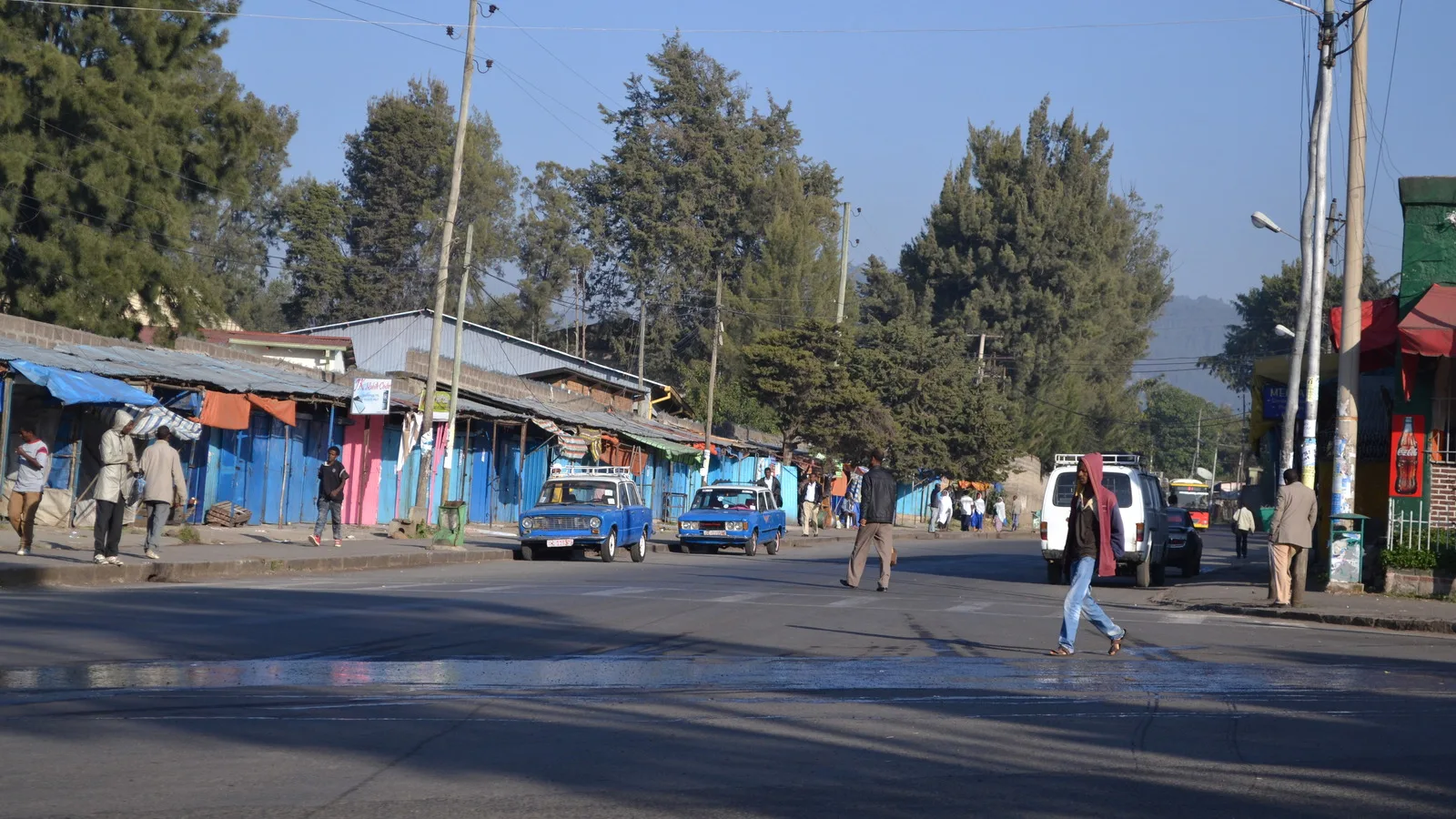
Ethiopia Travel Safety Guide
- Country Ethiopia
- Guide Safety
- Reviewed 20 August 2026
- Length 3 min read
Credit Dvermeirre, CC BY-SA 4.0, via Wikimedia Commons
Last reviewed 20 August 2026
This is the most serious safety guide in this series, and it is written for a reader deciding whether and where to go rather than for one already packing. Every statement here comes from a government source and is dated.
Where the advice stands
The US State Department places Ethiopia at Level 3, Reconsider Travel, dated 1 April 2026.
The UK FCDO advises against all travel to all of Amhara regional state, all of Tigray region and all of Gambela region. It advises against all travel to parts of Oromia, to the Somali region within 100 km of the Somalia and Kenya borders, to the Metekel and Maokomo zones of Benishangul-Gumuz, and to strips along the Sudan, South Sudan, Kenya and Eritrea borders. It advises against all but essential travel to a longer list again, including the remainder of Benishangul-Gumuz and much of eastern Oromia.
What that closes
- Lalibela and its rock-hewn churches, in Amhara.
- Gondar and the Simien Mountains, in Amhara.
- Aksum and its stelae, in Tigray, where civilian flights are also suspended.
- Harar Jugol is not in any restricted region and neither is the Konso landscape, and this guide says so because the difference is the whole point of reading the advice rather than a summary of it.
The warning that names our readers
The FCDO records that travelers may face increased scrutiny, particularly if they are of Amhara, Tigrayan or Oromo ethnicity. It goes further: it reports that security checks have increased at Bole International Airport, and that there are reports of ethnic Tigrayans being prevented from boarding flights.
A publication written for the African diaspora cannot print an Ethiopia guide and leave that out. Many of our readers are the people those sentences describe. The advice given is to check the credentials of officials who request access to your accommodation and then comply, to avoid confrontation, and to follow instructions, and it is repeated on our reconnection article for the same reason.
Crime, as the advice describes it
- Mugging, meaning violent theft or theft with the threat of violence, is on the rise, and there have been a number of incidents of sexual harassment of women.
- Reported crime against both foreign and Ethiopian nationals has increased in five named areas of Addis Ababa: Bole Medhanealem, Bole Atlas, Meskel Square, Yeka Hills and Entoto.
- Attacks in those areas have included knifepoint robberies and victims being choked unconscious. The advice is not to travel alone there if possible.
- Criminal groups, sometimes including children, use distraction techniques including begging, spitting, spilling food and drink, and feigning illness.
- Kidnapping is widespread in parts of Ethiopia, with incidents in the Oromia, Amhara and Somali regions and on the southern border with Kenya, and recently in the Adama special zone south of Addis Ababa.
Terrorism
The FCDO states that there is a threat of terrorism across Ethiopia and that attacks could target westerners. It notes these could occur at any time, including at religious events and on public holidays, which on the Ethiopian calendar means large and predictable gatherings.
The law on same-sex relationships
Same-sex acts are illegal in Ethiopia for both sexes and carry penalties of between one and fifteen years in prison. The FCDO records that local authorities intimidate and detain the owners and clients of hotels and bars, that the public are not generally accepting of same-sex relationships, and that some religious leaders have called for violence against LGBT+ people.
That is stated here once, as law and as recorded fact, so that anyone it affects can make their own decision with the whole of it in front of them.
Health, which is part of safety here
Two outbreak facts belong on this page rather than only on a health guide. Ethiopia declared the end of its first ever Marburg virus disease outbreak on 26 January 2026. The World Health Organization records fourteen confirmed cases, nine deaths and five recoveries, with five further deaths among probable cases, across four districts: Jinka, Malle and Arba Minch in the South Ethiopia region and Hawassa in Sidama. Two of those sit on the southern road toward Konso.
The US CDC separately records active cholera transmission as widespread in Ethiopia, and recommends malaria prophylaxis for all areas below 2,500 meters, noting chloroquine resistance. Take your own route to a travel clinic rather than a general answer.
Practical
- For an ambulance, dial 907.
- Only private hospitals in Addis Ababa offer a reasonable standard of basic care. Outside the capital, medical facilities are extremely poor.
- Drug offenses carry prison sentences of five to ten years and potentially large fines.
- Expect temporary closures of roads, internet and mobile networks.