Kenya Currency and Money Guide
- Country Kenya
- Guide Budget
- Reviewed 16 August 2026
- Length 3 min read
Credit Fiona Graham, CC BY-SA 2.0, via Wikimedia Commons
Last reviewed 16 August 2026
Kenya is the country that made mobile money ordinary. A great deal of daily commerce moves by phone rather than by card or cash, and a visitor who does not understand that spends the first few days confused about why the small transactions are the awkward ones.
The currency
The currency is the Kenyan shilling, written KES and usually shown as Ksh or the symbol /=. It divides into a hundred cents, which you will not see. The Central Bank of Kenya issues the notes and publishes their security features, which is worth two minutes before you handle unfamiliar cash.
Rates move and this guide quotes none on purpose: any figure written here would be wrong within weeks, with nothing on the page to tell you how old it was. Use a live converter on the day, and treat any rate quoted to you on a street as a reason to walk away.
M-PESA, and whether you need it
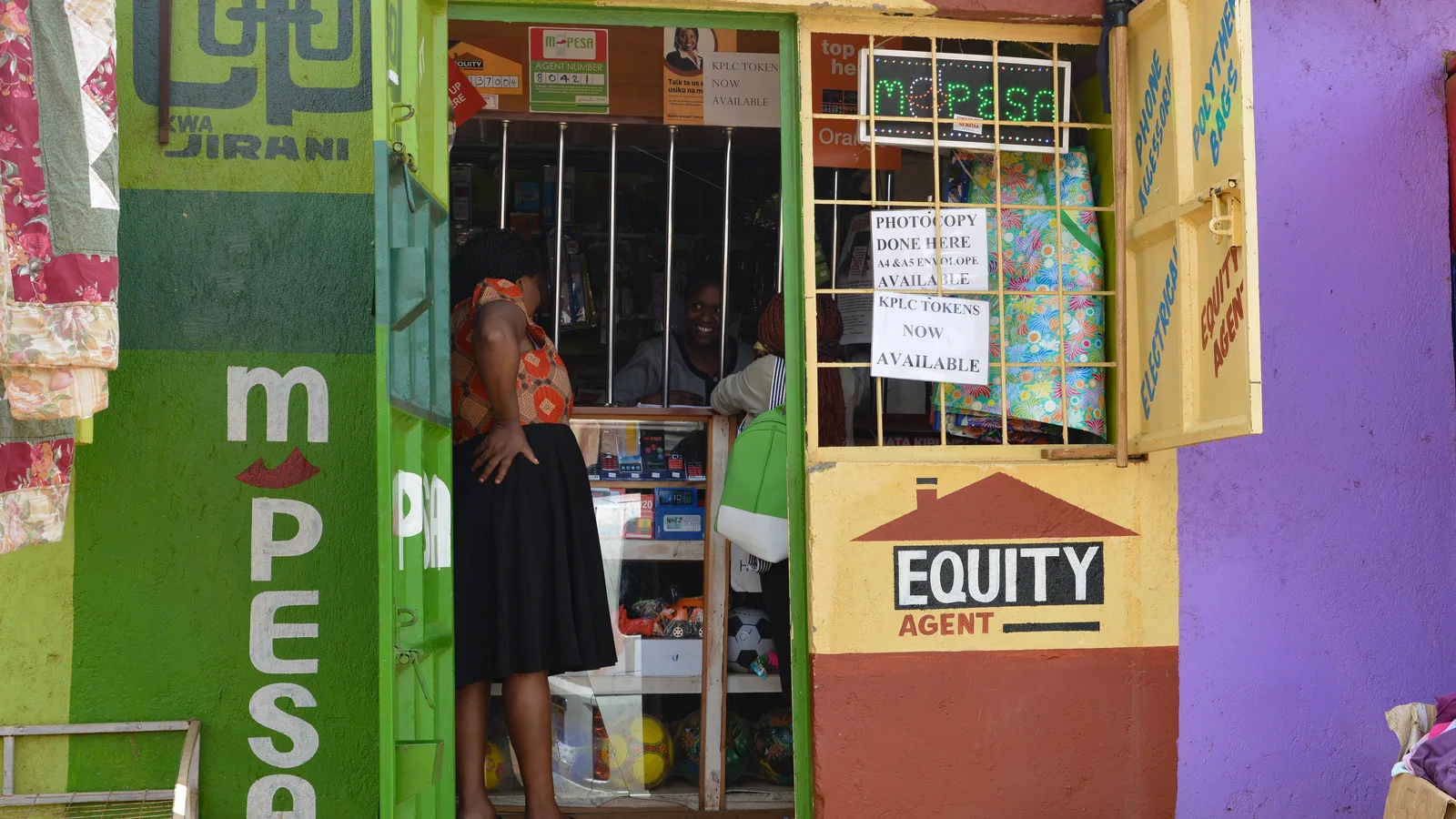
M-PESA is a mobile money service operated by a telecoms company, and in practice it is the default way to pay for a great many things: a matatu fare, a market stall, a bill, a small shop. Agents sit in painted kiosks on almost every street and turn cash into balance and back again.
Whether a visitor should set it up depends on the trip. For a week in lodges and hotels with a card, no. For anything independent, longer, or off the tourist route, it removes a daily friction and is worth the errand. It needs a Kenyan SIM registered in your name, which means bringing an unlocked phone and your passport to a provider’s shop rather than buying a card from a stall.
Cards, cash and ATMs
Cards work in hotels, established restaurants, supermarkets, lodges and the safari trade, and in Nairobi more widely than most visitors expect. They do not work for the informal economy, which is most of the interesting part of a day.
ATMs are plentiful in Nairobi, Mombasa, Kisumu and the larger towns, and thin once you are properly rural. Draw larger amounts less often, because your own bank’s charge is per withdrawal. Tell your bank you are traveling. Carry some small notes: changing a large one is a recurring small problem, particularly for tips and fares.
Tipping
Tipping is normal and not obligatory. On a safari it is a meaningful part of what guiding staff earn, so decide the figure before you go rather than in the car park on the last morning.
- Safari guide and driver: the single tip most worth budgeting for properly, and usually per day
- Camp and lodge staff: often a shared box at reception rather than individual tips
- Restaurants: a service charge may already be on the bill, so read it before adding
- Porters and hotel staff who carry bags: small notes, given directly
- Matatus and taxis: not expected, though rounding up is common
Budgeting
Kenya is two countries priced differently. Local transport, local food and city life are inexpensive. The safari industry is not, and it is not trying to be: park and conservancy fees are charged per person per day and are a large share of the cost of a trip, before any accommodation.
The two costs that reliably surprise people are those daily conservation fees and internal flights, which many itineraries need in order to be itineraries rather than drives. Budget both deliberately and the rest tends to look after itself.