Getting Around Namibia
- Country Namibia
- Guide Flight Planning
- Reviewed 18 August 2026
- Length 2 min read
Credit Olga Ernst, CC BY-SA 4.0, via Wikimedia Commons
Last reviewed 18 August 2026
Namibia is a self drive country in a way its neighbors are not. The distances are enormous, the traffic is light, the scenery is the point, and thousands of visitors a year do it happily. It also has a specific and expensive trap in it, and it is in the paperwork rather than on the road.
The insurance gap
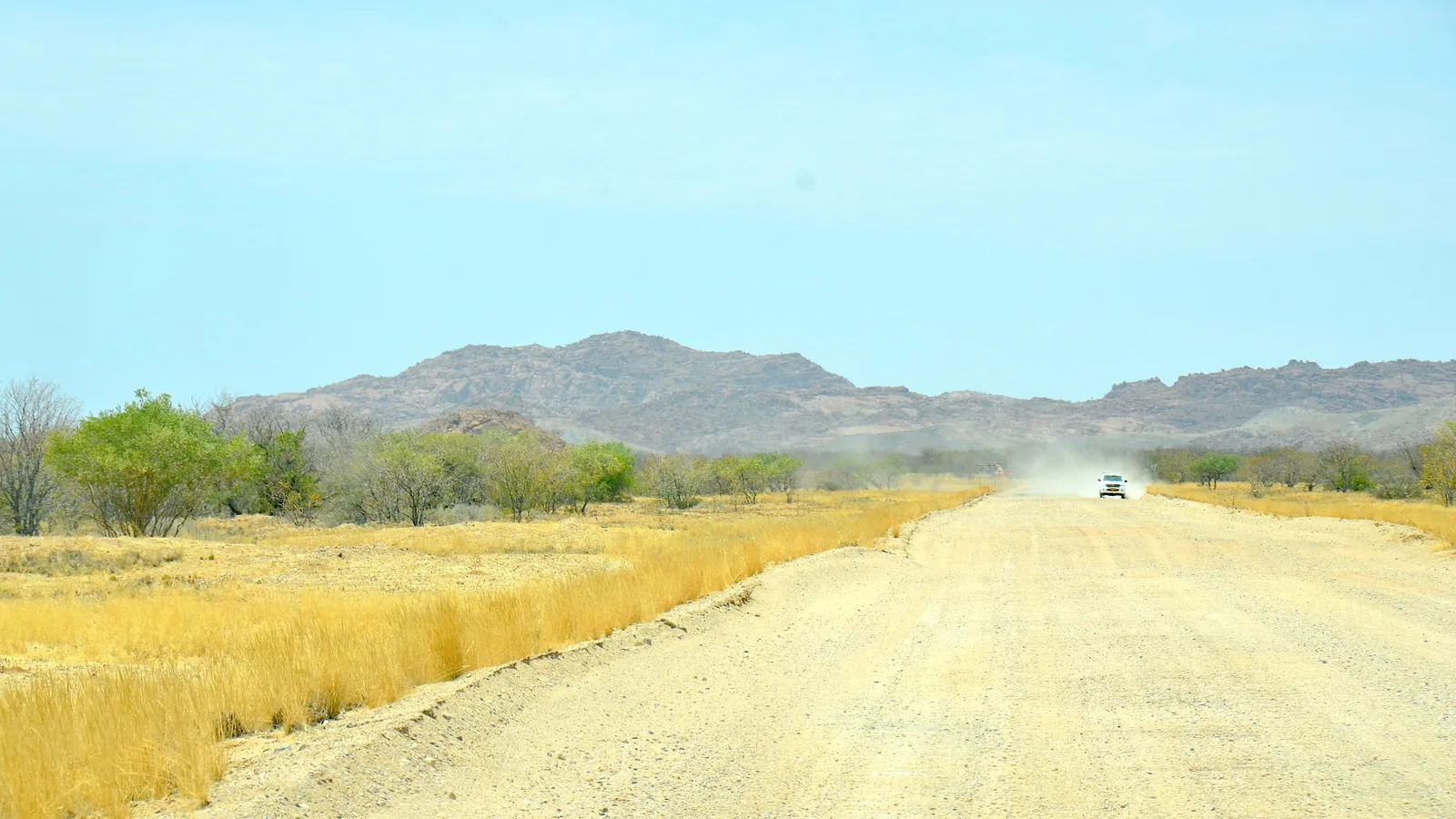
Accidents are common on gravel and dirt roads, and the advice is to take out comprehensive insurance. Then comes the sentence to read twice: most policies will not cover accidents that do not involve other vehicles or animals.
Think about what that excludes. The characteristic Namibian accident is a single vehicle losing traction on loose gravel, leaving the road and rolling. No other car, no animal. That is precisely the accident a standard policy may not cover, and a rolled vehicle in Namibia is a very large bill.
Check what your hire agreement actually covers, in writing, before you take the keys. Ask specifically about single vehicle accidents, tire and windscreen damage, and underbody damage. Buy the extra cover.
How to drive gravel
The official advice is specific and it is worth following exactly. Do not exceed 80 km/h. Carry two spare tires. Carry plenty of water. Check road conditions before setting off. Avoid driving at night outside the towns, because wildlife and livestock are serious hazards.
Eighty is not a suggestion about comfort. Gravel gives very little warning before it stops gripping, and the vehicles people hire here are high sided. Most rollovers involve someone doing rather more than eighty on a road that looked fine.
During the rainy season from January to April many gravel roads deteriorate. A route that was a good road in September may not be one in February.
Licenses and checkpoints
Keep your valid photocard driving license with you in the car. Carry photo identification generally: you may need to show it at police checkpoints in Windhoek and other major towns.
Not driving
Domestic flights link Windhoek with Swakopmund, the north and the private airstrips, and they save a great deal of time at real cost. Guided trips take the driving problem away entirely, which for a first visit to a country this empty is a reasonable trade.
In Windhoek, do not hail taxis from the street. Ask your hotel, guest house or operator to recommend a company and book. Do not enter townships at night unless you are with someone with local knowledge.
Getting around
- Ask in writing whether the hire policy covers a single vehicle accident, before you sign
- Never exceed eighty on gravel
- Two spare tires, and water, in the vehicle
- Check road conditions before every leg, especially January to April
- No driving outside towns after dark
- License in the car, and photo identification on you for checkpoints
- In Windhoek, book a recommended taxi rather than hailing one