Namibia Packing List
- Country Namibia
- Guide Packing
- Reviewed 18 August 2026
- Length 2 min read
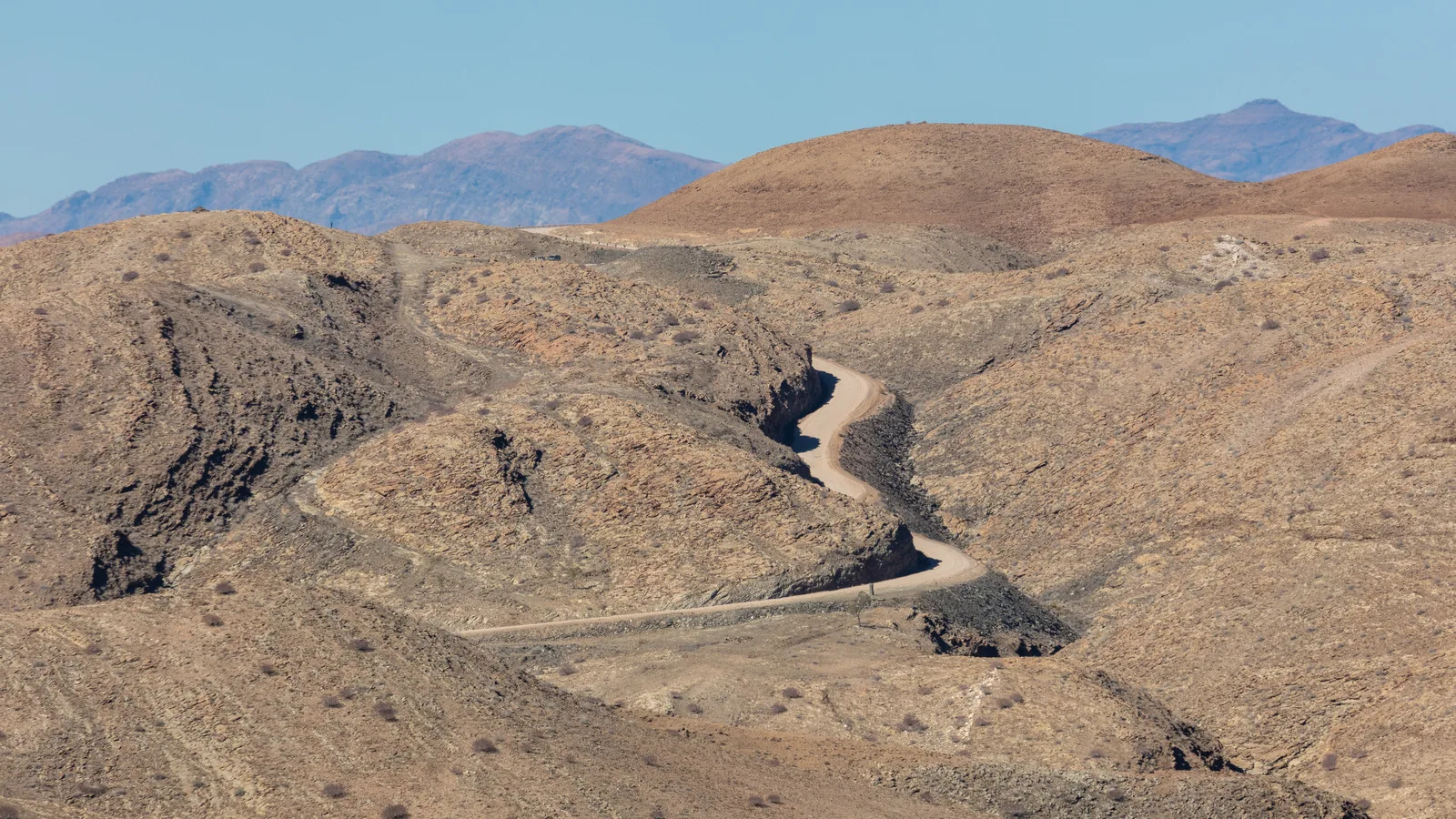
Credit Diego Delso, CC BY-SA 4.0, via Wikimedia Commons
Last reviewed 18 August 2026
People pack for Namibia as though it were hot. Parts of it are, ferociously, and the same trip will take you somewhere cold enough to be unpleasant if you did not bring the layer.
Three climates on one itinerary
The interior is high, dry desert: hot days, and winter nights from June to August that get close to freezing. A dawn balloon flight or game drive at that time of year is genuinely cold.
The Skeleton Coast and the Swakopmund and Walvis Bay stretch are the surprise. The Benguela current runs cold up this coast and pulls fog inland, so the coast can be gray, damp and wind-chilled while the interior two hours away is baking. Bring something windproof for it.
The north and north east are wetter and warmer, and the rains fall from January to April, when many gravel roads deteriorate.
Sun, dust and dehydration
The advisories are blunt that Namibia’s hot dry climate causes skin problems and dehydration, and the instruction is to carry a good supply of drinkable water. In a self drive country that means water in the vehicle, not water you intend to buy later.
High factor sun protection, a wide brimmed hat and lip balm are not optional. Dust gets into camera bodies, lenses and phone ports, so sealable pouches earn their space.
If you are driving, two things go in the vehicle
Two spare tires. That is the official advice for gravel roads here, not an abundance of caution, and punctures are the routine failure. Along with them: plenty of water, and a check on road conditions before you set off.
Nobody hires a car expecting two punctures. The people who carry two spares are the ones who have driven here before.
Health
Altitude sickness is a risk in parts of Namibia, which surprises visitors who think of it as flat desert. Malaria is a regional risk in the north and north east rather than a national one, and rises after the rains, so the answer depends on your route. Take that route to a travel clinic rather than a general assumption.
Carry enough prescription medicine for the whole trip and some over, in its original packaging.
The bag
- A genuine warm layer for interior nights between June and August
- Something windproof for the coast, which is cold and foggy even in summer
- High factor sun protection, a wide brimmed hat and lip balm
- A serious water supply, carried in the vehicle rather than planned for
- Two spare tires if you are driving gravel, which is most of the country
- Sealable pouches against dust for cameras and phones
- Prescription medicine for the whole trip, in original packaging
- Malaria advice taken with your actual route in hand, because the risk is regional