Travel Planning
Best Time to Visit Namibia
The desert in Namibia has no bad season, which means the month you choose is really a decision about Etosha and about the rain.
- Country Namibia
- Category Travel Planning
- Reviewed 18 August 2026
- Sources 3
- Length 2 min read
Credit Christoph Straessler, CC BY-SA 2.0, via Wikimedia Commons
Namibia is easier to time than either of its neighbors, because the thing most people come for does not have a season. Dunes, canyons and rock art look extraordinary in any month. What varies is the wildlife, the road, and how much of the sky you can see.
The desert is always open
Sossusvlei, the Namib Sand Sea, the Naukluft, Damaraland and the coast are landscape rather than a wildlife event. They reward almost any month. That is a genuinely different planning problem from Zambia, where the falls and the game peak at opposite ends of the year, and from Botswana, where the flood arrives in the dry season.
What does change is temperature and light. December and January in the interior are brutally hot in the afternoon. June and July nights get close to freezing. The coast is cold and foggy in almost any month, because the Benguela current runs up it.
Etosha has a season, and it is the dry one
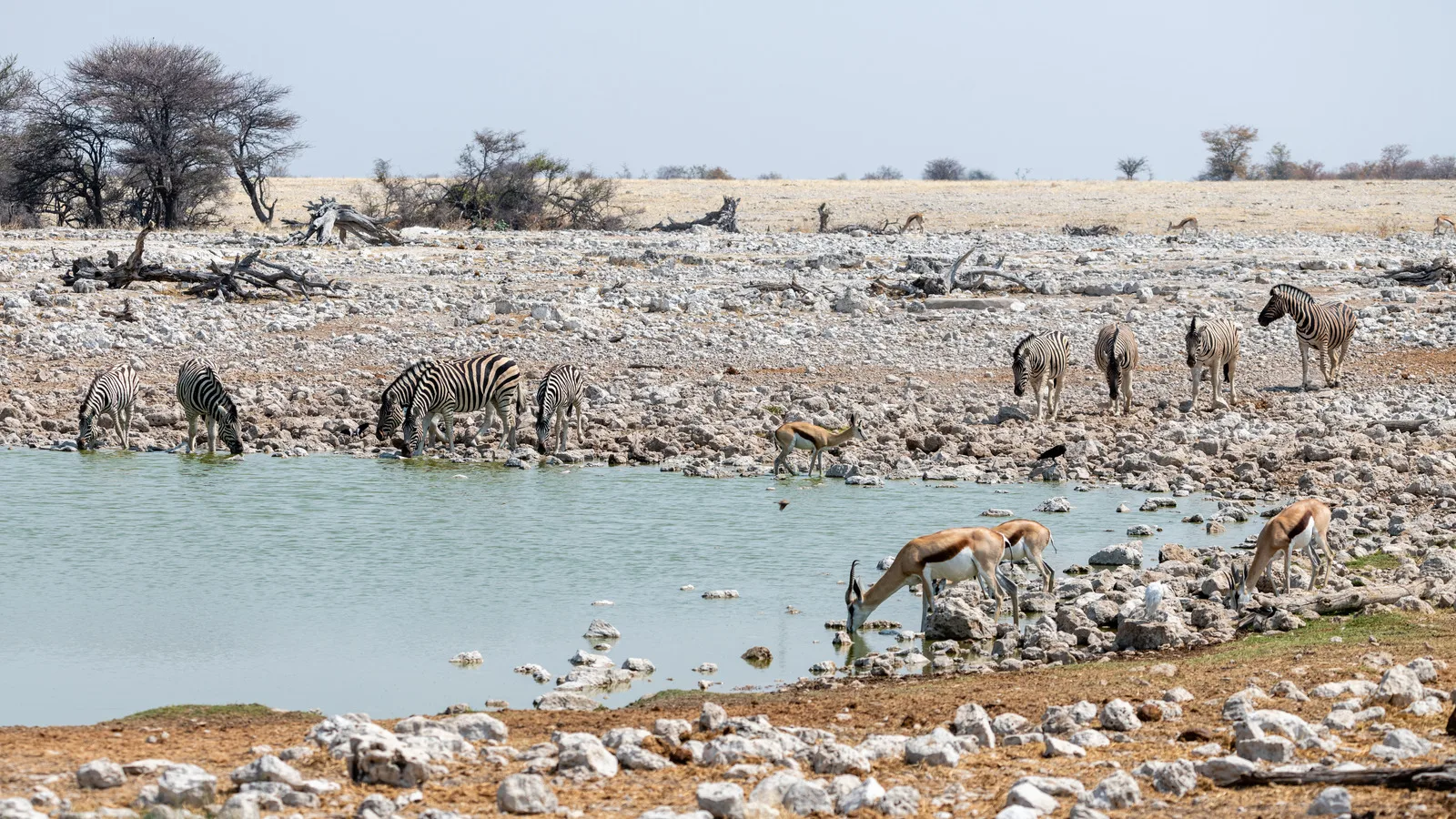
Etosha works by concentration. As the country dries, the pan hardens and the surface water disappears, and the animals come to the waterholes because there is nowhere else. Sit at a waterhole in September and the game comes to you.
That improves from about June and peaks in September and October, which is also when it is hottest and busiest. In the wet months the animals disperse, the grass is high, and Etosha becomes a much harder park to read.
The rains, and what they do to the road
The rains fall from January to April, mostly in the north and the interior, and they are usually short violent afternoon storms rather than days of drizzle. The country turns green, the birds arrive and the light becomes spectacular.
The constraint is the surface. Many gravel roads deteriorate in those months, and in a country where almost every interesting road is gravel, that is the fact that shapes an itinerary. Check conditions before every leg, and build slack into the days.
A note on crowds
Namibia is enormous and thinly populated, so even a busy season here would count as empty almost anywhere else. But Sossusvlei at sunrise in September has a queue at the gate, and the lodges near it book out a long way ahead. If the emptiness is what you came for, the shoulder months around April and May and November give you almost as much light and far fewer people.
Choosing a month
- Any month for the dunes, the canyon and the rock art
- June to October for Etosha, peaking in September and October
- January to April for green landscape and dramatic skies, with worse gravel
- June and July for cold nights and clear air, and a real warm layer
- April, May and November as the quiet shoulder with good light
- The coast is cold and foggy whatever the calendar says
Sources
- Namibia Ministry of Environment, Forestry and Tourism
- Visit Namibia: the national tourism site
- UK FCDO: Namibia safety and security
Seasonal patterns vary year to year and road conditions change without notice.