Tunisia Packing List
- Country Tunisia
- Guide Packing
- Reviewed 20 August 2026
- Length 2 min read
Credit Mohatatou, CC BY-SA 4.0, via Wikimedia Commons
Last reviewed 20 August 2026
Tunisia is the smallest country in North Africa and that is exactly why packing for it is harder than it looks. The distances are short enough that a normal itinerary puts a Mediterranean coast, a Roman hill town, a holy city on an inland plain and the edge of the Sahara into the same week. Those are four different sets of clothes.
What the itinerary actually demands
The note from your doctor is the FCDO's specific advice for Tunisia rather than a general precaution.
- Layers. The desert and the inland plains are cold at night, in winter sharply so.
- Real shoes for the archaeological sites. Dougga, Carthage and Kerkuane are uneven ground, loose stone and no handrails.
- Sun protection stronger than the coast suggests, because the sites have almost no shade.
- Clothing that covers shoulders and knees for Kairouan and the mosques, and for smaller inland towns generally.
- A scarf, for sun, dust and covering up.
- A power adapter for European style round pin sockets.
- Cash in an exchangeable currency, since the dinar cannot be bought in advance.
- Prescription medication in its original packaging, with a note from your doctor confirming it was prescribed to you.
The south is a different trip
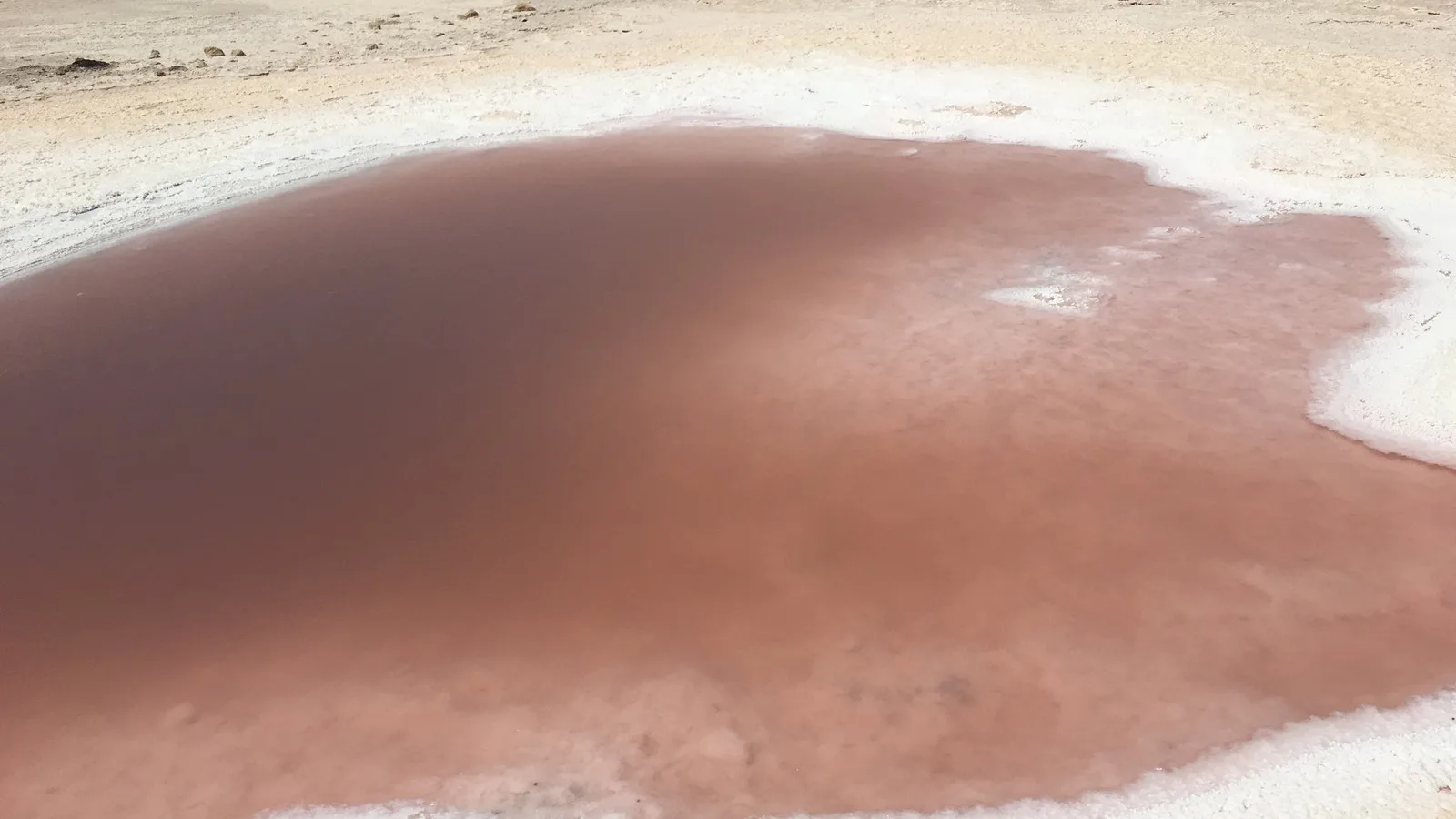
If the itinerary includes Tozeur, Douz, Matmata or Chott el Djerid, treat it as a separate packing problem. The salt lake is a crust over brine and the light off it is brutal; the desert is genuinely cold after dark; and the drive is long enough that water in the vehicle matters. None of that is exotic, and all of it is easy to get wrong from a hotel on the coast.
What to buy rather than carry
Tunisia has real craft traditions and a low price for them. The pottery of Sejnane, made by women in the northwest, is on the UNESCO Representative List, and Nabeul is the country's ceramic town. Woven blankets and rugs come out of workshops in Mahdia and Kairouan. Olive oil is excellent and cheap, and harissa, which is also inscribed, travels well in a tin.
One thing not to buy: antiquities. Removing them needs permission from the Tunisian authorities and an undeclared piece risks a fine and a prison sentence. At an archaeological site you will be offered coins. Decline.