Heritage
Aapravasi Ghat: Visitor and Heritage Guide
Sixteen hundred square meters of stone steps in Port Louis, where a system that moved half a million people and reshaped the labor of empires began.
- Country Mauritius
- Category Heritage
- Reviewed 19 August 2026
- Sources 4
- Length 2 min read
Credit Z thomas, CC BY-SA 4.0, via Wikimedia Commons
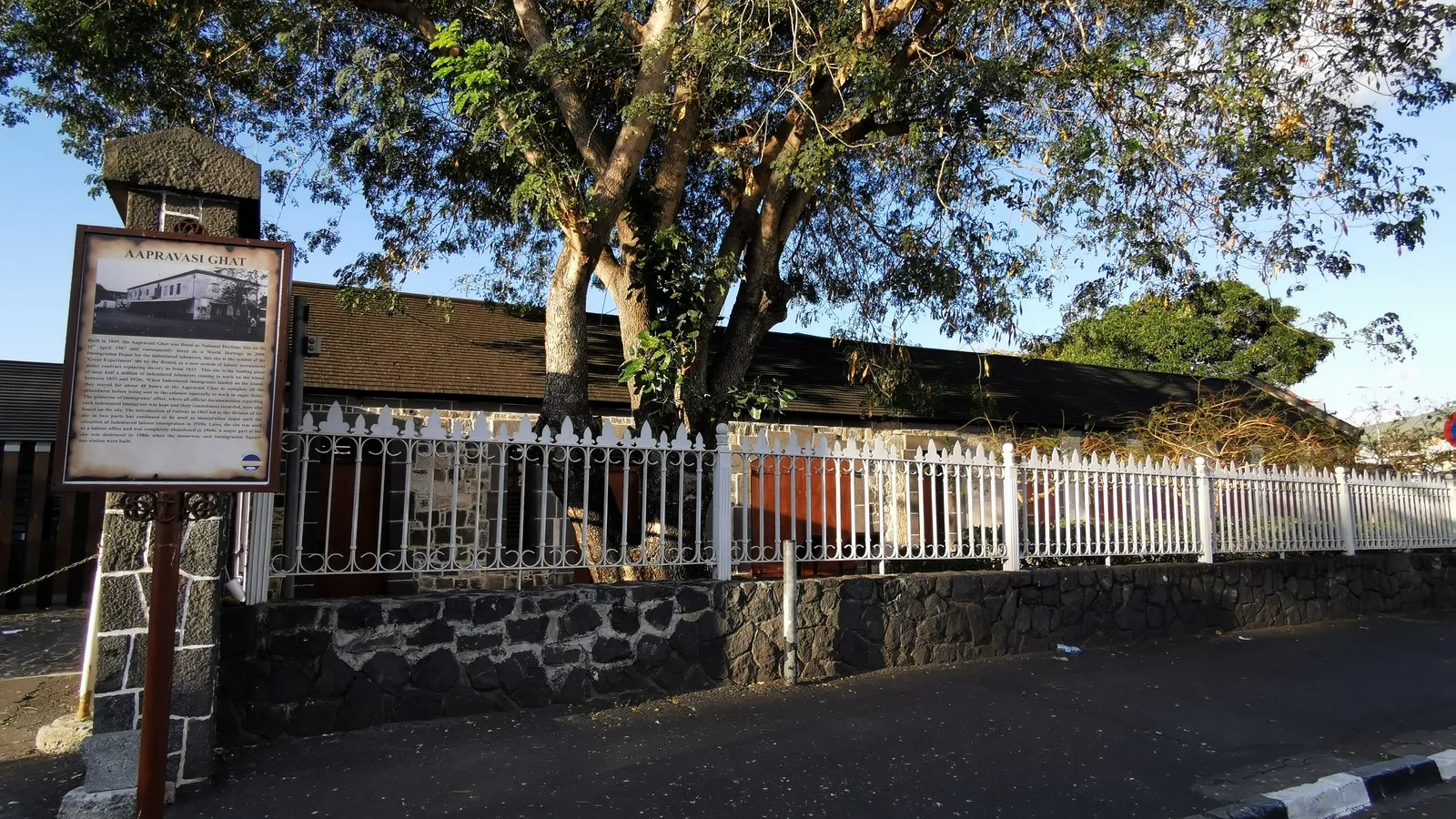
Aapravasi Ghat is one of the smallest World Heritage properties anywhere. The inscribed area is about sixteen hundred square meters, with a buffer zone of a little under twenty nine hectares around it, and what survives is a flight of stone steps, part of the depot buildings and a hospital block on the edge of Port Louis harbor.
It was inscribed in 2006 under criterion six alone, which is the criterion for a place associated with events and ideas of outstanding universal significance. Nothing about its architecture earned it a place on the list. What happened on those steps did.
The great experiment
In 1834 the British government began what it called the great experiment. Slavery was ending across the empire, the sugar estates still needed labor, and the answer was indenture: contracts, wages and passages, applied to workers recruited at first in India and shipped in.
Mauritius was where it was tried, and the immigration depot in Port Louis was where arrivals were processed. By 1920 almost half a million people had come through it. Depots modeled on this one were built across the Indian Ocean, the Caribbean, Fiji, South Africa and Southeast Asia, and the descendants of the people who passed through them are a substantial part of the population of a dozen countries today.
What is there now
Less than you might expect, and that is part of what makes it work. A modern city grew over most of the depot, a motorway runs beside it, and the site is a fragment protected inside a working port capital. The steps up from the water are the ones the arrivals climbed. The interpretation center nearby carries the record, the photographs and the registers.
Give it an hour and read before you go. The site rewards knowing what you are looking at more than almost anywhere on the island.
If you go
- It is in central Port Louis, near the waterfront, and is walkable from the market.
- Visit the interpretation center as well as the site itself.
- Entry is free at the time of writing. Confirm opening hours locally.
- Mornings are cooler and the harbor side offers little shade.
- The second of November marks the arrival of the indentured laborers and the site is the focus of it.
- The ground is largely flat and partly uneven underfoot.
Why it matters here
This publication covers the African diaspora, and indenture is part of that story rather than adjacent to it. The system was designed as the successor to slavery, it was run by the same governments in the same ports for the same estates, and in Mauritius the descendants of both live in the same villages. Reading Aapravasi Ghat alongside Le Morne is the only way either makes sense.
Sources
- UNESCO World Heritage Centre: Aapravasi Ghat
- UNESCO World Heritage Centre: Mauritius
- Mauritius and diaspora reconnection
- Mauritius destination guide
The inscription year, criterion, inscribed area, buffer zone and the figures for 1834 and 1920 were read from the UNESCO World Heritage Centre page for Aapravasi Ghat on 19 August 2026.