Heritage
Mauritius and Diaspora Reconnection
Two forced migrations built Mauritius and the island remembers them separately. Slavery, indenture, and where a returning descendant can begin.
- Country Mauritius
- Category Heritage
- Reviewed 19 August 2026
- Sources 5
- Length 2 min read
Credit आशीष भटनागर, CC BY-SA 3.0, via Wikimedia Commons
Mauritius is the rare place where the record survives. Two systems of forced migration filled the island, they were administered by governments that wrote things down, and a great deal of what they wrote is still here. For a descendant, that is the difference between a feeling and a name.
They were different systems, and the island does not confuse them. Neither should this page.
Slavery, and Le Morne
Enslaved people were brought to Mauritius from the African mainland, from Madagascar, from India and from Southeast Asia. Those who escaped went up, into the caves and onto the ledges of Le Morne Brabant, the basalt mountain at the southwest corner, and formed maroon communities there through the eighteenth and into the nineteenth century.
Le Morne was inscribed by UNESCO in 2008 under criteria three and six, as a landscape that stands for maroonage and for resistance to slavery worldwide. It is oral tradition rather than architecture that carries it, which is why the inscription rests on the meaning of the place rather than on what is built there.
Indenture, and Aapravasi Ghat
Slavery ended in Mauritius in 1835. The year before, the British government had begun what it called the great experiment: importing indentured laborers, at first from India, to work the sugar estates under contract. The first arrivals landed at the immigration depot in Port Louis in 1834, and by 1920 almost half a million people had passed through it.
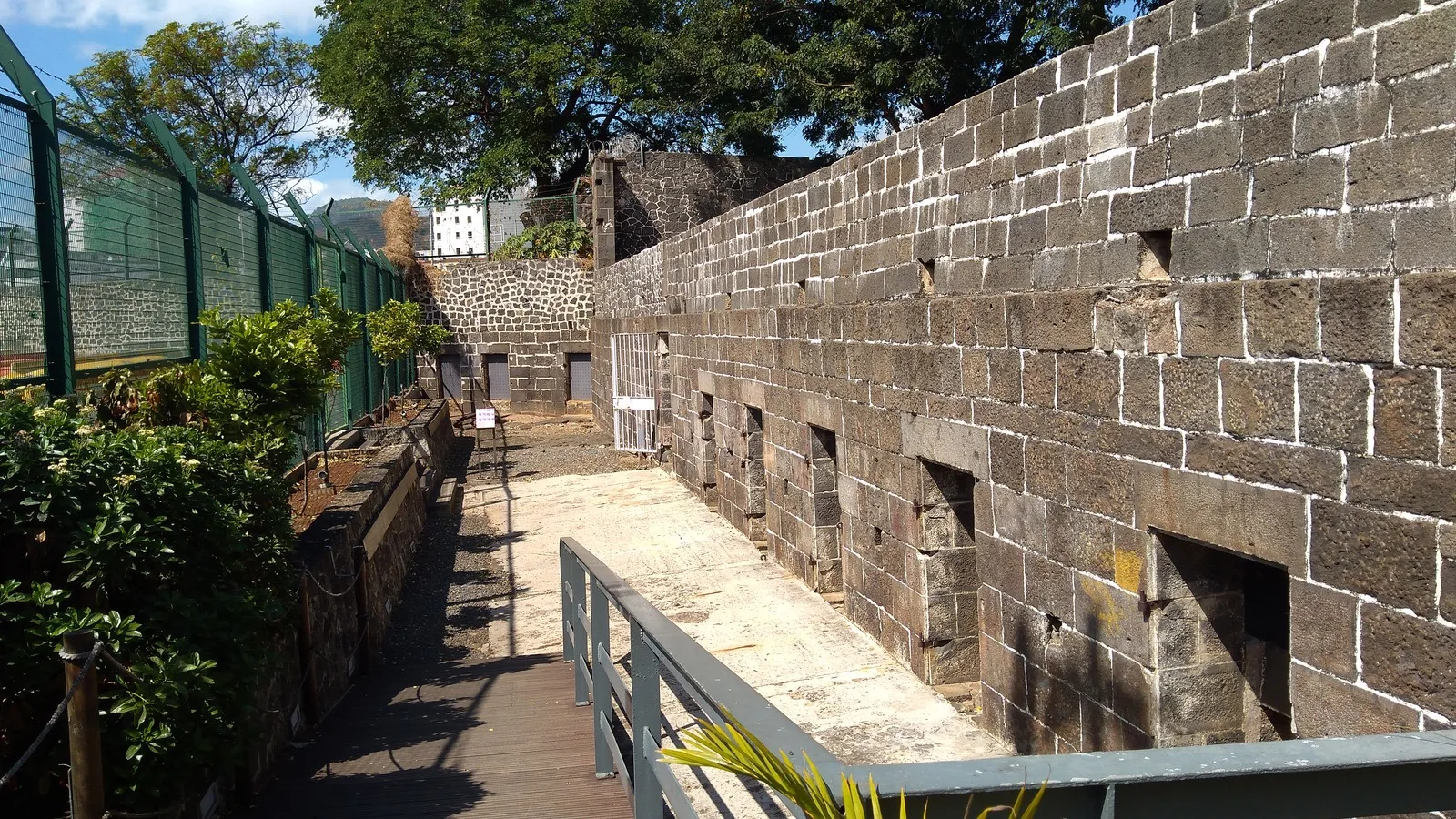
What remains is small. Aapravasi Ghat covers about sixteen hundred square meters and consists of the surviving stone steps, part of the depot buildings and the hospital block. It was inscribed in 2006 under criterion six alone, as the place where a system that reshaped the labor of half the world began. The Indian Ocean, the Caribbean, Fiji, South Africa and Southeast Asia all received people processed through depots modeled on this one.
Where to begin, if you are tracing a family
Bring whatever you have, however thin. A ship name, a district, an estate or a spelling that was changed on arrival are all more useful than they sound.
- The Aapravasi Ghat site and its interpretation center in Port Louis.
- The Mahatma Gandhi Institute at Moka, which holds the indenture immigration records.
- The National Archives, for estate, civil and colonial records.
- Le Morne and its village at the mountain's foot, for the maroon history.
- The Intercontinental Slavery Museum project in Port Louis.
- A local genealogist. The records exist; reading them is a skill.
Coming back well
Two things are worth knowing before you arrive. The first is that the two commemorations are separate: the first of February for abolition, the second of November for the arrival of the indentured. Descendants of both live here and the distinction is theirs, not a technicality.
The second is that this is a small island where a great many people share the history you are looking into. Ask, and you will usually be helped further than you expected. Announce, and you will be answered politely and briefly.
Sources
- UNESCO World Heritage Centre: Aapravasi Ghat
- UNESCO World Heritage Centre: Le Morne Cultural Landscape
- Aapravasi Ghat: visitor and heritage guide
- Le Morne Cultural Landscape: visitor and heritage guide
- Mauritius destination guide
The inscription dates, criteria, areas and figures above were read from the UNESCO World Heritage Centre pages for Aapravasi Ghat and Le Morne on 19 August 2026. This site's own visitor guides to both are linked below.